Emergency water release ordered as Colorado River crisis reaches a breaking point
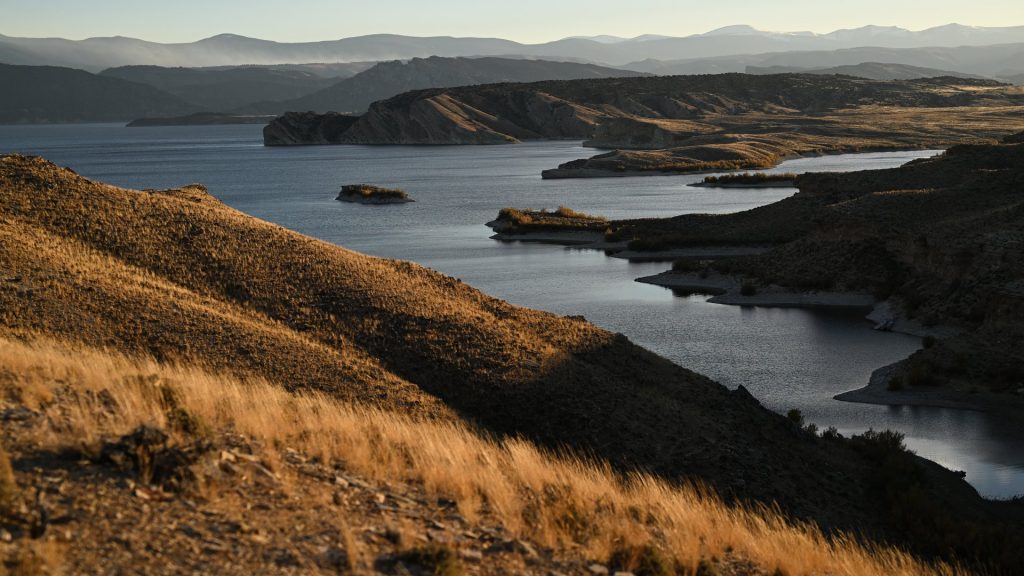
Federal officials ordered a massive emergency release of water from a major Upper Basin reservoir as the Colorado River system reels from one of the worst snowpack years on record, deepening tensions among Western states already locked in unresolved negotiations over the river’s future.
The U.S. Bureau of Reclamation announced it will release up to one million acre-feet of water from Flaming Gorge Reservoir in Utah and Wyoming to stabilize Lake Powell, which is at risk of dropping too low to reliably deliver water and generate hydropower.
The decision comes amid record-low snowpack and an unusually early melt across the Upper Colorado River Basin. Straight Arrow News reported that roughly 60% of the basin’s 2026 snowpack melted in just three weeks in March, after a prolonged heat wave pushed temperatures high enough for precipitation to fall as rain rather than snow.
“The entire Colorado River storage system is now at about 36% capacity,” Reclamation officials said, warning that “immediate action” was needed to preserve water deliveries and electricity production for millions across the West, according to Fox 13.
Under the plan, reclamation will add about 2.48 million acre-feet to Lake Powell by drawing water from Flaming Gorge and retaining an additional 1.48 million acre-feet that would otherwise flow downstream to Lake Mead. Officials said the move would raise Powell’s surface level by roughly 54 feet.
Interior Secretary Doug Burgum said the step was necessary given “unprecedented drought conditions,” praising governors for working toward short-term solutions while long-term agreements remain unresolved.
Nearby reservoirs such as Blue Mesa and Navajo will not see similar releases due to their already low levels.
The effects of the decision ripple across the basin. Reclamation officials said Lake Mead could see a 40% reduction in hydropower output, triggering deeper water cuts for Lower Basin states including Arizona, Nevada and California. Upper Basin states, including Utah, said they supported the move reluctantly, emphasizing that any water released from Flaming Gorge would be recovered when hydrologic conditions improve.
“All of the Upper Division States are taking unprecedented action to protect critical elevations at Lake Powell,” the Upper Colorado River Commission said, citing mandatory water-right reductions and voluntary conservation efforts.
At the same time, Western water managers are contending with the reality that snowpack is no longer serving as a reliable natural reservoir. Experts say early runoff forces difficult decisions about how much water to store, how much to release and how much is simply lost before summer demand peaks.
“There’s not a whole lot of snow left to come down,” Brad Rippey, a meteorologist with the U.S. Department of Agriculture, said to Straight Arrow News.
Farmers and ranchers are already feeling the impact. Drought officials told SAN that surface water shortages could limit some farmers to as little as 20% of their allotted water this season, while prolonged heat threatens crop yields across the Southwest. Arizona, which grows the vast majority of winter vegetables irrigated by Colorado River water, has already experienced an unusually high number of 100-degree days this spring.
Despite the emergency release, reservoirs across parts of California and Utah remain near or slightly above average for now, offering a temporary buffer. But water managers warn that smaller, single-year reservoirs may fail to refill, forcing irrigation districts and municipalities to impose tighter restrictions as summer approaches.
The crisis unfolds against a backdrop of escalating political and legal conflict. The seven basin states missed a federal deadline earlier this year to agree on new rules governing the river after existing agreements expire in 2026. As a result, the Interior Department released a draft plan that has drawn sharp criticism from states on both sides of the basin.
Lower Basin states argue the federal proposal unfairly shifts the burden of water cuts onto them, while Upper Basin states say the models ignore evaporation losses and continue to favor downstream users. Representatives from Arizona have warned that the federal proposal includes scenarios where communities could be forced to truck in water.
With Lake Powell and Lake Mead still hovering near levels that threaten power generation at Glen Canyon and Hoover dams, experts say recovery will not come quickly.
“It would take a sea change,” Rippey said. “You would have to bring in a decade of good years.”
Ella Rae Greene, Editor In Chief