Millions to experience severe weather during ‘March Megastorm’
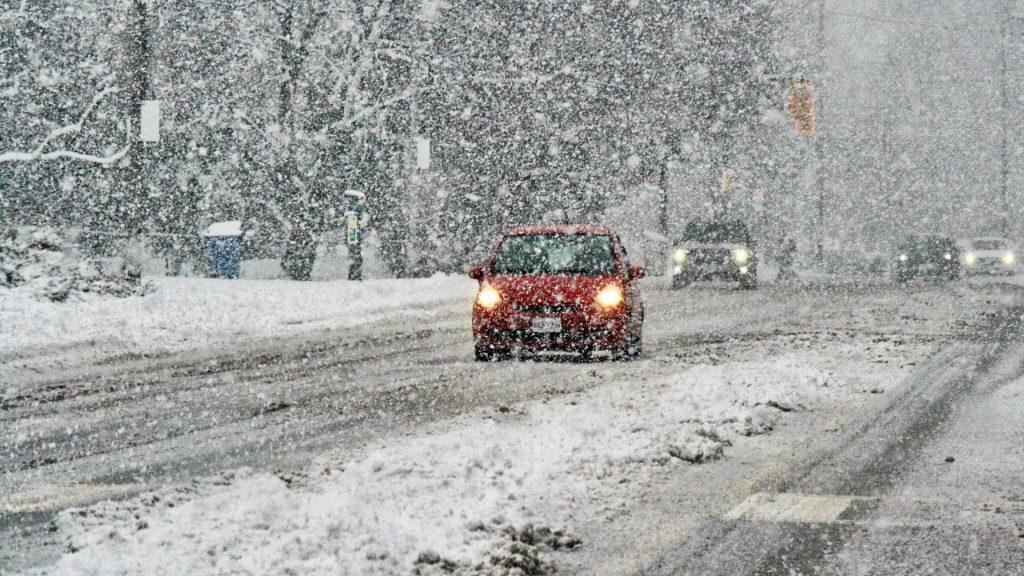
People across the country are set to see severe weather Sunday going into Monday with what some forecasters are calling a “March Megastorm.”
The system will move across the central U.S., with over two dozen states experiencing high winds, as well as blizzard conditions in the upper Midwest, according to AccuWeather.
Isaac Longley, a senior meterologist with AccuWeather, told Straight Arrow News there may be much as two to three feet of snow from northern Wisconsin through the upper peninsula of Michigan and into Ontario.
Snow and wind should wind down across the upper Midwest later on Monday, and especially into Monday night, Longley said.
That storm will likely become a bomb cyclone, meteorologists said.
Severe thunderstorms will hit other parts of the Midwest and Mid-South, before going through the east. The highest threat, per the National Weather Service, is across the Mid-Atlantic on Monday.
“[We’re] expecting widespread damaging winds and definitely a few tornadoes,” Longely said. “Some of those could possibly be on the strong side.”
Nearly 200 million people may be affected by wind, rain, thunderstorms, snow or cold air, per AccuWeather’s estimations. Some could lose power because of the wind, and flight delays and cancellations are predicted to be “in the thousands” on Monday, AccuWeather said.
“This is one of our classic March-type storms, where it’s multi-faceted,” Longley said.
Stocking up and staying safe for the storm
Along with food and water, the Federal Emergency Management Agency suggests having these items at home:
- Prescription medications and first-aid supplies
- Flashlights, batteries, power banks and phone chargers
- Blankets, warm clothing, extra layers, hand warmers
- Baby supplies or pet food
- Rock salt and a working snow shovel.
- Textured grip shoes to reduce falls on slippery surfaces
If your power goes out, start by turning off and unplugging smaller appliances such as televisions, computer equipment, game consoles, fans and lights, Edison International, a California-based public utility company and parent of SoCal Edison, says. These electronics can be especially vulnerable during an outage, and not taking care of them properly can damage them, and even cause the power to go back out once it’s restored.
Larger appliances like refrigerators, on the other hand, shouldn’t be unplugged, but fridges and freezers should be kept closed.
Per the Food and Drug Administration, a closed refrigerator will keep food cold for about 4 hours, while a full freezer can keep its temperature for about 48 hours — if it remains unopened.
If you have any perishable food in there that has been room temperature for at least two hours, though, throw it out.
Longley said people need to be aware of the threats of the multi-faceted storm.
“Keep an eye out for road conditions, and if you don’t have to travel, it’s probably best not to,” he said.
In addition, people should make sure their phone’s push notifications are turned on to receive weather alerts, even overnight, and keep checking the weather source of their choice, Longley said.
“It’s important and crucial to have multiple ways to receive warnings,” Longley said.
Ella Rae Greene, Editor In Chief