Energy Secretary says the Navy’s ‘not ready’ to escort tankers through Hormuz
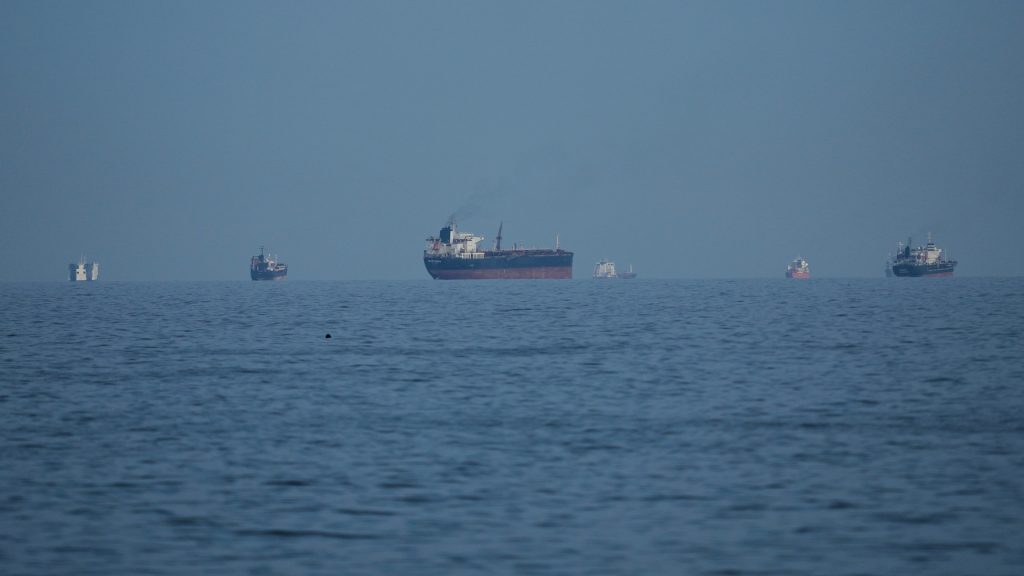
U.S. officials have floated the idea of the military escorting oil tankers through the Strait of Hormuz amid the war with Iran, though experts largely agree it wouldn’t be feasible at this point.
Earlier this month, President Donald Trump said on Truth Social that “the United States Navy will begin escorting tankers through the Strait of Hormuz, as soon as possible.”
In an interview with CNBC on Thursday, Energy Secretary Chris Wright agreed that these escorts will “happen relatively soon,” perhaps by the end of the end of the month, though he added that “it can’t happen now.”
“We’re simply not ready,” Wright said. “All of our military assets right now are focused on destroying Iran’s offensive capabilities and the manufacturing industry that supplies their offensive capabilities.”
Dominick Donald, an adviser to the Joint War Committee, which is made up of war risk underwriters in the Lloyd’s insurance market, told USNI News that taking on U.S. protection in the strait could put a target on a vessel.
“That becomes a bit more complicated in that the Iranians have actually said, basically everyone’s a target. But the reality is, they can’t make everybody a target. They can only make certain vessels targets,” he said.
French navy retired Vice Adm. Pascal Ausseur told The Associated Press that “in today’s context, sending warships or civilian vessels into the Strait of Hormuz would be suicidal.” If there were a ceasefire agreement with Iran, “that would make the situation shift from suicidal to dangerous,” Ausseur said.
Insurance premiums could prove to be another issue.
“Maritime traffic is a business. That business has to make money. If insurance costs are so high that you can’t make a profit by sailing through a given area, then you don’t sail through that area,” Ausseur said.
The United States, along with its allies, escorted ships before in the Red Sea during attacks by Houthi rebels. However, Iran itself is more powerful than its proxies. And risks for shipping are “much greater” in the Hormuz passage than they are in the Red Sea because of the war, French retired Vice Adm. Michel Olhagaray, a former head of France’s center for higher military studies, told the AP.
“The means to counter this threat must be far more substantial and far more effective,” he said. “Before the heat can decrease … most of the offensive installations on land in Iran would have to be eliminated. There would need to be constant monitoring, patrols, extremely close surveillance, and a very high level of intelligence to be able to say that it would be possible to allow tankers to transit, even with military escorts.”
This isn’t something Olhagaray sees happening in the near future.
In a previous interview with Straight Arrow News, Matthew Lekstutis, a seasoned supply chain expert and director at the consulting firm Efficio, said escorts could “help reduce the view of risk,” though he added: “Do you want to be the guy driving the first one through?”
Oil shipping companies, regardless of a military escort, would be hesitant to sink a large crude carrier, Lekstutis said.
Joshua Tallis, a naval analyst at the Center for Naval Analyses, said in Lloyd’s List that Iran’s capabilities to attack ships include “fast-attack craft armed with rockets and small missiles, a large stockpile of naval mines (some possibly laid clandestinely by dhows), and uncrewed surface systems,” which pose a threat to commercial traffic. These are difficult for warships to counter, Tallis said.
Tallis told Lloyd’s List that escorts are more likely to start once more damage is done to Iran’s ability to attack ships.
“Conditions will dictate that timeline, but seven to 10 days is probably a good initial estimate,” Tallis said.
If the U.S. did use escorts, it would not look like a convoy, Donald predicted to USNI News, but would require air, sea and unmanned assets.
Traffic halted in Strait of Hormuz
Wright on Tuesday erroneously said on X that the Navy escorted a tanker in the strait. That post was deleted from his account, but not before oil prices plunged.
White House press secretary Karoline Leavitt confirmed at a press briefing Wednesday that “U.S. Navy has not escorted a tanker or a vessel at this time.”
On Fox News Thursday, Wright attributed the mistake to a “miscommunication in our department.”
Since the start of the war on Iran on Feb. 28 with joint strikes by America and Israel, shipping through the Strait of Hormuz, which exports about 20% of the world’s oil supply, has halted.
According to Iranian media, Ebrahim Jabari, a senior adviser to the Revolutionary Guards’ commander-in-chief, said the strait is closed, and Iran will attack ships that try to pass through it.
In his first message since Mojtaba Khamenei took over as Iran’s new supreme leader, he said the Strait of Hormuz will stay closed, calling it a “tool of pressure.” This came after Brent oil prices briefly topped $100 a barrel Thursday morning following reports of an attack on two oil tankers in the Persian Gulf near Iraq. Oil prices could reach $200 per barrel, Iran warned.
The U.S. Navy has been refusing requests from those in the shipping industry to escort them through the strait, Reuters reported, citing anonymous sources familiar with the matter. The Navy, which Reuters wrote has had regular briefings with shipping and oil industry counterparts, said the risks of attacks are currently too high.
At a press briefing, Chairman of the Joint Chiefs Gen. Dan Caine said the Department of Defense is looking at a “range of options” for if it’s asked to escort vessels.
“And then, like we always do with every potential mission, [we’ll] come to the secretary and the president with both: what are the resources required, what is the command and control required, and what are the risks, and how do we mitigate those risks?” Caine said.
Ella Rae Greene, Editor In Chief