How today’s gas prices compare to a 30-year history of inflation
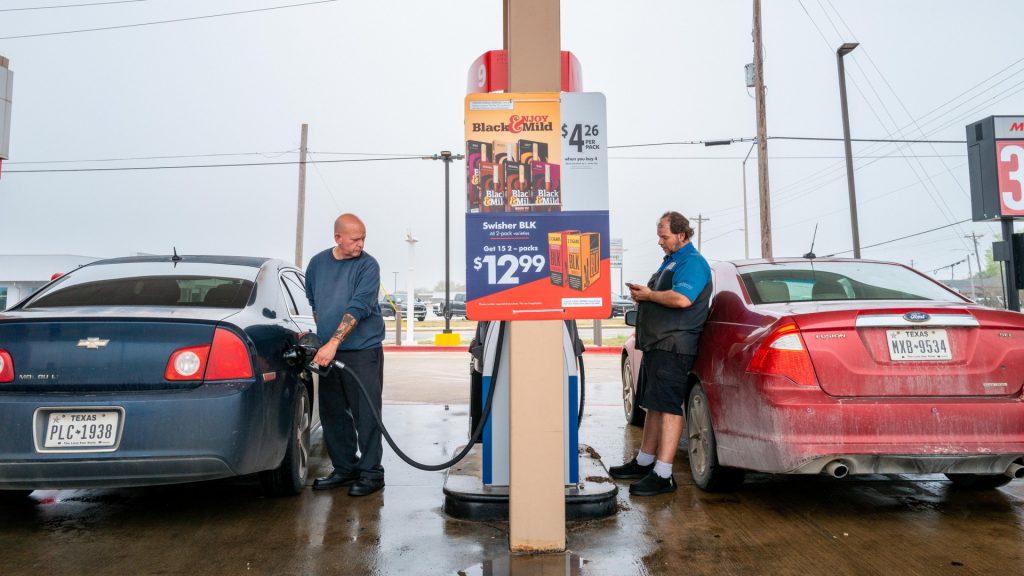
The economic fallout from the war with Iran has hit American drivers’ wallets. It’s hardly the first time that geopolitical conflict has caused increased gas prices, and when adjusted for inflation, gasoline is less expensive now than throughout much of the 2000s and 2010s.
The historic trend for gas prices is full of valleys and peaks, even when adjusted for inflation. Tuesday’s average of $3.54 per gallon, according to AAA, is up over 70 cents from $2.81 in January 2026, the baseline month Straight Arrow News used in its analysis.
In less than two months, the cost of a gallon of regular gasoline increased by more than it did in the past 30 years, when adjusted to today’s dollar.
What causes gas prices to soar and fall?
Using today’s values, a gallon of gas in 1995 cost about $2.35 — 16% less than it cost at the start of 2026.
Hurricane Katrina caused the first major gasoline price shock of the millennium by shutting down production at oil refineries along the Gulf Coast. Reduced refinery capacity meant less crude oil could be processed and turned into gasoline. At the time, gas hit $2.90, or $4.77 in 2026 terms.
Inflation-adjusted prices remained higher than today’s average throughout the following three years. Oil production stagnated while emerging economies — primarily that of China — began to consume more. In July 2008, with oil at $147 per barrel, gasoline cost an inflation-adjusted average of more than $6.
Unbiased. Straight Facts.TM
Inflation-adjusted gas prices in July 2008 topped $6 per gallon, while a barrel of oil cost $147.

Then came the 2008 financial crisis, and gasoline prices took a nosedive to $2.61 — in today’s dollars — by the end of the year.
However, the same oil market dynamic persisted: As the recession faded, oil demand increased. China’s growth trajectory continued. And oil-producing countries in the OPEC price-fixing cartel held a steady rate of production. On top of that, the Arab Spring introduced a risk premium to global markets, as instability roiled several oil-producing countries.
From 2009 to 2014, inflation-adjusted gasoline prices remained higher than today’s average. Prices did not swing back below $3.50 in 2026 terms until the U.S. shale boom took off and OPEC decided against cutting oil production in 2014.
The COVID-19 pandemic brought gasoline prices back to 1990s-level lows as drivers stayed home. Only two years later, Russia’s invasion of Ukraine and subsequent U.S. sanctions on Russian oil strained global markets as post-pandemic travel heated up. Gasoline hit $5.46 per gallon in June 2022, when adjusted for inflation.
When do drivers change their behavior?
In an interview last week with SAN, Patrick De Haan, head of petroleum analysis at GasBuddy, said American drivers typically only start driving less once the cost of filling their tank eats away a significantly higher percentage of their monthly income.
“Right now it’s still only about 2.2%,” De Haan said on Friday. “When that number rises to 3%, I believe Americans start taking action. When it rises to 4%, Americans start biking and taking mass transit.”
Nevertheless, De Haan said the current price spikes are having a significant impact as price increases add up across the entire economy. He also cited a February jobs report, which showed the U.S. lost 92,000 jobs last month.
“Americans spending more on gasoline when more Americans are losing their jobs and fewer jobs are being added is not a great recipe,” De Haan said.
Ella Rae Greene, Editor In Chief