US strikes 16 Iranian minelayers near Hormuz as 3 ships hit by projectiles
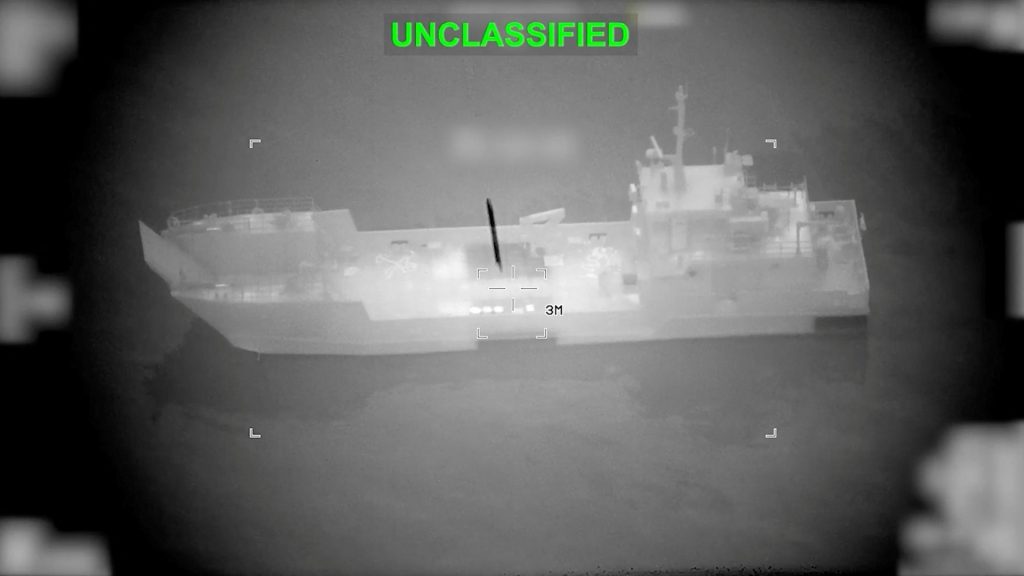
President Donald Trump warned Iran to remove any mines from the Strait of Hormuz and threatened severe military consequences if shipping through the waterway is disrupted, as the conflict around the key oil route intensifies. U.S. Central Command said American forces have now struck 16 Iranian vessels capable of laying mines in the strait.
Trump issued the warning Tuesday in a post on Truth Social addressing reports that Iran has begun placing naval mines in the narrow shipping lane that carries a large share of the world’s oil.
“If Iran has put out any mines in the Hormuz Strait, and we have no reports of them doing so, we want them removed, IMMEDIATELY!” Trump wrote. He added that if mines are discovered and not removed, “the Military consequences to Iran will be at a level never seen before.”
U.S. forces soon struck vessels linked to mine-laying operations in the strait.
“I am pleased to report that within the last few hours, we have hit, and completely destroyed, 10 inactive mine laying boats and/or ships, with more to follow,” he wrote.
Later Tuesday night, U.S. Central Command said the total number of vessels struck had reached 16 and posted video showing munitions hitting several of the boats.
U.S. intelligence officials said that Iran has begun placing mines in the waterway, according to reporting from CNN. The mining activity is limited so far, involving a few dozen devices, the sources said. Iran retains most of its small boats and mine-laying craft and could deploy hundreds of mines if it chooses.
The Islamic Revolutionary Guard Corps controls much of the activity in the strait alongside Iran’s navy.
U.S. officials said the force has the capability to deploy small craft, explosive boats and shore-based missiles in the channel.
Oil shipping through the strait slows sharply
The Strait of Hormuz sits between Iran and the Arabian Peninsula and carries about one-fifth of global oil consumption. Tanker traffic has slowed sharply during the conflict, leaving millions of barrels of crude and refined fuel unable to move out of the Persian Gulf.


On Wednesday, projectiles struck 3 cargo ships near the strait, setting one of the vessels on fire, according to the United Kingdom Maritime Trade Operations Center. The British military-run monitoring group said the vessel was hit north of Oman, and the crew was evacuating the ship. Iran did not immediately claim responsibility for the strikes.
Nearly 15 million barrels per day of crude production, along with roughly 4.5 million barrels of refined fuels, are effectively stranded in the region. Producers such as Iraq and Kuwait rely on the route and have few alternatives for exporting oil.

As Straight Arrow News reported, energy markets have swung sharply as developments around the strait continue to unfold. Oil prices surged earlier in the week and have remained volatile as the conflict unfolds.
Despite the disruption, some tankers linked to Iran are still moving through the strait, according to the Associated Press. Several of those ships are making so-called “dark” transits, meaning they are not broadcasting Automatic Identification System tracking signals that normally identify a vessel’s location. Ships carrying sanctioned Iranian crude frequently disable those trackers.
Navy escorts remain under consideration
The White House said Tuesday that the U.S. Navy has not escorted commercial vessels through the strait, despite a social media post from Energy Secretary Chris Wright that briefly claimed otherwise.
Press secretary Karoline Leavitt said the Navy has not conducted tanker escorts “at this time,” and said the post from Wright’s account was removed after officials determined it had been incorrectly captioned.
Leavitt said naval escorts remain an option if the administration determines they are necessary.

“That’s an option the president has said he will absolutely utilize if and when necessary at the appropriate time,” she said during a White House briefing.
Trump has previously said the Navy could escort tankers through the strait if needed to keep oil moving to global markets.
Ella Rae Greene, Editor In Chief