Here’s what has to happen before Americans get tariff refunds, if any
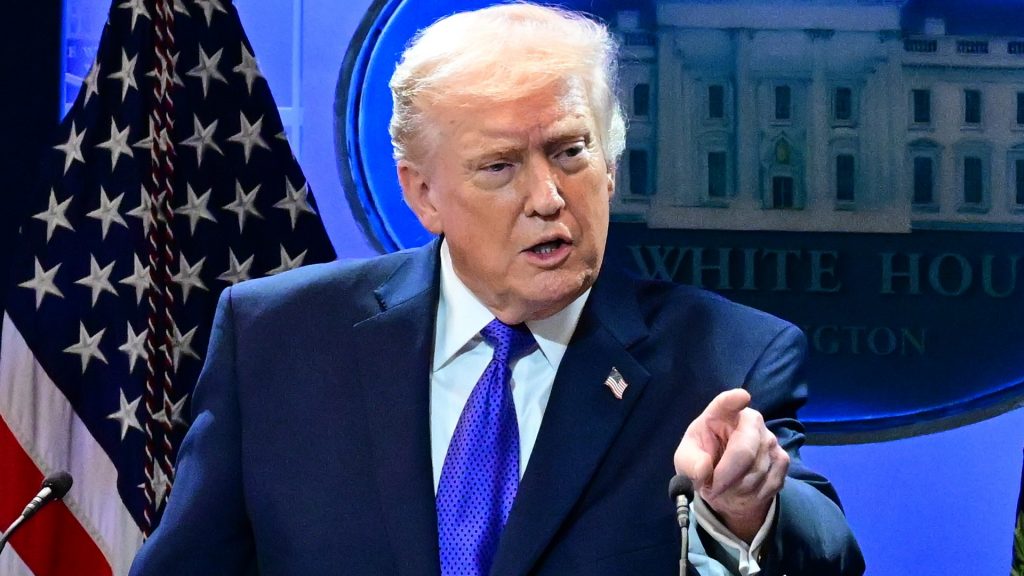
The Supreme Court ruled some of President Donald Trump’s tariffs were illegal. The administration now owes refunds for the extra revenue generated by those tariffs.
The big question is, will you see any of this money that’s coming back from the government?
In short, probably not.
Court decisions
On Monday, the U.S. Court of Appeals declined to pause the implementation of the Supreme Court decision, which ruled that refunds must begin. Those refunds will come from any of the tariffs the president justified under the 1977 International Emergency Economic Powers Act, or IEEPA.
“What the Supreme Court did was say that the President did not have the authority to impose the tariffs that he did under two specific executive orders, one involving a claim that Canada, Mexico and China were not doing enough about fentanyl, and a second one that involved products from every country that was done in response to chronic trade deficits,” Jennifer Hillman, professor at Georgetown Law School and a fellow at the Council on Foreign Relations, told Straight Arrow News.
That decision from the appellate court has now opened the door for the next move, which comes from the U.S. Court of International Trade.
“For trade cases like the IEEPA dispute that made its way to the Supreme Court, there effectively is a lower court,” Ryan Majerus, a partner in the international trade team at the law firm King and Spalding, told SAN. “So, before the case got to the Supreme Court, it worked its way up through the U.S. Court of International Trade and then the U.S. Court of Appeals for the Federal Circuit.
It’s now the job of the U.S. Court of International Trade to determine how the refund process will work.
“We’re really waiting to see what they do,” Majerus, who previously served as senior policy advisor for supply chains at the White House National Economic Council under former President Joe Biden, said.
Since this case reached the Supreme Court, the Trump administration has exhausted its appeals.
“They haven’t suggested any other legal claims they have for not paying the refunds back,” Alan Morrison, a professor at George Washington University law school, told SAN.
In 1998, the Supreme Court ruled in U.S. v. U.S. Shoe Corp., that a federal harbor tax on exports was unconstitutional, which forced the government to refund several billion dollars to exporters. But that’s pennies compared to this.
“It’s of a very different scale,” Majerus said.
Who’s getting refunds?
So, where will this $175 billion be heading?
“The law is quite clear that the only people who can ask the government for rebates, refunds, whatever you want to call it, on the tariffs that were paid illegally are the people who actually paid the tariffs,” Morrison said.
That means the average American consumer is not getting a check from the federal government.
“The only entity that has the ability to obtain a direct refund from U.S. Customs or from the courts is the importer of record,” Majerus said. “And so, that’s the company that paid the duties when the goods came into the U.S.”
Hillman made it three-for-three among the experts SAN spoke with.
“The legal obligation extends only to the importer of record,” she said. “So, that is the company that actually did the importing and paid the tariffs.”
Unless you imported items from overseas yourself and have filed a lawsuit against the government over it, you won’t be receiving any direct money from the federal government.
Consumer refunds
Despite that, there’s still a chance American consumers can see some financial benefits from the tariff refunds.
“There are some companies that have gone out there and said they’re going to refund the IEEPA tariffs directly to customers, but a lot of that’s going to be up to businesses,” Majerus said.
One business that has already announced a plan to pass along the returns to consumers is FedEx.
“Our intent is straightforward: if refunds are issued to FedEx, we will issue refunds to the shippers and consumers who originally bore those charges,” the company said in a statement to SAN. “When that will happen and the exact process for requesting and issuing refunds will depend in part on future guidance from the government and the court.”
Joining FedEx is a popular party game, Cards Against Humanity, and Dame Products, a company that sells sex toys at major retailers.
“Whether or not it trickles down, and how far it trickles down to end consumers, is, in part, a question of what was the nature of the imports,” Hillman said.
FedEx, Cards Against Humanity and Dame Products all sell direct-to-consumer, which Hillman believes are the types of companies more likely to pass along the refunds.
For companies that import goods such as steel, aluminum, or other components and then sell them to other companies, consumer refunds are less likely.
“The company that was using those pieces to put those into another component, that ultimately ended up in a car or a refrigerator or something, I think the chances that consumers will see those rebates directly is almost none,” Hillman said.
Cost to consumers
Several studies, including one widely cited from the Kiel Institute, found U.S. consumers bore most of the costs of the tariffs. The Joint Economic Committee estimates American families have paid $1,200 each in tariff costs since Trump began his second term.
But none of that guarantees any money is coming your way.
“We’re quite sure that overall, consumers were very badly affected, but the ability to break it down, let alone to have a legal basis to get somebody to pay you back for your overcharge is going to be pretty hard to find,” Morrison said.
While several companies have announced consumer savings, more than 1,000 other companies, including Costco, Toyota, Prada and more, have filed suit over the tariffs. According to experts SAN spoke with, none of them are likely under any legal requirement to pass refunds to consumers.
“It’s unlikely that they are under any legal obligation,” Hillman said. “Whether they are or not, would be under the individual contracts that they have with the individual that are using FedEx to ship.”
But there’s also no legal requirement that they pad their bottom line.
“Nothing prevents the Costcos of the world from being fair and generous to their customers for public relations, goodwill or any other reason they want to give some of this money back to their customers,” Morrison said.
What’s next?
What’s next is mostly up to the U.S. Court of International Trade.
“Likely this week, they’re going to issue some kind of order, probably to the government, indicating what’s going to happen next,” Majerus said. “That’ll be very much a clue on kind of how quickly this could move.”
Majerus said the court has a few options.
“They could ask the government to effectively provide a status update on how they intend to implement the U.S. Supreme Court’s order,” he said.
“They could order U.S. Customs to effectively develop some kind of administrative process to issue refunds,” Majerus continued. “They could lump lawsuits together to kind of more efficiently administer refunds.”
Once a plan is in place, how quickly companies start actually seeing money come back to them also depends on the transactions.
Importers purchase bonds ahead of shipments coming in that ensure Customs collects the correct amount in tariffs. Those bonds remain open for 314 days, and during that period, duties paid can be reviewed and corrected.
“It’s called a post-entry correction,” Hillman said. “They go in and say, ‘Oops, I made a mistake. I don’t actually owe $100 in duties. I owe $0 in duties because I included IEEPA duties. IEEPA duties are not owed, therefore I am correcting my entry.’ So, for those transactions that can go through this corrected entry process, my sense is that that process will begin soon.”
For shipments in which the books have already been closed and liquidated, companies need to file an official protest.
“You formally have to file a protest, basically saying, ‘Customs, you got it wrong,’” Hillman said. “So, you are protesting the finality of that entry that then requires a formal protest to be filed and for customs to what they call reliquidate the entry, redo the books and take out those IEEPA tariffs.”
Then, of course, the administration actually needs to send the funds.
“As you can imagine, the Trump administration is in no hurry to get these refunds out,” Morrison said. “Maybe they’ll feel a little different right around election time, but right now that they need the money, every penny in the bank, not only to pay for the war, but also to pay for all the other things that the president has promised they’re going to be able to be paid for with the tariffs.”
Meanwhile, the president has still cited other legal authorities to keep some of his tariffs in place.
“Bottom line is, I expect tariffs to remain in place for a while,” Majerus said.
Ella Rae Greene, Editor In Chief