In Pakistan, then Iran, Chinese air defense looks like a paper tiger
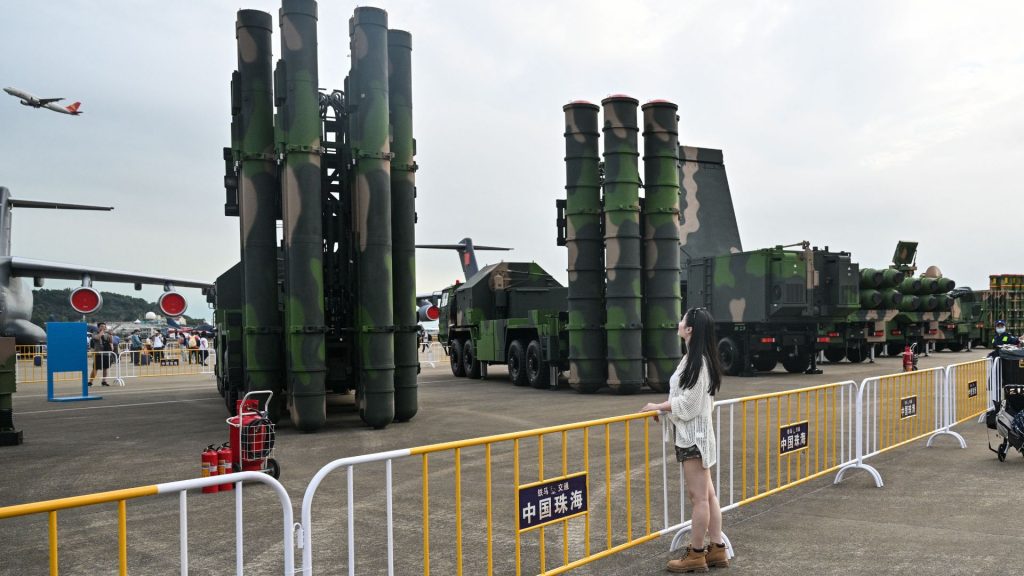
On Saturday morning, Iranian government officials, including Supreme Leader Ali Khamenei, met at a compound in Tehran despite knowing a joint U.S. and Israeli strike was coming at some point in the future. They had prepared by upgrading their defense system with the Chinese-made HQ-9B surface-to-air missile and felt safe enough to conduct their meeting, but they were mistaken.
Within minutes, Israeli fighter jets bombarded the compound with more than 30 missiles, killing the government officials, including Khamenei. The Chinese air defense system did little to stop the operation, the third time this specific system proved insufficient.
China postures that its HQ-9B air defense system is as capable as America’s Patriot missile platform. On three occasions, it has catastrophically failed to do its job.
Following the 2025 Israeli-American strikes, Iran sought to increase its protection against future attacks. As the negotiations quickly evolved earlier this year, the country began deploying the systems in locations they believed the Israeli Defense Force and the U.S. would attack. Iran previously used Russian-made S-300PMU-2s, but the IDF destroyed most of the country’s arsenal in 2025.
Now, military experts and analysts are wondering if China may be overestimating its military capabilities.
Has China’s air defense system failed before?
In May 2025, Pakistan and India began a brief four-day conflict where both countries used an array of weapons and technology, including air defense systems. Pakistan had purchased China’s defense system and activated it during the attack.
India said its military was able to take out numerous targets, leading to the Pakistan Air Force losing 20% of its infrastructure in the attacks.
“The HQ-9 and HQ-16, have performed poorly. We have successfully neutralized them,” retired Indian Maj. Gen. GD Bakshi told the EurAsian Times.
Bakshi said the Indian military has deployed its own air defense system that outperforms China’s and is about as effective as the Patriot system, saying “Indian technology has indeed surprised the global community.”
Analysts believe the defense system failed because of the Pakistani military officials’ over-reliance on an easy-to-disrupt automated system and the sheer volume of weapons India threw at Pakistan.
Less than a year later, another attack tested China’s systems again, but this time in Venezuela against a much more advanced U.S. military. Venezuela had purchased China’s JY-27A anti-stealth radar to use with the Russian S-300VM SAM system to build a layered air defense network.
During the U.S. raid on Caracas, U.S. radar jammers disrupted the Chinese radar system before the missiles could even lock on. Combat reports indicate there were no confirmed interceptions by Venezuela. The mission was a success for America and another failure for China’s radar system.
Analysts say radar disruptions and a lack of a fully cohesive system led to the system’s failure in Iran over the weekend. Iran had used a defense system comprising Russian, Chinese and domestic technologies. This led to a slower response time since they don’t operate on the same system.
How has China responded?
Since the joint operation against Iran, China has denied supplying Iran with the system. The Chinese embassy in Israel said that it “never exports weapons to countries engaged in warfare and maintains strict controls on the export of dual-use items.”
However, Iranian officials previously said that China was exporting the HQ-9B system to Iran “in significant numbers,” Newsweek reports.
Chinese officials have also pointed to user error as the reason its systems were inadequate, like in the case of Pakistan. The Chinese government took to social media, accusing the Pakistani military of a lack of professionalism in deploying the defense system, according to reports.
The Chinese government also asked the Pakistani government to conceal or destroy any evidence confirming the HQ-9B’s failure, according to the Indian publication Mizzima.
China touts its HQ-9B as comparable to Russia’s S-400 and the American Patriot systems, but much cheaper. All three systems offer anti-ballistic and anti-air capabilities for both low-flying and high-altitude threats.
China’s system has impressed Western experts with features such as the system’s ability to maintain lock on a target after launch, even if enemies jam the ground radar. However, they also point to problems with the system’s radar, which allows jammers to easily exploit it.
In all three instances of the system’s failure, its radar had issues.
What does this mean for a potential Taiwan invasion?
While America’s Patriot defense system has a combat record, China’s HQ-9B is only now being tested and is not performing well. This puts China’s domestic defense in question, since the country has deployed this system on South China Sea. China has also deployed a naval variant of the system on its naval destroyers.
Taiwan is paying close attention to its performance. Shu Hsiao-huang, a scholar at Taiwan’s Institute for National Defense and Security Research, believed the incident in Iran proves that America’s investments in new fighter jets and other high-tech weaponry have paid off.
John Culver, a former CIA senior analyst on China’s military, said China might look scary, but he questions if it could withstand a U.S. strike.
“The force that China has built looks highly capable on paper, but they haven’t been to war in a very long time and their ability to conduct complex, large-scale integrated joint operations is unproven,” Culver told Brookings. “It remains unclear whether even Xi Jinping is confident that the PLA can provide him with real military operations for a decisive victory.”
Ella Rae Greene, Editor In Chief