How ‘no detrimental effect’ became the basis for new ICE detention centers
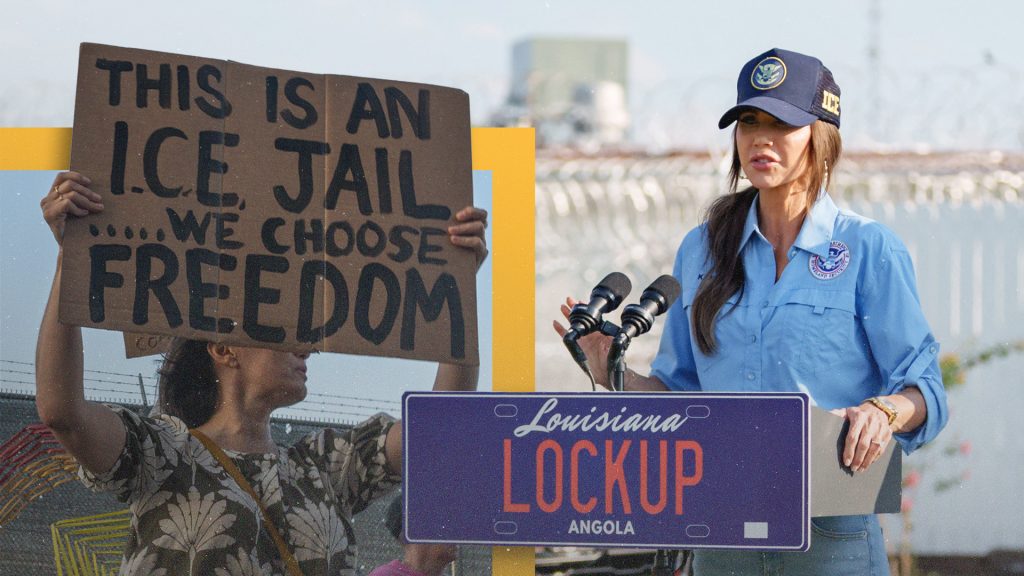
U.S. Immigration and Customs Enforcement (ICE) has determined that new detention centers commissioned as part of the agency’s mass expansion will have “no detrimental effect” on host communities, according to documents reviewed by Straight Arrow News. Yet as protesters across the nation fill streets and pack city council chambers, urging local officials to block the federal plans, many of those same local officials sharply disagree with ICE’s “no detrimental effect” characterization. And now, they are pressing ICE to explain exactly how it reached that conclusion.
SAN first began examining ICE’s quiet acquisition of warehouses after officials in Kansas City, Missouri, told SAN they were blindsided when federal agents toured a potential site there last month.
Local governments often left in the dark
It didn’t stop in Missouri. Across the country, many local governments have learned of immigration detention centers planned for their jurisdictions via media reports or other external sources, rather than through direct notification from federal authorities.
Chris Judd, a city council member in Surprise, Arizona, told SAN he learned of the Department of Homeland Security’s $70 million purchase of a large warehouse — intended for use as an ICE detention center — during a phone call with a reporter, only after the deal had closed.
This pattern of federal secrecy has left local leaders uninformed and unprepared, forcing them to confront angry constituents who demand answers the officials can’t provide.
Escalating Calls for Transparency
The calls for transparency have escalated to the federal level. In a Feb. 4 letter to DHS Secretary Kristi Noem, Arizona Rep. Paul Gosar asked, “What consultations, if any, have occurred with the City of Surprise, Maricopa County, local school districts, and public safety agencies prior to site selection?”
Noem responded two weeks later by writing in part, “ICE and the contractor performing due diligence services did not have direct contact with the city of Surprise or Maricopa County prior to site selection. Site selection was predicated on a ‘No Detrimental Effect’ determination.” The explanation continues: “ICE will continue to engage with state and local stakeholders when appropriate, while ensuring operational security.”
Gosar expressed gratitude for the secretary’s response, thanking her in a statement for her “prompt, direct and transparent response” to his questions.
But local Surprise officials remain unconvinced by the federal assurance of “no detrimental effect.”
“I threw my hands up at that line,” Judd told SAN. “It’s frustrating that they can unilaterally declare that it won’t hurt anyone, so they don’t need to talk to us. How can they possibly know what effects the facility will have when they haven’t even talked to anyone that is responsible for the area?”
Gosar did not respond to a request for comment. But Surprise City Council Member Johnny Melton expressed skepticism about DHS’s methods for evaluating the detrimental effects.
“What does that mean? Can we talk about that?” Melton asked. “Does ‘no detriment’ mean you have your own medical services — you’re not going to call us?”
According to Noem’s letter to Gosar, ICE will have a fully staffed medical unit to deliver “primary care” to immigrants in detention.
“ICE strives to maintain a cooperative partnership with local governments, including local fire departments, law enforcement and EMS,” Noem wrote. “ICE reimburses local partners for medical care and medical services provided.”
How is “detrimental effect” determined?
The “no detrimental effect” designation has also been cited in federal documents pertaining to a proposed detention center in Merrimack, New Hampshire. ICE had planned to convert a warehouse into a short-term processing facility for 400 to 600 immigrants, with average stays of three to seven days. An ICE document titled “ICE Detention Reengineering Initiative” concluded the site would impose “no detrimental effect,” citing assessments of electricity, water usage, waste exportation and fire protection systems. The final site selection rested on this determination.
Local officials and residents in Merrimack who raised concerns over potential infrastructure strain and community impact said they learned of the proposal through media reports rather than direct federal notification. Opposition from state leaders intensified after the plan surfaced.
On Feb. 24, Gov. Kelly Ayotte announced that DHS would not proceed with the Merrimack facility following discussions with Noem.
DHS did not provide direct answers to SAN’s questions about the meaning behind the term “no detrimental effect.” Rather, in an email, agency representatives wrote that the Surprise site “will be a very well-structured detention facility meeting our regular detention standards. Sites will undergo community impact studies and a rigorous due diligence process to make sure there is no hardship on local utilities or infrastructure prior to purchase.”
Melton, in Surprise, told SAN he remains concerned.
“This could be a strain on our resources,” Melton said. “They have to do a lot of modifications, a lot of plumbing — are they gonna coordinate with us for the wastewater?”
The ICE Detention Reengineering Initiative documents show the larger facilities would need additional infrastructure. The warehouse purchased by ICE in Surprise is intended for short-term detainment with fewer occupants than the larger detention centers.
In Noem’s response to Gosar, she stated “ICE does not anticipate requiring infrastructure upgrades to surrounding areas. However, a site and engineering evaluation will be completed for this location. ICE has completed feasibility studies and site fit assessments for this facility, which we will provide to your office.”
Beyond potential strains on utilities and services, local officials say a more fundamental question looms over the project: the treatment of those held inside.
“Are these detainees going to be treated humanely?” Judd asked. “What kind of assurances can you give us that we’re not going to have terrible headlines coming out of this facility?”
Ella Rae Greene, Editor In Chief