Medal of Honor recipient Bruce Crandall, whose heroism was chronicled in ‘We Were Soldiers Once,’ dies at 93
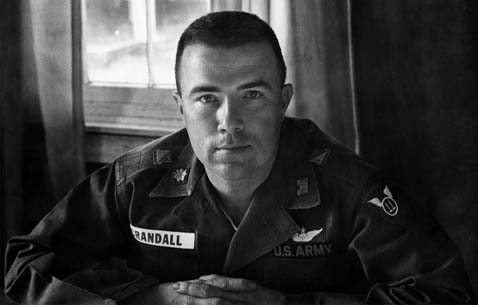
Ret. Col. Bruce Crandall, who led more than 900 combat missions during two tours in Vietnam and received the Medal of Honor for repeatedly flying his helicopter into intense enemy fire to evacuate dozens of wounded troops, died on May 31. He was 93.
Crandall, while recognized for his heroism, will be best remembered for the “warmth of his wit, the depth of his humility and the fierce loyalty he gave to the people and communities he loved,” according to a Congressional Medal of Honor Society release.
Born in February 1933, Olympia, Washington, the All-American athlete had dreams of being drafted by the New York Yankees and earned a scholarship to the University of Washington. That dream was deferred, however, when Crandall was drafted by the U.S. Army in 1953.
Crandall would subsequently receive the nation’s highest honor for valor during the Nov. 14, 1965, Battle of Ia Drang — the first major clash of the Vietnam War, made famous by the book We Were Soldiers Once … and Young: Ia Drang–The Battle That Changed the War in Vietnam and the subsequent movie of the same name.

On that day, Crandall led 16 helicopters carrying soldiers into Landing Zone X-Ray in the Ia Drang Valley, but as the fighting intensified, orders came down for follow-on aircraft to abort their mission, meaning all medevac assistance had been cut off to the men of the 1/7 Cav.
“The medevac pilots were all great pilots, but they weren’t allowed to land on a landing zone until it was ‘green’ for a period of five minutes,” meaning it wasn’t being relentlessly attacked, Crandall later recalled.
Crandall recognized that the men he had shuttled into Ia Drang were trapped, in desperate need of ammunition and, for some, medical evacuation.
Contacted on the radio by Col. Ramon Antonio “Tony” Nadal, Crandall recalled that Nadal was yelling, “I got to have — get my wounded out of here. I’ve got 12 guys that are — and they’re collected, and I have a hole where a helicopter can get in, but they won’t come.”
In response, Crandall refueled, kicked off his door gunner and weaponry to lighten his load.
“If you have infantry on the ground, you can’t shoot up their backside,” Crandall said, calling the M60 guns “worthless.”
Ignoring the heavy enemy fire, Crandall, alongside his friend Maj. Ed Freeman, voluntarily flew 22 missions into the valley to deliver ammunition and evacuate some 70 wounded soldiers.
“While medical evacuation was not his mission,” reads his Medal of Honor citation, “he immediately sought volunteers and with complete disregard for his own personal safety, led the two aircraft to Landing Zone X-Ray. Despite the fact that the landing zone was still under relentless enemy fire, Major Crandall landed and proceeded to supervise the loading of seriously wounded soldiers aboard the aircraft.
“Major Crandall’s voluntary decision to land under the most extreme fire instilled in the other pilots the will and spirit to continue to land their own aircraft, and in the ground forces the realization that they would be resupplied and that friendly wounded would be promptly evacuated,” the citation continues. “This greatly enhanced morale and the will to fight at a critical time.”
Crandall would ultimately fly nearly 1,000 combat missions and was further commended for rescuing 12 wounded soldiers during a dense jungle operation in January 1966, according to the Department of Defense.

In 1968, four months into his second tour in Vietnam flying Huey gunships in support of the 1st Cavalry Division, Crandall’s helicopter crashed, breaking the pilot’s back among other severe injuries that left him hospitalized for five months.
The broken back didn’t deter Crandall for flying, but a subsequent stroke in the early 1970s ended his flying career. He retired from the Army in 1977.
Crandall, who initially received the Distinguished Service Cross for his actions at Ia Drang, was awarded the Medal of Honor on Feb. 26, 2007, by President George W. Bush.
With Crandall’s passing there are now only 63 living Medal of Honor recipients.
Ella Rae Greene, Editor In Chief