Greenland holds vast mineral wealth. Getting it out of the ice is the hard part
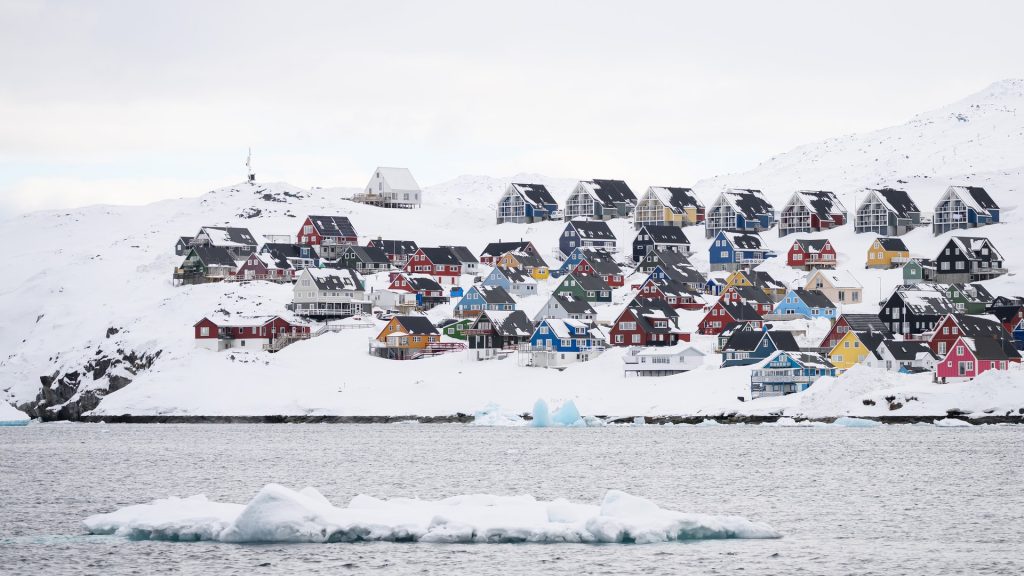
Greenland contains a wealth of natural resources. And much like the Trump administration’s push to control oil in Venezuela, the pressure on Denmark to cede control of Greenland could unlock vast energy resources for the U.S. in the form of oil and gas as well as minerals to feed the technology sector.
President Donald Trump has emphasized how control of Greenland — population 57,000 — will improve U.S. national security and ensure that neither China nor Russia seizes the territory, a scenario that few foreign policy experts think is likely.
“NATO becomes far more formidable and effective with Greenland in the hands of the UNITED STATES,” Trump wrote in a recent post on Truth Social. “Anything less than that is unacceptable.”
Greenland is a semi-autonomous territory of the Kingdom of Denmark. Officials representing Greenland and Denmark have said they have no interest in selling the large, ice-covered island that bridges the North Atlantic and Arctic oceans. It’s unclear whether the U.S. will take no for an answer, and several European nations have sent troops to Greenland for military exercises and a show of force in recent days.
The potential price tag for Greenland has been estimated at $700 billion, or more. But Greenland’s natural resource wealth is undoubtedly part of the appeal for U.S. officials. While Denmark represents Greenland in international affairs, the territory has autonomy over developing its oil and mineral wealth. Europe and the U.S. have both pointed to Greenland as a potential source of minerals that could break China’s control over supply chains.
Regardless of who controls Greenland, accessing its wealth is easier said than done.
How big is Greenland’s natural resource potential?
Greenland’s 4 billion-year geological history has created unusual resource diversity, from some of Earth’s oldest rocks to truck-sized lumps of native iron and diamond-bearing kimberlite “pipes” discovered in the 1970s but never exploited.
Unbiased. Straight Facts.TM
Greenland has only 93 miles of roads across an island three times the size of Texas.

Greenland is estimated to hold approximately 36 million metric tons of rare earth elements. Those minerals are essential for batteries, wind turbines, electric vehicles and defense technologies. However, only 1.5 million tons are currently considered proven, economically viable reserves, according to research from the Center for Strategic and International Studies (CSIS).
The European Union has identified that Greenland has 25 of 34 critical raw minerals, including graphite, lithium, copper, zinc and gallium, according to Barron’s.
The Kvanefjeld deposit in southern Greenland contains over 11 million metric tons of mineral reserves, including 370,000 metric tons of heavy rare earth minerals. Another deposit currently under development, the Tanbreez mine, contains an estimated 28.2 million metric tons with over 27% heavy rare earth minerals. Greenland also possesses 270,000 tons of uranium, making it the eighth-largest uranium deposit globally.
The island also contains an estimated 31 billion barrels of oil and hydrocarbons, roughly equal to the entire volume of U.S. proven crude oil reserves.
Why is Greenland’s wealth difficult to access?
Despite this wealth, Greenland currently operates only two mines — the Nalunaq gold mine and the White Mountain anorthosite mine. While projects like Tanbreez are in the works, no rare earth or uranium projects have entered commercial production.
Extracting more resources out of Greenland requires major infrastructure investments. Even if mining began today, Greenland’s mineral wealth could take a decade or more to translate into meaningful supply.
Greenland has only 93 miles of roads across an island three times the size of Texas. Ice covers more than 80% of the surface, with vast deposits buried beneath ice exceeding a mile thick, according to a report from the Atlantic Council. Temperatures reach below minus-40 degrees Fahrenheit, making traditional road construction impossible. Transportation expenses can exceed mining costs.
Greenland’s existing ports also have a limited capacity, and electric grid capacity near mining is also relatively low, the CSIS report found. The lands are publicly owned, and locals often oppose mining projects.
As the climate changes, an area the size of Albania has melted since 1995, exposing more resources but creating what geologist Jonathan Paul calls “an unfortunate dilemma,” in an article for The Conversation.
“Should Greenland’s increasingly available resource wealth be extracted with gusto, in order to sustain and enhance the energy transition?,” Paul wrote. “Doing so will add to the effects of climate change on Greenland and beyond, including despoiling much of its pristine landscape and contributing to rising sea levels that could swamp its coastal settlements.”
The post Greenland holds vast mineral wealth. Getting it out of the ice is the hard part appeared first on Straight Arrow News.
Ella Rae Greene, Editor In Chief