Trump wanted Republicans to ‘pick up’ 5 House seats. Instead, they could lose.
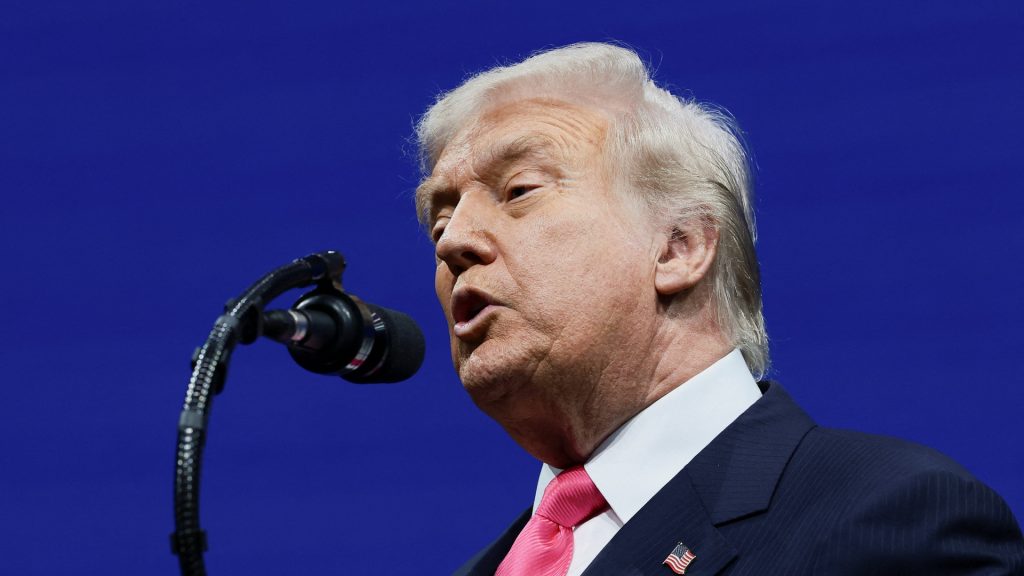
President Donald Trump pushed this summer for Texas Republicans to add to their slim majority in the House of Representatives by redrawing congressional boundaries in their favor. He later encouraged Republicans everywhere to do the same to secure wins in the 2026 midterm elections.
But the results haven’t been what Trump envisioned. Courts, lawmakers and citizens have stopped these efforts in their tracks.
Across the nation, mid-decade redistricting that favored Republicans has succeeded only in Missouri and Ohio. In Ohio, it required an 11th-hour compromise. Elsewhere, lawmakers rejected Trump’s push, residents sued over maps, or voters approved ones favoring Democrats.
The latest loss occurred in Texas, where a panel of three judges — appointed by various presidents — tossed out a new map that likely would have given Republicans the five-seat advantage Trump instructed them to obtain. U.S. District Court Judge Jeffrey Brown, whom Trump appointed, said the map showed clear evidence of racial gerrymandering. Gov. Greg Abbott, a Republican, said he’d appeal the decision to the Supreme Court.
“Substantial evidence shows that Texas racially gerrymandered the 2025 Map,” Brown said.
If the Texas ruling survives the Supreme Court appeal, Democrats are set to likely add six seats, while Republicans could add four.
Those moves have dealt blows to Trump’s aspirations to retain a trifecta in the federal government and have affected his relationships with GOP members. He sought the seats in anticipation of the 2026 midterm elections, when a president’s party typically loses seats.
Despite the losses, Trump remains optimistic he’ll pull wins before the end of the year in urging Indiana Gov. Mike Braun to empower the Legislature to start the redistricting process.
“I am working with Governor Mike Braun and other Indiana Republicans, on picking up two Republican Congressional seats,” Trump wrote on TruthSocial hours before the Texas ruling. “The Governor, a good man, must produce on this, or he will be the only Governor, Republican or Democrat, who didn’t.”
Redistricting fights in the nation
Fights that Trump ignited in California, Florida, Illinois, Indiana, Kansas, Louisiana, Maryland, Missouri, Nebraska, New York, North Carolina, Ohio, Utah, Texas and Virginia caused an unusual timing of redistricting. The methods that states use to redraw maps typically do not draw national attention, and usually occur only after the results of the decennial census are released to show population changes.
Trump’s insistence on creating Republican strongholds caused apprehension among many state lawmakers, as redistricting is regulated by the states and can involve weeks or months of debate over the fairness of the maps. In states like Arizona, Idaho, Michigan and Washington, independent commissions are in charge of creating nonpartisan maps.
Most states, however, do not rely on commissions, and many were thrown into Trump’s unexpected frenzy for creating new GOP-majority districts.
So far, his push for redistricting to favor Republicans has failed in Indiana, Kansas, Nebraska, Utah and Texas. In Indiana, Kansas and Nebraska, lawmakers rejected Trump’s urging and his threats to support primary challengers. Braun, a Republican, also laid out primary threats on Tuesday when he urged the Indiana Legislature to “support Trump’s efforts.”
Indiana state Sen. Travis Holdman, a Republican who’s the majority caucus chair, said in a statement he’s focused on winning Republican seats through elections rather than redistricting.
“The message from my district has been clear — they do not support mid-cycle redistricting, and therefore I cannot support it,” according to the statement reported by Politico.
In Utah, a state judge said the map violated a voter-approved 2018 referendum and immediately adopted a map that gave Democrats a chance to win a seat that involves much of Salt Lake City.
Trump administration litigates maps
In California, Gov. Gavin Newsom, a Democrat, urged his party to pass legislation to offset Texas’ efforts. State lawmakers came up with a plan that netted five new strongly Democratic districts — a map that voters overwhelmingly approved for the 2026 elections. The ballot measure, known as Proposition 50, also temporarily paused the California Citizens Redistricting Commission’s authority in handling mapmaking for the state until after the midterm elections.
The Justice Department has joined a lawsuit filed by California Republicans to challenge the new map, a case similar to the one Democrats filed in Texas.
Litigators allege the California map creates new district boundaries specifically to benefit Hispanic voters and thus should be thrown out.
However, the man who drew California’s map doesn’t believe the Trump administration will win in the lawsuit just because Texas’ was overturned.
“No, this doesn’t undo #Prop50,” Paul Mitchell wrote on X. “The trigger language was removed in the legislative process as it was clear that TX was redistricting. So, even if their map is invalidated/postponed, the Prop 50 maps stay in place.”
One other redistricting effort, completed before Trump’s demands to Republican states, is being closely watched. The Supreme Court recently heard arguments in Louisiana v. Callais, and the outcome could either nullify or harden a provision in the Voting Rights Act that calls for equal representation to Black Americans in Congress.
The post Trump wanted Republicans to ‘pick up’ 5 House seats. Instead, they could lose. appeared first on Straight Arrow News.
Ella Rae Greene, Editor In Chief