Why the ground beneath you can make an earthquake more deadly
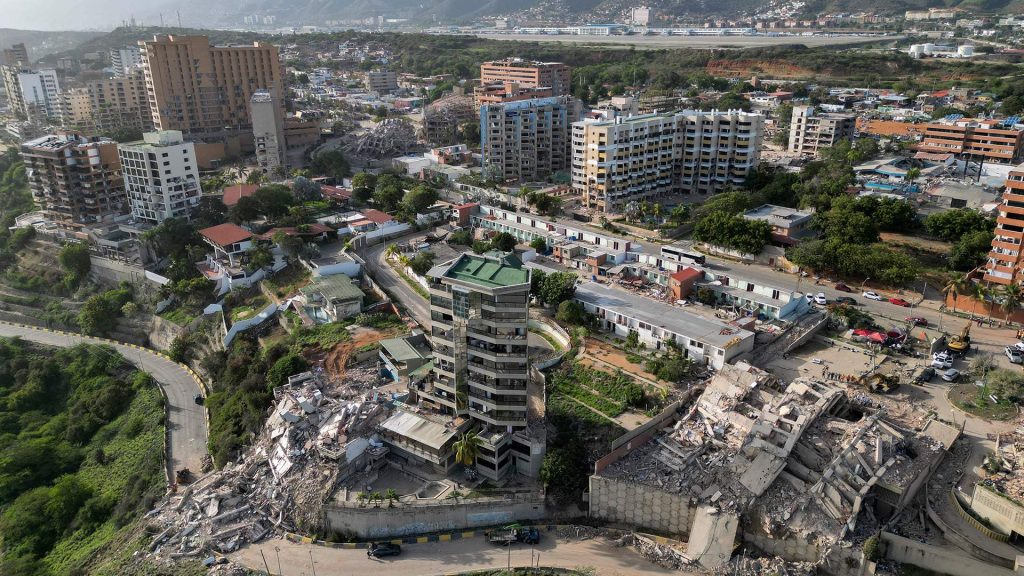
Earthquakes strike quickly and without warning, making them one of the most dangerous natural disasters in the world. The level of damage done by a quake depends on several factors with, of course, the top factor being how strong that quake is.
One important factor in how severe an earthquake will be is something many people typically don’t consider: the type of ground that is shaking underfoot.
“We typically categorize site conditions or the geologic conditions as stiff or soft, so hard rock or soft rock or sediments, and they respond differently to earthquake shaking,” Grace Parker, research geophysicist at the U.S. Geological Survey, told Straight Arrow.
Soil conditions
Nearly 2,000 people are dead following twin earthquakes in Venezuela, and that number will likely only get higher.
While many factors contribute to why those quakes had such an impact, the city of Caracas is built on what is considered soft soil.
“Caracas is well known to have soft soil layers that produce resonance at certain periods of vibration that in some cases align with buildings and can be very damaging,” Jonathan Stewart, professor of civil and environmental engineering at UCLA, told Straight Arrow.
When seismic waves travel through softer soil, they slow down. which only amplifies the shaking due to conservation of energy.
“You can kind of think of that like if you were to hold a Jello cup in your hand and shake it, where the Jello is like a soft soil, the top of the cup will wiggle,” Parker said. “That’s kind of like an earthquake traveling through those soft soils. The top is amplified when you stop shaking it, right? The Jello might keep wiggling afterward. So, the duration of shaking might become longer, and those are the types of effects that we expect for softer site conditions.”
That’s very different from a place that’s built on hard soil.
Hard, dense ground generally reduces earthquake shaking because it doesn’t deform as much when seismic waves pass through it.
Instead of amplifying the waves, hard rock transmits them with less increase in motion, so buildings often experience less intense shaking.
“All other factors being equal, firmer site conditions, whether it’s rock or firm soil, will have weaker shaking than very soft soils,” Stewart said.
That’s not the best news for California, which carries the biggest risk of earthquakes.
Many of the state’s major cities like Los Angeles and San Francisco are built on soft sedimentary basins.
That was shown during the famous 1989 Loma Prieta earthquake that happened live on television during the World Series.
Experts believe the strong shaking was amplified twofold because of the softer base.
“We certainly have the potential for significant amplification of ground motion through these sediments,” Stewart said.
California sits on a major fault line called the San Andreas Fault. It separates two major tectonic plates known as the Pacific Plate and the North American Plate.
Start heading east, and you won’t hit the next major tectonic plate boundary until you get into the middle of the Atlantic Ocean.
That doesn’t mean other parts of the U.S. aren’t at risk of quakes, but they are far less frequent.
There are deep, soft basins similar to California in the eastern U.S. that would cause issues if they were to experience a major earthquake.
“They have very deep sediments there, and there’s also an Atlantic coastal plain that has some deeper sediments,” Stewart said. “So, there are certainly deep soil conditions in other parts of the U.S., but aside from those coastal plains, the soil deposits tend to be relatively shallow in the eastern part of the U.S.”
Other factors
The biggest factor when it comes to damage from an earthquake is clearly the magnitude. Bigger earthquakes mean more shaking, which means more potential damage.
Another factor is how far away a given place is from the fault line.
The Venezuelan earthquake occurred along the San Sebastián Fault, which is roughly 6 to 9 miles from Caracas.
Another big actor in earthquake damage is preparedness.
Caracas has many older buildings that haven’t seen extensive retrofitting like those in California over the last two decades.
“They’re economically disadvantaged,” Stewart said.
Venezuela adopted new building codes over the last two decades, but that really only helps newly built structures.
Venezuelan experts also mapped out neighborhoods known to be built on softer sediments and thus, more at risk of earthquake damage. Figuring out the soil type certainly influences preparedness and those building codes.
“The USGS produces national seismic hazard models that become the basis of our building codes, and those take into account variations in the site conditions in the U.S.,” Parker said.
‘The Big One‘
It’s not a matter of if, but when, a massive earthquake hits California.
“It’s gonna happen,” Stewart said.
The state has been working for decades to prepare as best they can for that event including the retrofitting, passing seismic building codes, strengthening infrastructure and the ShakeAlert early warning system. Because California has prepared, Stewart does not expect the damage to be as catastrophic as what we’ve seen in Caracas.
That doesn’t mean it won’t be bad.
“If the earthquake were to happen tomorrow, we will have some of these buildings come down, and we will unfortunately have fatalities,” he said. “As time goes on, these buildings are being either replaced or retrofitted, so I think time in that respect is our friend.”
The deadly quake in Venezuela serves as a reminder to Californians of what could come.
“Secure your space,” Parker said. “Make sure there’s nothing that can fall on you during earthquake shaking. Have a plan and figure out how you’re going to communicate after an earthquake, and have an earthquake kit.”
Round out your reading
- America at 250: Straight Arrow’s week-long look at the pressures testing modern America.
- Ketamine is booming in America. The reasons go beyond drugs.
- Cluster of AI news sites suddenly goes dark after human reporter starts asking questions.
- A 79-year-old, obese, well-connected man gained exclusive access to a new weight loss drug. Is it Trump?
- Newsom pushes national wealth tax after opposing California billionaire tax.
Ella Rae Greene, Editor In Chief