Why newsrooms are banning journalists from betting in prediction markets
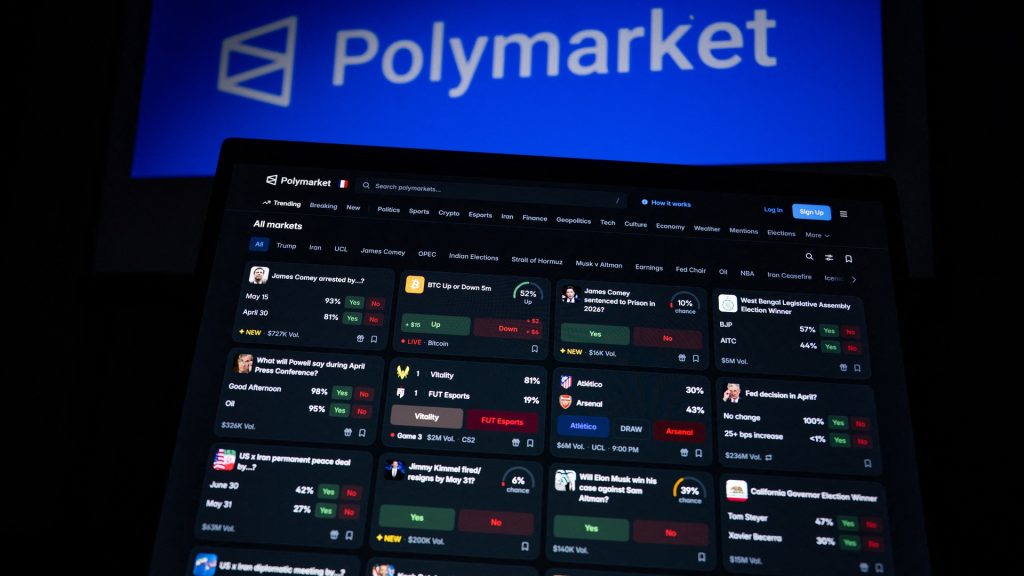
Ethics is a core pillar of journalism. It often plays a significant role in what is covered and how it’s covered, and helps newsrooms establish policies for journalists. And in this day and age, there are quite a few ethical dilemmas popping up in newsrooms, from using artificial intelligence to write stories to the latest: prediction markets and the role they play in journalists’ lives.
Those ethics conversations are now leading to restrictions in the newsroom and may have some wondering how much power employers really have over their staff.
Policing betting market use
In a unique move on Monday, the publication ProPublica announced it updated its code of ethics to address prediction markets. Employees at the nonprofit news organization are no longer allowed to place bets on news-related topics.
“According to a recent update to ProPublica’s code of ethics, ‘no employee should wager on the outcome of news events on the prediction markets — regardless of whether or not they are involved in coverage of said event,’” ProPublica wrote in an article Monday, announcing the change.
The thought behind the change revolves around insider information and protecting the organization’s reputation. Journalists are often privy to information the public may not be aware of, or come up with a “scoop,” meaning they learn something before the public does.
Taking that information, whether it’s just additional details or a sneak peek at something that’s coming, and betting on it, breaches ProPublica’s existing policy of prohibiting employees from profiting off inside information.
Plus, the publication noted, if an employee has a financial interest in an outcome, how can readers be sure the publication’s coverage is unbiased?
“It felt imperative for us to establish professional boundaries in a world where a person can have a financial stake in almost anything,” ProPublica wrote Monday.
And they’re not the only ones policing the use of prediction markets. NPR issued guidance prohibiting employees from betting on which artists would appear in its upcoming Tiny Desk concerts, Time magazine prohibits the use of prediction markets, and The New York Times has a broad ban on betting on news events.
The legalities of it all
Now, it may seem obvious that betting on things journalists have extra information on is a big no-no, but do these policies leave newsrooms controlling too much of their employees’ lives? The answer to that depends on the person. But what we can say is it’s completely legal.
It all comes down to “at-will” employment. In the U.S., all employment is considered “at-will,” meaning companies have the right to establish their own terms of employment.
They can lay out specific employment requirements, including ethics codes, for continued employment. If those requirements aren’t met, they have legal rights to punish employees or terminate their employment altogether.
There are exceptions to the doctrine, which is why we sometimes see wrongful termination lawsuits, but the exceptions are limited, vary by state and are often hard to prove.
So, at the end of the day, employers can ban employees from using prediction markets. Employees may not be happy about it, but it’s the law of the land.
And get this, prediction market bans aren’t the only thing it impacts.
Newsrooms also police social media
This at-will doctrine is also what gives newsrooms the right to control what employees share on social media.
From journalism school through professional careers, journalists have to be especially cautious about their social media posts. Voicing opinions or stances on certain issues can be grounds for dismissal, even if what was posted wasn’t particularly harmful.
Take a former Wisconsin meteorologist, for example. In 2025, Sam Kuffel of WDJT-TV in Milwaukee criticized Elon Musk on her Instagram account for a hand gesture many compared to a Nazi symbol.
The next day, the station informed staff by email that Kuffel was no longer employed with the company.
Round out your reading
- Could a common dietary supplement accelerate Alzheimer’s?
- NY AG Letitia James gets hundreds of taunts, racial slurs in ICE public reporting portal.
- As Musk becomes the first trillionaire, historian sees warning signs.
- An experimental weight loss drug is so effective, many Americans don’t care it’s not FDA approved.
- How search engine optimization reduced Simone Biles to an ‘NFL wife’.
Ella Rae Greene, Editor In Chief