Why cities are eyeing nonprofit real estate to solve their budget crises
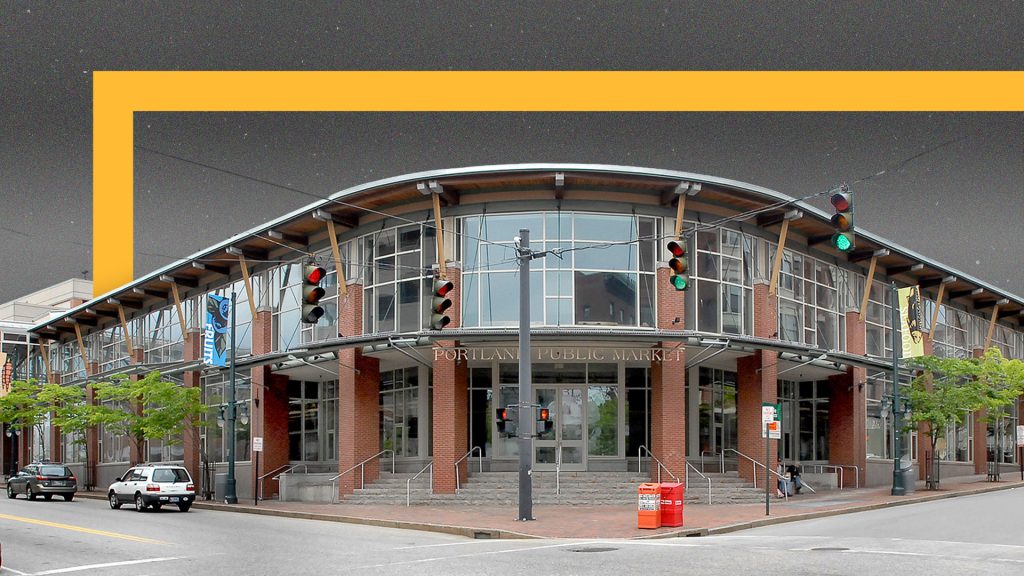
When Maine Public bought a largely empty building for a new studio in Portland, it figured the deal would come with the same property tax exemption that the radio and television nonprofit has long claimed for sites it owns in two other Maine cities.
In February, the Portland tax assessor sent a bill anyway.
Nobody disputes that Maine Public is a nonprofit. And Maine state statutes allow nonprofits with “benevolent” and “charitable” missions to bow out of paying property taxes.
But does that include Maine Public?
Did it ever?
“To be fair, we made assumptions that turned out not to be accurate,” president and CEO Rick Schneider told Straight Arrow. “The assumption was, we’re a nonprofit, of course we’re going to be exempt.”
The city’s denial of the property tax exemption surprised everyone, he said, including the organization’s board, lawyers and supporters.
Similarly surprised: 16 other Portland nonprofits, including several neighborhood arts centers, who also were informed that they must start paying taxes on their properties. Portland’s assessor explained in a statement that the city reinterpreted existing state law and decided to require the groups to pay property taxes after all. The city declined to comment further.

Why do nonprofits have to pay property taxes?
Across the country, some municipal assessors are taking the same steps — challenging local nonprofits to pay property taxes — in most cases, for the very first time. Shellshocked nonprofits are scrambling to fight back and appeal to state legislatures to formalize their tax advantages.
Nonprofits are granted that status by the federal Internal Revenue Service, but other aspects of tax exemption stem from state law. If states don’t specify the tax privileges they extend to nonprofits, municipalities must determine whether nonprofits qualify for a tax exemption. Now, things are getting messy in cities and states across the country.
READ MORE: Nonprofit donor anonymity overhaul faces free speech skepticism
In Connecticut, the town of Colchester informed the Caring Communities, which runs residential homes for people with developmental disabilities, that it didn’t qualify for a tax exemption because it received substantial state funding. This April, a state superior court affirmed that Caring Communities more than qualified.
The city of Kentwood, Michigan, wants Holland Home, a church-affiliated residence for seniors, to continue paying property taxes, arguing it can’t afford to forfeit $673,000 in annual revenue. In April, Holland Home asked the state to pass a law assuring it and similar nonprofits are officially exempt from paying property taxes.
Officials for neither the nonprofits nor the governments in either state would comment.

Why do local governments cut tax exemptions for charities?
The eruption of tax exemption battles is partly due to financial need and partly to public mood, according to nonprofit consultants. Current federal budgets cut funding for local services, leaving counties and municipalities to scramble for ways to pay for programs that many residents count on. Inflation also pinches local government budgets. And property owners that do pay taxes — especially homeowners — aren’t enthusiastic about shouldering ever-increasing bills while some organizations pay nothing, nonprofit consultants told Straight Arrow.
“When land is lost to nonprofits, taxpayers have to pay more,” said Matthew Putnam, policy manager with the National Taxpayers Union, an advocacy group.
The challenges coattail on widely held skepticism about the value that big landholding nonprofits, like universities and hospitals, return for their myriad tax advantages, said David Heinen, vice president for public policy and advocacy for the North Carolina Center for Nonprofits.
“It’s consistent with the argument of taxing the endowments of wealthy universities that charge tuition,” said Heinen. “It’s just a matter of scale. And mix in small-town politics.”
Assessors might think the moment is ripe, given the tone set by the Trump administration that political norms are irrelevant, said Ofer Lion, a partner with law firm Seyfarth Shaw LLP.
Still, the fundamental question, Lion said, is a good one: Are nonprofits giving back to their communities at least as much as they take by occupying untaxed property?
READ MORE: How to rescue your charitable donations from philanthropic purgatory
“Nonprofits tend to think of potential tax collection as the arm of the government that’s coming for them, but that’s the government that represents all the people who are paying taxes that you’re not,” he told Straight Arrow. “We the people want to know if we’re getting our money’s worth. We can show you how much tax you’re not paying, to the penny. Is it worth it?”
The debate becomes especially acute when nonprofits directly compete with for-profits that do pay property taxes, Lion said. For instance, a community center that hosts childcare at subsidized rates ostensibly competes with for-profit child-care franchises. That’s partly why nobody is seriously proposing that churches pay property taxes, Ofer said: They have no for-profit corollary.

How do nonprofits prove their economic value to cities?
It’s up to nonprofits to make their economic case.
“It’s easier for some nonprofits to quantify the value of their services than others,” said Nancy Wolanski, director of the Alliance for Nonprofit Impact, which represents organizations across Rhode Island, where the state Supreme Court found in April that an agency that serves low-income seniors must pay property taxes to its host city of Providence because such nonprofits are not specifically granted tax-exempt status by state law.
“If you’re providing after-school programs, you can count the kids and the market value of tutoring. If you’re not providing direct services, it’s difficult to quantify,” Wolanksi told Straight Arrow.
For years, hospitals and universities in Chicago, Boston, Providence and other nonprofit-rich cities have estimated the dollar value of their charity care, economic development impact and programs. For some, the calculations translate to a voluntary contribution called a Payment in Lieu of Taxes (PILOT).
Such valuations don’t work for other types of nonprofit missions, said Wolanski, citing “safety net” services such as behavioral health agencies, as “essential to a functioning society.” Some arts and culture organizations that enhance community life can’t directly prove their market value, either, even though they help create the quality of life that economic development advocates love to promote, said Wolanski and other nonprofit advisors.
State legislators are now facing calls from nonprofits and their communities to transition tax exemption traditions into law. Consistency and equity are overarching goals for legislative reform, say nonprofit consultants.
North Carolina, for instance, just tweaked an affordable housing property tax exemption to ensure that for-profits can’t give themselves a free tax ride by giving housing nonprofits a tiny slice of a deal. For-profit investors had crowded into affordable housing deals, stripping counties of millions of dollars of property tax revenue. Now, to qualify for a property tax exemption, an affordable housing project must be fully owned by a nonprofit or governmental entity, Heinen said.
Municipalities and nonprofits can convert their angst to craft new avenues of economic contribution that honor both, said Putnam, of the NTU.
Cities like Portland need to realize that inflicting taxes on small nonprofits is more likely to shut them down than raise significant revenue, he said.
PILOTs are overkills for small organizations, he said. Some cities are considering asking only nonprofits with significant revenues to contribute. Others are “gauging the request based on the proportion of services they use,” Putnam said.
The opposite economic calculation could also work, he said: figuring how much it would cost local government to directly do the work of nonprofit domestic violence shelters, for instance. “Programs actually do improve the community,” Putnam said.
While nonprofits must fight economic challenges with economic metrics, they also seize the chance to address the greater issue of unquantifiable value that lies outside the math, said Janetta Cravens, founder of nonprofit consulting firm CoSpire Consulting.
“We’ve fundamentally failed to frame donors’ return,” she told Straight Arrow. “The way forward is that we have to rethink how nonprofits contribute to communities.”
That means adding context around the economic drivers — and that’s a job for nonprofits’ communities, which are perfectly positioned to articulate the quality of life delivered when nonprofits fulfill their missions.
“There’s value coming together to work on a model of contribution, across social and political lines,” said Cravens, “and to see the sector as contributing to society: If the nonprofit were not to be there, there would be a deficit and we’d all be poorer for it.”
Round out your reading
- Plea bargains keep America’s courts running. Guilt or innocence barely matters.
- Trump says the media isn’t covering one of his biggest accomplishments. We checked.
- Mike Lindell denied MyPillow was hacked. Its private data is now online.
- Red meat allergy rises with ticks as HHS targets Lyme disease, alpha-gal syndrome.
- We’re building a new Straight Arrow. Help us shape our future by taking our survey.
Ella Rae Greene, Editor In Chief