Which states are raising their minimum wages in 2026
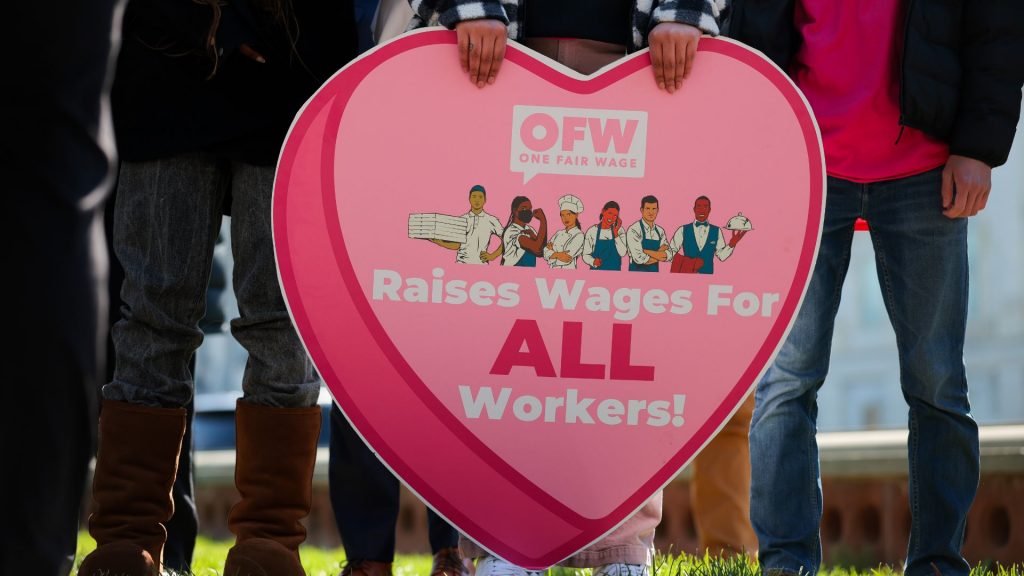
Nearly two dozen states and Washington, D.C., are increasing the minimum wage for workers. The wage hikes come as a majority of Americans say it’s getting harder to keep up with rising prices.
Americans increasingly say they are struggling to keep up with rising costs, but some support is coming for certain workers as 19 states will raise their minimum wage on Jan. 1. Three other states and Washington, D.C., will follow later in 2026.
In 2025, 30 states and D.C. had minimum wages higher than the federal minimum wage of $7.25 per hour. That rate has been the same since Congress passed a wage hike in 2009, raising it from the previous minimum wage of $6.55.
Smaller governments, like cities and counties, are also raising the minimum wage for workers in their areas. While Washington state has the highest minimum wage, the Seattle suburb of Tukwila has a city minimum wage of $21.65 per hour, the highest in the nation.
However, many cities won’t see any changes unless the new state minimum wage is higher than the city’s. According to the Labor Law Center, companies are required to comply with the minimum wage that is the highest in the area.
For example, if the state minimum wage is lower than the federal minimum wage, the company must pay at the federal minimum wage. If a city’s minimum wage is higher than the state and federal minimum wage, then the company must pay the city’s minimum wage.
What areas are raising minimum wage?
In all, 22 states and 49 other cities and counties and Washington D.C., will raise their minimum wages in 2026, according to The Hill.
Many cities with a minimum wage higher than their state’s are raising it even higher. Seattle, which has a minimum wage of $20.76 per hour, is raising it to $21.30 on Jan. 1. That is more than $3 above the state’s 2026 minimum wage of $17.13.
Hawaii is raising its minimum wage nearly 15%, more than any other state, to $16 per hour. Nebraska came in second by 50 cents, raising its rate about 11% to $15.
What effects do wage hikes have?
Increases to the minimum wage have a wide array of effects, both good and bad, according to economists and researchers.
The most direct effect of wage increases is on low-wage workers, who benefit the most from them. Since lower-wage families typically can’t afford to save, economists say they will spend more, which boosts businesses and can produce job creation.
However, for some workers, their pay would fall dramatically, as some companies would cut jobs to offset the increase in pay, according to the Congressional Budget Office. Companies can also recover costs by cutting hours, potentially negating wage increases for some workers.
Studies have shown that higher minimum wages increase productivity and lower turnover. This is good for the business since they don’t have to pay to train new employees as often. But it’s not ideal for those looking for a job.
According to an article published by the Federal Reserve Bank of Cleveland, increasing the minimum wage would reduce overall employment. Companies that cut jobs because of wage increases aren’t looking to hire new employees. That creates a double issue for those seeking employment, as there’s now more competition and fewer job opportunities.
Could Congress raise the federal minimum wage?
The federal minimum wage has remained unchanged since Congress last raised it in 2009. This is the longest period without an increase since Congress enacted the federal minimum wage law in 1938.
Since then, lawmakers have tried several times to increase the federal minimum wage.
Sens. Bernie Sanders, I-Vt., and Bobby Scott, D-Va., proposed the Raise the Wage Act in April, which would’ve raised the minimum wage to $17 per hour by 2030. The senators introduced the bill, but it didn’t go any further in the Senate.
The measure has struggled to pass in a divided Congress, as most Republicans and some Democrats oppose an increase at the federal level. The biggest argument against it is that local municipalities and states would do a better job of addressing wage issues.
In June, Sens. Josh Hawley, R-Mo., and Peter Welch, D-Vt., introduced a bipartisan bill to raise the minimum wage to $15 per hour. That bill has made no progress since it was introduced during a committee meeting.
The post Which states are raising their minimum wages in 2026 appeared first on Straight Arrow News.
Ella Rae Greene, Editor In Chief