What will it take to solve the great American energy puzzle?
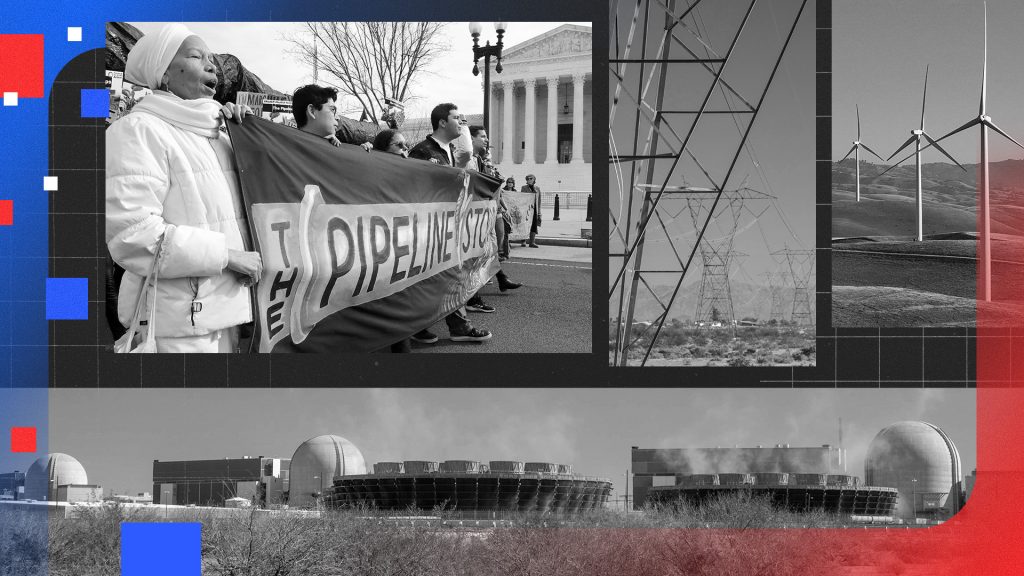

As the United States marks its 250th birthday, Straight Arrow is taking a fresh look at the institutions, systems and social contracts that shaped modern America — and the pressures now testing them.
Michael Skelly has spent most of this century trying to solve a Rubik’s cube. Not the six-colored toy with 43 quintillion possible solutions. Skelly’s career has been dedicated to the puzzle of building energy infrastructure in America.
“To build a transmission project you have to get right the sort of Rubik’s cube of customers — somebody who’s going to pay for the project — along with financing of the project, along with engineering it, along with the landowner part, the regulatory piece, the permitting and so on,” Skelly, who is now the CEO of transmission project developer Grid United, told Straight Arrow. “Putting all those things together to make a project happen is to me a worthwhile endeavor, and an interesting one.”
Aligning every side of this infrastructure puzzle is a challenge for America’s energy systems.
This year has seen a confluence of energy stories: volatile prices at the pump, monthly electric bills that keep creeping up and electricity demand forecasts trending skyward. The laws of supply and demand dictate that the increased access to fuel and electrons should lower costs.
But in the United States, which for much of its 250-year history has relied on relatively cheap energy to fuel its expansion across the continent and its dominance around the world, it has become increasingly costly, time consuming and politically complex to build energy infrastructure. From transmission lines and oil and gas pipelines to nuclear power plants and offshore wind turbines, the United States no longer builds like the rest of the world.
How the US compares to other countries
The nuclear difference between the U.S. and other nations is especially stark.
Since 1996, the U.S. has brought only three new nuclear reactors online, according to the World Nuclear Association. In that time, China finished 58, and India connected 15 to the grid. China has 39 reactors under construction, India has eight and Russia, Egypt, Turkey and South Korea are each building multiple new reactors.
Not a single new large nuclear power plant is currently being built in the U.S., though a handful of small-modular reactors are being permitted, with construction possible within the next year. Instead, three once-retired, large-scale reactors are heading back online.
This construction lag extends beyond nuclear power, or even the entire energy sector, to infrastructure as a whole.
“If you look at a majority of our interstate highway system, or a majority of the oil pipelines we still use today, most of them were built before 1970, before we had a modern environmental statute,” said James Coleman, an energy law professor at the University of Minnesota.
The 2025 Infrastructure Report Card from the American Society of Civil Engineers gave the country’s energy infrastructure a grade of D+; across 18 categories, the nation earned a C average.
Construction of coal power plants peaked in the 1970s. Most U.S. nuclear power plants came online in the 1980s. Since then, natural gas has become the largest source of U.S. electricity — a trend poised to continue as data centers look for power sources.
Wind and solar power additions account for the majority of new energy infrastructure built in the past 20 years. It hasn’t been enough: According to the engineers’ report card, the “rapid acceleration” of new electricity demand, “compounded by federal and state net zero greenhouse gas emissions goals, means utilities will need to double existing transmission capacity to connect new renewable generation sources.”
Permitting delays
Transmission lines, as well as oil and gas pipelines, are especially challenging to build because developers of long-distance projects must navigate federal laws, state-level permits and local opposition.
The National Environmental Policy Act of 1970 (NEPA) requires the federal government to consider projects’ environmental impacts. It also mandates federal agencies to conduct environmental assessments or detailed impact statements for major proposals.
Over the years, NEPA has been used as legal justification in advocacy groups’ lawsuits to stop everything from affordable housing developments to oil pipelines.
The law’s intent is good, Coleman told Straight Arrow. Still, he said, “I don’t think Congress ever intended that [NEPA] would be able to delay projects the way that it has been.”
Local opposition, lawsuits and delays can lead to project cancellations. That’s been the fate of numerous oil and gas pipelines, including Keystone XL, Atlantic Coast Pipeline and the Mountain Valley Pipeline.
The projects drew fierce resistance from environmental groups concerned about climate pollution from burning oil and gas and the potential for pipeline leaks. Building a pipeline or a transmission line also involves invoking eminent domain to seize private property. As a result, communities along proposed routes typically fight each step of the way.
Even if developers win in court, delays can tank energy projects.
In the case of the PennEast Pipeline, which would have carried gas produced in Pennsylvania 115 miles to New Jersey, the state of New Jersey attempted to stop the company from using federal eminent domain law to take 42 parcels of state-owned land.
The PennEast Pipeline Co. eventually prevailed in a 2021 Supreme Court decision, but withdrew the project several months later because of delays and the need for additional state-level permits in New Jersey, according to NJ Spotlight News.
“It’s not the projects that are stopped — it’s all the projects that say, ‘Look at this process’ and think, ‘Wow, this is too unpredictable, this will take too long, this will be too expensive, there’ll be too much litigation, and so we’re not going to go forward,’” Coleman said.
Negative partisanship
NEPA has also stopped renewable energy projects. Bipartisan efforts to reform the federal permitting process have come and gone since the Obama administration, to no avail.
“Neither party wants to give a bipartisan win to a president of the other party,” Coleman said.
The latest legislative effort, known as the SPEED Act, has languished in the Senate since it was passed by the House in December 2025. The Trump administration’s attempts to derail renewable energy projects, including offshore wind farms already under construction, have been a major sticking point in negotiations.
“There are precious few types of energy production that both parties agree on,” said David Spence, a professor of natural resources law at the University of Texas at Austin. “It all depends on whether the people doing the negotiating in Congress like their own projects and their own goals more than they hate the other side’s goals and projects.”
In general, Democrats favor renewables while Republicans favor oil and gas. But the problem goes deeper: With the rise of partisan gerrymandering where districts are increasingly safe for one party, political candidates often focus solely on primary elections.
Candidates “worry about the people that vote in those primaries who happen to be more ideologically extreme and more negatively partisan than even the average member of their own party,” Spence said.
Each state’s partisan balance also leaves certain types of energy projects vulnerable.
A 700-mile, $2.2 billion transmission project called the Plains and Eastern Clean Line received federal backing in 2016 to bring wind energy generated in Oklahoma across Arkansas to Tennessee. From there, the wind power could connect to the Southeast and Mid-Atlantic power grids. After Arkansas legislators campaigned against the project, the Department of Energy withdrew its support in 2018, and the developers shelved the project.
A similar story played out last year for the Grain Belt Express, a 542-mile transmission line in Kansas and Missouri. Sen. Josh Hawley, R-Mo., pressured the Trump administration to revoke a $5 billion Biden-era loan that had been awarded to the project.
In New York, a 2019 state law effectively barred pipelines from winning state-level approvals. Opponents argue that prevents natural gas from reaching New England, making the region dependent on more costly imports during high electricity demand.
The valley of death
Despite the gridlock, there are signs the tide is shifting.
“The rise of data centers and the worries about future power demand are shaking loose some of these projects,” Spence said, which is yielding more willingness among state elected officials to “override local opposition.”
Geothermal and nuclear power have each gained bipartisan support. Fervo Energy raised $1.9 billion in a public offering of the geothermal start-up’s stock in May, Reuters reported.
Geothermal harnesses heat from below the earth’s surface to generate electricity, but the technology currently generates less than 1% of U.S. electricity. Nuclear generates 18%.
Nuclear’s primary obstacle in 2026 isn’t scaling a new technology, nor is it politicization or even permitting woes. The problem is financial, according to Budd Haemer, a senior fellow with the Nuclear Innovation Alliance who has decades of experience in the nuclear industry.
“You have to get across the valley of death, and then there’s milk and honey on the other side,” Haemer said.
That valley of death is the years between when power companies invest the upfront engineering costs to build a new nuclear power plant and the day the plant begins generating electricity. For Georgia Power’s Vogtle Units 3 and 4 — America’s newest nuclear reactors, which began powering the grid in 2023 and 2024, respectively — that valley spanned more than 14 years and cost more than $30 billion, according to the U.S. Energy Information Administration.
“You need somebody with deep pockets and a long time horizon,” Haemer told Straight Arrow.
According to Haemer, Georgia Power’s tribulations are starting to pay off. Revenue is higher than anticipated due to rising electricity demand. And Westinghouse, the company that designed the AP1000 model reactor, is signing deals to sell the model — except they’re in Europe and Asia.
To build more in the U.S., developers need standardized reactor designs and a more predictable process across the supply chain, said Haemer. But rather than building more nuclear plant models that already exist, the nuclear industry continues to pour money into new ventures like small modular reactors and fusion reactors.
“In the U.S., we have a tendency to build one new thing, say, ‘Boy, that was hard,’ and then, like magpies, get distracted by the next thing that promises to be faster and cheaper,” Haemer said. He likened this to technologies like video tapes in the 1980s, adding that no one wants to “wind up sitting there on Betamax when everybody else goes to VHS.”
Can the puzzle be solved?
Whether from a nuclear power plant or an offshore wind turbine, new electricity sources will need transmission lines to be of any use.
Earlier in his career, Skelly worked on land-locked wind projects. In the 2000s when Texas started developing new transmission lines known as CREZ lines to connect renewable energy with population centers, something clicked that changed Skelly’s career trajectory.
Skelly saw that transmission projects could create a symbiotic “alignment amongst folks in rural areas who wanted the economic development, people who were concerned about clean air issues and people who wanted a broader portfolio of energy choices.”
Skelly founded Clean Lines Energy Partners, the company behind the ill-fated Plains and Eastern Clean Line and Grain Belt Express projects. Having experienced those and other setbacks, Skelly isn’t discouraged. He believes he’s closer now to solving the Rubik’s cube.
His new company Grid United has five projects in the works from Montana to Texas with the goal of increasing the amount of power that can be shared from otherwise isolated regions.
“We ought to plan the grid not on sub-regions, but inter-regionally,” Skelly said. “We need a grid that’s bigger than the weather, so that when we have extreme events, we have better ability to move power around the country.”
Progress is being made one click at a time, much like the solution to a Rubik’s cube.
SunZia, a transmission project billed as the largest piece of clean energy infrastructure in the U.S., recently connected wind power in New Mexico to consumers in Arizona. And the Trump administration recently announced $17.5 billion in federal loans to help kickstart construction of 10 new large-scale nuclear reactors by 2030.
With the right combination of moves, the next epoch of American energy could be about to fall into place.
Round out your reading
- America at 250: Straight Arrow’s week-long look at the pressures testing modern America.
- Ketamine is booming in America. The reasons go beyond drugs.
- Cluster of AI news sites suddenly goes dark after human reporter starts asking questions.
- A 79-year-old, obese, well-connected man gained exclusive access to a new weight loss drug. Is it Trump?
- Newsom pushes national wealth tax after opposing California billionaire tax.
Ella Rae Greene, Editor In Chief