What the first local dengue case in Virginia means for Americans
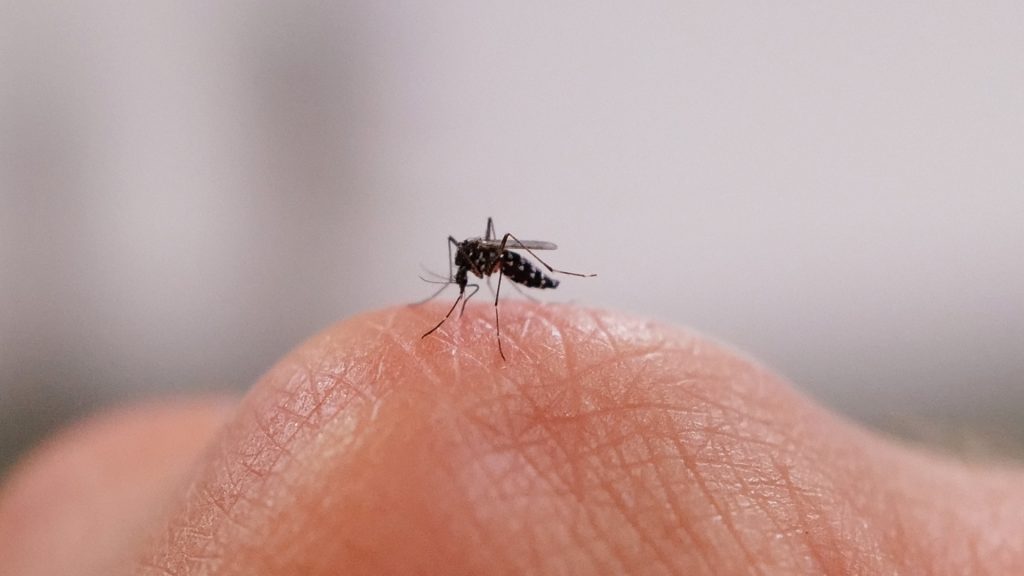
The Virginia Department of Health announced Tuesday that a Northern Virginia resident was infected with dengue, a mosquito-borne viral disease known as “breakbone fever” in many parts of the world for the intense muscle, joint and bone pain it can cause. It is the first locally acquired case in the state’s history, according to health commissioner Cameron Webb.
Officials say the risk of additional infections is low. Only one other state — Florida — has reported a local dengue case this year.
“I want to make sure that people don’t panic, especially living in Northern Virginia,” said Scott Weaver, a microbiology and immunology professor at The University of Texas Medical Branch. “I don’t think there’s going to be a huge dengue outbreak there. That’s very unlikely, but people should always be aware that these mosquito-borne diseases can be present, and nobody knows it.”
Nonetheless, the case comes as dengue surges globally, infecting people in places where it was once uncommon. Scientists say warming temperatures, international trade and travel and rapid urbanization are driving its spread, while uneven mosquito surveillance and control are leaving many U.S. communities unprepared to detect and respond to the threat.
What is dengue?
Dengue is a virus spread through the bite of infected Aedes mosquitoes. It is common in tropical and subtropical regions around the world, including much of Latin America, the Caribbean, Southeast Asia, Africa and the Pacific Islands.
Many infections cause no symptoms at all. For those that do, most people experience a rash, nausea and the tell-tale muscle, joint and bone pain. Symptoms usually begin within two weeks of being bit by an infected mosquito and can last for two to seven days. Roughly 5% of patients develop severe disease, which can cause shock, internal bleeding and, in rare cases, death.
There is no specific treatment for dengue. In the U.S., a dengue vaccine is approved only for children ages 9 to 16 who have laboratory-confirmed evidence of a previous dengue infection and who live in areas where dengue is endemic, such as Puerto Rico. It is not approved for people living in areas where dengue is not routinely transmitted because vaccination without prior infection can increase the risk of severe dengue if a person is later infected. (A second dengue infection, especially with a different strain of the virus, is more likely to cause severe illness or death.)
Several other dengue vaccines are available outside the U.S. The most widely used is Qdenga, which has been approved in dozens of countries in Asia, Latin America and Europe. Some countries also use Dengvaxia under more limited recommendations.
The Virginia case
The Virginia resident diagnosed with dengue had not traveled internationally before becoming ill but had been in close contact with another Virginia resident who recently returned from overseas and was infected with dengue.
Health officials believe the most likely explanation is that a local Aedes mosquito bit the infected traveler while they were contagious and later transmitted the virus to the second patient. The department said there is no evidence of continued community transmission and that the risk of additional locally acquired infections remains low.
While it remains unclear exactly where the infected mosquito acquired the virus, Weaver said the case illustrates how increasing global travel is creating more opportunities for dengue to reach the U.S.
“The vector’s already present,” he said, referring to the Aedes mosquitoes that spread dengue. “It just takes a person unknowingly infected getting on an airplane during the incubation period, and then when they have virus in their bloodstream, being exposed to the right mosquitoes at the right time and place. And that’s happening more and more with increased global travel [and] global commerce.”
Dengue’s rise
Globally, dengue has become one of the world’s fastest-growing infectious diseases. Between January and July 2025, the World Health Organization recorded over 4 million cases and more than 3,000 deaths across 97 countries. Many cases go unreported; the WHO estimates the true burden is closer to 100 million to 400 million infections each year, up from around 500,000 in 2000 and 14.6 million cases in 2024.
Today, the disease is endemic in more than 100 countries, but in recent years, dengue has spread to new countries and regions, including in Europe and the Mediterranean.
The U.S. has also seen a sharp rise in cases, driven primarily by travelers returning from countries experiencing large outbreaks. In 2024, the U.S. reported 3,798 dengue infections — a 359% increase over the annual average from 2010 through 2023, the CDC announced in May. More than 97% of cases were travel-associated, although more than 100 were acquired locally.
So far this year, the CDC has recorded dengue cases in 36 U.S. jurisdictions, including Puerto Rico and American Samoa and 34 states from California to Maryland and as far north as Michigan and Wisconsin. Most infections have been linked to international travel.
Florida, and now Virginia, are the only two states that have reported locally acquired cases in 2026.
Researchers say dengue’s resurgence is driven by several overlapping factors. Warmer temperatures are allowing mosquitoes to survive longer, expand into new areas and, under the right conditions, speed the replication of dengue virus inside the mosquito, increasing the likelihood of transmission. Rapid urbanization has created densely populated environments where Aedes mosquitoes thrive, while heavy rainfall, flooding and even drought-driven household water storage can create additional breeding sites.
Global trade has also helped expand the range of dengue-carrying mosquitoes. Weaver noted that Aedes albopictus — one of the two primary mosquito species that spreads dengue virus — was introduced into the Houston area in the mid-1980s through international shipments of used tires. “Whenever we’re moving materials around the world, there’s always the risk of hitchhikers like mosquitoes or other invasive vectors of human disease,” he said.
Dengue is not the only mosquito-borne disease becoming more common.
Chikungunya, a virus spread by the same type of mosquito as dengue, resurged in 2025, when more than 500,000 suspected and confirmed cases — and nearly 200 deaths — were reported across 41 countries and territories. In the U.S., cases rose from 81 in 2022 to 628 in 2025. Most were travel-associated cases, though at least two were locally acquired.
“The resurgence and emergence of cases in new geographic areas are facilitated by the presence of competent Aedes mosquito vectors, limited population immunity, favorable environmental conditions, and increased human mobility,” the WHO noted in a December risk assessment report on chikungunya.
West Nile virus has also become more common across the U.S. since it was first detected in New York in 1999. The CDC recorded just 62 cases that year, but for much of the past decade the agency has reported more than 2,000 cases annually. Activity has fluctuated considerably, with major outbreaks resulting in nearly 10,000 cases in 2003 and nearly 5,700 cases in 2012.
West Nile virus has gotten off to an unusually early start this year. By late July, the CDC had recorded 91 human cases across 20 states, compared with a historical average of about 10 cases by the end of June, indicating mosquito activity is running well ahead of what is typically seen early in the season.
Like dengue, neither West Nile nor chikungunya has a treatment plan.
Why isn’t dengue already common in the US?
Although the mosquitoes that spread dengue are established across much of the southern U.S., locally acquired cases remain relatively uncommon. Researchers have attributed much of the difference between the U.S. and even neighboring Mexico — which reports hundreds of thousands of cases during major outbreak years — to differences in housing, access to air conditioning and window screens, mosquito control programs, and the amount of time people spend indoors, all of which reduce opportunities for infected mosquitoes to bite humans.
“We don’t expose ourselves to as many mosquito bites as people do in the tropics,” Weaver said.
In most parts of Mexico, people cannot afford air conditioning and don’t even like to screen their windows, because it limits ventilation.
“Mosquitoes like Aedes aegypti, the main dengue vector, can easily enter their homes, and in fact, spend most of their life inside their homes, where they have ready access to biting people,” Weaver said.
On the contrary, most Americans have air conditioning, screened windows and even drive with their windows rolled up. Fortunately, the mosquito that spreads dengue is not particularly aggressive so bites are less likely unless there is prolonged exposure.
“There has to be a lot of biting of Aedes aegypti on people, and if there’s just not enough contact, we don’t have very efficient transmission,” explained Weaver.
How can the US prepare?
The Virginia case underscores the importance of early detection and rapid response.
As global outbreaks continue to grow and more infected travelers return to the U.S., public health agencies are likely to encounter imported dengue cases more frequently, increasing opportunities for occasional local transmission. But experts have warned for years that many mosquito surveillance and control programs are underfunded, leaving some communities better prepared than others to detect and respond to emerging mosquito-borne diseases.
“Our public health infrastructure has been reduced quite a bit over the last few years, and there’s not as much trust in our public health system. People maybe are not as willing to support it financially, and this is a big problem,” Weaver said.
The first line of defense is surveillance. That includes monitoring mosquito populations, testing mosquito pools for dengue and other pathogens, quickly identifying travel-associated infections and encouraging clinicians to consider dengue in patients with suspected symptoms even in states where locally acquired cases have never been reported.
Experts also emphasize the importance of maintaining robust mosquito control programs. Eliminating standing water where mosquitoes breed, conducting targeted spraying when necessary and educating residents about preventing mosquito bites remain the most effective tools for limiting local transmission.
Local public health departments are largely responsible for managing mosquito surveillance and control practices, and unfortunately, these programs vary drastically from county to county. Some wealthier districts have robust monitoring, continuously trapping mosquitoes and testing them for a slew of pathogens, while others, including some with high-risk Texas and Florida communities, conduct little or no surveillance.
“I think we’re going to find that there are even small outbreaks in places without good surveillance that aren’t even detected, but unless healthcare workers are thinking about locally transmitted dengue, they’re not going to get the right tests run on their patients,” Weaver said.
Public health officials face another challenge: Mosquitoes are increasingly becoming resistant to insecticides, making many of the chemicals used to control them less effective and limiting the tools available to stop outbreaks. Weaver said promising alternatives — including mosquitoes infected with the naturally occurring bacterium Wolbachia, which can reduce their ability to transmit dengue, and the release of sterile male mosquitoes to suppress populations — are being tested in some areas but require significant investment and sustained public health funding.
For now, Weaver said the Virginia case should not be viewed as a sign that large dengue outbreaks are imminent in the U.S. But as global outbreaks continue to grow and international travel increases, he said counties and states need stronger surveillance, mosquito control and public health infrastructure to stay ahead of the growing threat of mosquito-borne infectious diseases.
Round out your reading
- Why Gen Z is staying home on the weekends.
- Autism research is entering a new era. Here’s what scientists are learning.
- The big reason small cities want data centers. Hint: It’s not permanent jobs.
- High school teacher arrested at city meeting after clapping for anti-data center speech.
- Off Script: Everyone’s watching Michigan. Our reporter explains why the race just changed.
Ella Rae Greene, Editor In Chief