What is hawala? Ancient money transfer system now under federal investigation
In the fallout of Minnesota’s massive welfare fraud schemes, several federal officials have opened investigations into one of the oldest money transfer systems in the world. The Treasury Department, Homeland Security and the House Oversight Committee are looking into what’s known as the hawala system.
What is hawala?
“It’s an informal network that is capable of making cross border and domestic transfers outside of the formal or regulated banking system,” Jonathan Ercanbrack, reader in transnational financial law at the University of London’s College of Law, told Straight Arrow News.
It dates back centuries.
“Essentially, the time of Christ and in the B.C. area,” Ercanbrack said. “[There’s] some evidence from the Chinese tea trade that, in fact, a kind of a predecessor of hawala was being operated to finance the tea trade.”
In modern times, hawala is typically used by immigrants to send money back to their relatives in their home countries. It’s especially common if their family members live in areas without a formal banking system.
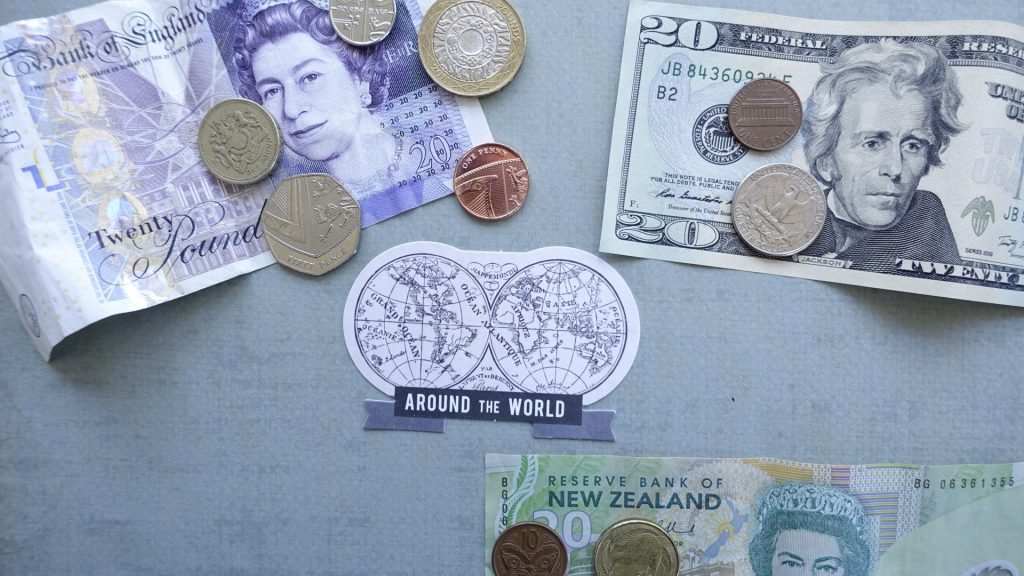
“It is a way of transferring value from place to place, from country to country, through the use of intermediaries, local agents,” Nikos Passas, professor of criminology and criminal justice at Northeastern University, told SAN.
Those intermediaries are a big part of how the network operates. Known as hawaladars, they are the ones who move the money.
“It’s really no different than a typical money service business or a money transfer business like Western Union,” Ercanbrack said. “A party approaches a hawala agent, and that hawala agent, through their connections, is able to send money informally. And the recipient of that money generally produces some form of ID, and sometimes, occasionally a so-called hawala code, that is used for identification purposes, and they pay out the cash in the local currency.”
For the most part, those hawaladars are not doing this to make a major profit themselves but to help communities that need it.
“That’s the only way that they have to send support, and typically that money goes to fragile communities that depend enormously on these inflows,” Passas said. “So, for this reason, some intermediaries do not even charge anything. They do not do this as a profit-making business, but as a way of helping the community to send money back home.”
There is no federal law that specifically makes hawala illegal in the U.S. However, federal banking regulations for money transfers place hawala outside the legal boundaries.
It is specifically illegal in other countries, especially if the hawaladars are not registered. Some countries have legalized hawala but with strict regulations.
Concerns of hawala
In recent decades, concerns over the hawala network first blossomed following the 9/11 terror attacks.
Two months after the attacks, James Sloan, the director of the Financial Crimes Enforcement Network, testified on Capitol Hill about the hawala system and potential exploitation of the system by al-Qaida.
Two years later, lawyer Lee S. Wolosky testified in front of the 9/11 commission about how al-Qaida makes good use of the hawala system.
“Everybody was up in arms about it,” Passas said.
A detailed report on al-Qaida’s financing shows the group used numerous methods to finance their actions, including hawala. Especially because Afghanistan, which served as their home base, had an antiquated banking system.
That report found hawaladars, some willing and some unwitting, helped move money to the group through several means, including the Pakistani banking system.
“It certainly can be abused for that reason,” Ercanbrack said. “So, that’s not beyond possibility. It certainly could be used for that. What I would caution is to say that the experts do believe that the majority of value transferred via hawala is perfectly legitimate, and in fact, is there in the form of remittances. It’s going home to the friends and family of migrant laborers in advanced economies, and they are sending money back home.”
Passas echoed that sentiment.
“As far as misconduct is concerned, it is a red herring to think that it is a criminal means or a criminal method and so on,” he said.
“Now, does this get exploited by criminals? Of course, it does,” Passas added. “Everything does. You can use a nursery to launder money or do whatever it is that you want to do illegally. But when you compare the legitimate services provided by them, there is a balance that needs to be struck between the crime control and the economic benefits for all communities served by this.”
New investigations
Al-Qaida is no longer the global threat it once was. New concerns focus on al-Shabab, a Somalia-based extremist group.
That’s where the connection to Minnesota welfare fraud comes in, with some accusing Somalis here in the U.S. of helping finance al-Shabab.
Among those doing the accusing is Treasury Secretary Scott Bessent, who said his department is opening an investigation.
“At my direction, @USTreasury is investigating allegations that under the feckless mismanagement of the Biden Administration and Governor Tim Walz, hardworking Minnesotans’ tax dollars may have been diverted to the terrorist organization Al-Shabab,” Bessent wrote on X.
Along with Bessent, House Oversight Committee Chairman Rep. James Comer, R-Ky., said his committee will also investigate the allegations.
Comer cited a report from City Journal about Minnesota taxpayer dollars going towards al-Shabab, although other reports dispute those findings.
“People who depend on this money do not receive it, and that creates additional grievances and fuels extremism, rather than target it,” Passas said. “So, for all kinds of intents and purposes, crime control, economic development, better international cooperation, prevention of crime and extremism — there are solutions. It’s a problem with a solution, and it requires understanding of the mechanics, the history and the way that it can be regulated. So, if they are doing this investigation, I hope that they will seek to find the facts about it.”
Sen. Rand Paul, R-Ky., serves as the chairman of the Senate Committee on Homeland Security and Governmental Affairs and said he plans to open an investigation into cash being shipped overseas through U.S. airports.
“As Homeland Security Chair, I’m launching an investigation because Americans deserve to know where this money went,” Paul wrote on X.
So far, none of the investigations have announced any findings into any potential funding to al-Shabab from Somali migrants in Minnesota.
“It certainly seems to be politically motivated,” Ercanbrack said. “Essentially, he’s trying to dig up dirt on the Somali migrants.”
It’s also not the first time Somali migrants have been targeted for allegedly funding terror groups abroad. Following the 9/11 attacks, the U.S. blacklisted an organization called Al-Barakat.
That group was founded in the 1980s to serve as a financial lifeline for the Somali diaspora. They facilitated hundreds of millions of dollars in remittances to Somalia through numerous channels, including hawala.
After 9/11, Al-Barakat was accused of helping fund al-Qaida, with some even suggesting Osama bin Laden had invested in the group.
“A lot of people lost their money, lost their savings, and that has really affected many Somalis’ memories of that period,” Ercanbrack said.
However, in 2020, Al-Barakat was removed from the designated terror list after no credible evidence was found linking the group to any terror organization.
The post What is hawala? Ancient money transfer system now under federal investigation appeared first on Straight Arrow News.
Ella Rae Greene, Editor In Chief