What happens when an entire town has no daycare?
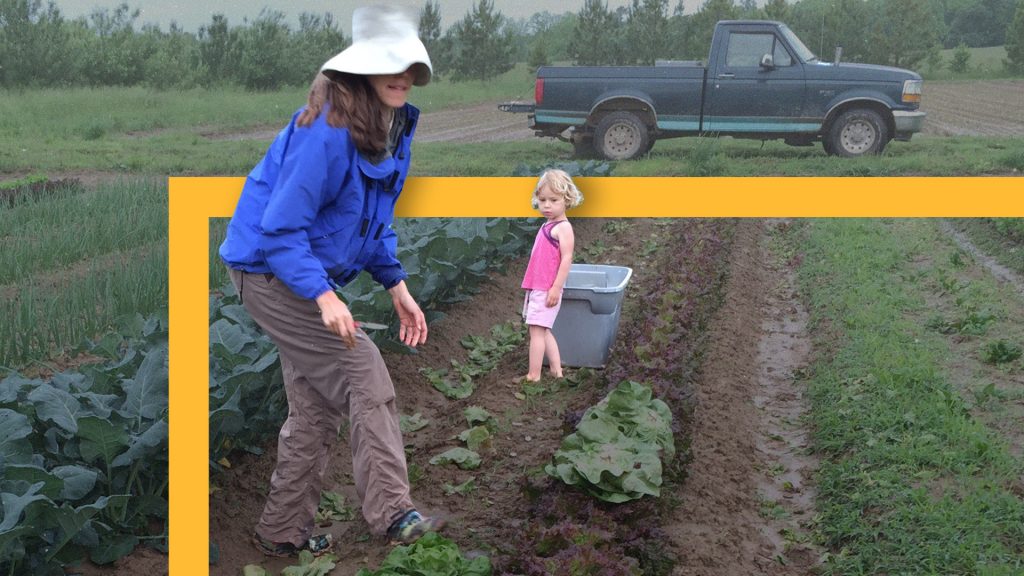
As an infant, Lisette Oakley spent much of her time strapped to her mother as her parents worked in the family’s Oklahoma vegetable fields. It wasn’t until Lisette was 8 or 9 years old that her parents were able to find consistent childcare during their busy summer months.
“We were able to get a friend to help us during our super busy days,” Lisette’s father, Mike Appel, told Straight Arrow. “But she would have to come from a half hour away.”
Also a half an hour away: The nearest full-sized grocery store and doctor’s office.
Appel’s patchwork plan for childcare is not a relic of a bygone era. For rural farmers in communities across the nation, finding childcare is a persistent problem.

The farther parents live from the hulking skyscrapers that span the skylines of major American cities, the harder it is to find someone to watch their children while they work.
So-called childcare deserts are most prevalent in heavily rural states such as Mississippi, South Dakota and Wyoming. At least 20% of children under 6 years old in those states live in a place with no licensed childcare providers, according to an April study from the Center for American Progress.
For Alaska, with a population of 737,000 people living on 665,000 square miles, the figure is 85%.
Childcare deserts are rarer in urbanized states such as California, which has multiple major cities.
Only 2.5% of children under 6 live in a place with no licensed childcare providers in that state, according to the Center for American Progress research.
READ MORE: 14% of families spend more on day care than housing
The scarcity is not new. Three in five rural communities were considered childcare deserts before the COVID-19 pandemic, according to the center’s 2018 report.
Even when childcare options are available, parents in sparsely populated regions face long drives to reach them.
Those parents tend to lean on nearby family members, but that isn’t an option for everyone.

Rocks, ditches and hard places
Heather Holmes wants nothing more than to move back to the small town she once called home.
Morganton, North Carolina, where she lived before relocating to Nashville last year, has a population of 17,000. The closest mid-sized city — Asheville, population 95,000 — is an hour drive through the winding roads and scenic overlooks of the Blue Ridge Mountains.
“We want to get back to a rural community,” Holmes said. “We love the space, we love the values. We miss the mountains so much.”
There’s just one snag: finding someone to take care of her four small children proved too high a hurdle to clear.
Holmes didn’t trust the nearby daycare centers, and “the only people I could find who were willing to babysit were extremely young and didn’t have any experience,” she said.
Childcare is notoriously expensive, but a lack of it dents parents’ finances through lost wages.
“We sacrificed income to take care of our kids,” said northeast Ohio vegetable farmer Julia Barton. She and her husband took turns staying home to take care of their children, who are now 10 and 11 years old.
The closest town to the couple’s home is Conneaut, which has a population of just over 12,000 people.
READ MORE: How states and schools are racing to solve the small-town vet shortage
The childcare shortage sometimes meant farming duties were put on hold. When the children were small, Barton said she jackknifed a tractor into a ditch.
“My husband had to come and help,” she said. “Then one of my little ones fell into a creek and everything else had to stop. It’s a wonderful privilege and a gift to raise children on a farm, but it can also be a real challenge.”

What do parents do when they can’t find childcare?
When Holmes and her husband lived in North Carolina, they resorted to Facebook groups to find childcare.
“The fastest way for a mom in a rural county to find someone is Facebook groups,” Holmes said. “That’s extremely scary. I see moms posting ‘I need a babysitter’ and all these people they don’t know are commenting and then coming to the house to watch their kids. I had some really bad experiences from that.”
Some of the people she hired spent the workday glued to their smartphones, she said.
The problem comes down to basic economics, experts told Straight Arrow. Rural communities don’t have enough children to support daycare centers.
“When you think about this in terms of how many people [childcare centers] are serving versus what it costs, it becomes a big financial problem,” said William Franko, an associate professor of political science at West Virginia University who studies economic inequality and social welfare policy.
Finding staff for daycare centers is also harder outside of cities, where fewer qualified applicants are willing to work for relatively low pay, he said.
Taxpayers support hospitals and public schools. “But when a daycare center closes, there is no public policy that requires something else to open up,” Franko said.
Rural communities that do have daycares find the centers are spread thin.
“People are driving 45 minutes in each direction,” said Shoshanah Inwood, an associate professor of rural sociology at the Ohio State University.
“I was driving my kids 30 minutes or more before I would start making the commute to work,” said Marquee Ricks, who grows wheat, barley and mustard on a farm in southwest Idaho.
Ricks and her husband work full-time on the farm, but she also works a healthcare job two days a week.

Her children are 11, 9 and 7 years old and recently transitioned out of summer care.
“My kids bounced between 10 different people over the course of the eight years that we needed childcare,” she told Straight Arrow.

What would it take to solve the rural childcare affordability problem?
No matter the location, experts said the barriers separating parents from childcare always come down to one thing: money. That makes more investment in rural daycares the most effective solution, they said.
Fixes can come from both the public and private sectors.
“We just recently had a worker who was unable to come back because they were unable to secure affordable childcare,” said Kristi Westbrock, CEO of the Brainerd, Minnesota internet company CTC.
Upon learning that a local YMCA was trying to start a childcare center, Westbrock worked with them to secure a USDA Grant.
However, one problem proved a hard nut to crack.
“It still hasn’t solved all the issues, especially around the affordability piece of it,” Westbrock said.
The increase in childcare costs has outpaced inflation. Between 2020 and 2024, the annual national average price for childcare rose 29% to $13,128 per family, according to an analysis from Childcare Aware.
A steady stream of money from COVID-era spending packages helped keep daycare centers open during the height of the pandemic, but childcare deserts popped up after that spigot went dry, Franko said.
“Without devoting those resources, I don’t see how you can make this work,” he said.
Rural residents like Holmes are quick to note that their childcare fixes are less than ideal.
“You’re finding people on Facebook and having them come to your house,” she said. “There definitely needs to be a better system.”
Round out your reading
- Tennessee officials will pay $835,000 for jailing man over Charlie Kirk meme.
- Why the immune system turns on women more often than men.
- More than 340 newspapers block the Wayback Machine. What that means for the future of the internet.
- Why Rep. Cohen filed articles of impeachment against Supreme Court Justice John Roberts.
- We’re building a new Straight Arrow. Help us shape our future by taking our survey.
Ella Rae Greene, Editor In Chief