What 50 years of oil shocks explain about the future of gas prices
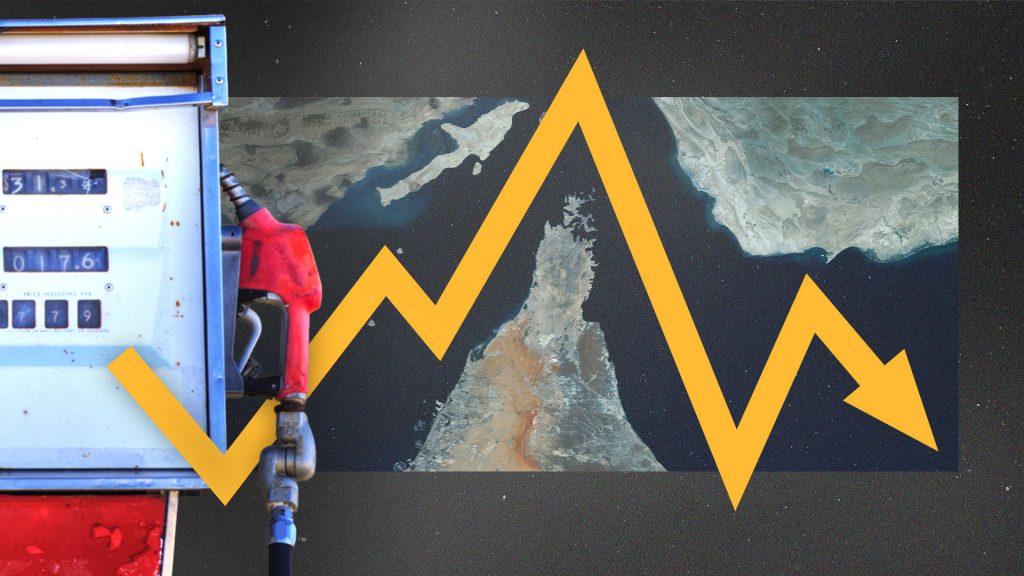
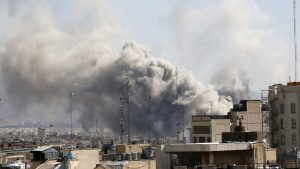
Gas prices go up and down with world events that shake the global oil market. The war in Iran, which led to Iran’s de facto blockade of the Strait of Hormuz, is only the latest such example.
While refining, distribution and taxes all factor into the price of gasoline, the majority of what Americans pay at the pump is determined by the price of oil. When adjusted for inflation, global events that disrupt oil markets have caused gasoline prices to surge past $5 and even $6 per gallon at various points in recent history. In the video above, Straight Arrow News walks through 50 years of gasoline prices.
Experts told SAN the 2026 attacks on Iran and Iran’s decision to close the Strait of Hormuz have created the biggest disruption in the past 50 years.
“It is without a doubt the largest supply disruption in the history of global oil markets,” said Christiane Baumeister, an economist at the University of Notre Dame focused on energy markets. “The severity of this event is not fully reflected in prices yet. Oil supplies are much tighter than what the market price currently suggests.”
The 1970s
A turning point for gas prices came in 1973, when OPEC nations declared an oil embargo against the United States in response to American support for Israel during the Yom Kippur War. The Nixon administration capped gas prices, which suppressed the sticker price but created severe shortages and long lines at stations.
“The gasoline lines, the supply shock that we had in the ‘70s, was self-inflicted by federal policy,” Ed Hirs, an energy economist at the University of Houston, told SAN.
The decade’s price spike came in 1979, when the Iranian Revolution took roughly 7% of global oil supply offline. By early 1980, inflation-adjusted gasoline prices topped $5 per gallon.
The 1980s and ‘90s
Gasoline prices remained elevated for several years in the early 1980s as tension continued in the Middle East. But the high prices also triggered energy conservation efforts and encouraged more oil production. That led to a sharp decrease in gasoline prices by 1986.
“There was a relative abundance of crude oil supplies in the world relative to oil demand,” Baumeister told SAN.
With the exception of brief spikes such as Iraq’s 1990 invasion of Kuwait, gasoline prices remained stable in the $2 and low $3 inflation-adjusted range through the turn of the century.
The 2000s
As emerging economies such as China industrialized rapidly, global oil demand began outpacing supply, which remained relatively stagnant. Hurricane Katrina worsened the picture in 2005 by knocking out refining capacity along the Gulf Coast. And as China prepared for the Beijing Olympics in 2008, the price of a barrel of oil hit $147, sending gasoline above $6 per gallon, when adjusted for inflation. But prices tumbled only a few months later.
“There was a steep drop in oil consumption in anticipation of a major global recession,” Baumeister told SAN.
But the underlying market dynamic did not change, and by the summer of 2009, gas prices were back on an upswing.
The 2010s
From 2011 to 2014, inflation-adjusted gasoline stayed above $4 per gallon — the longest sustained period in available data. Continued growth in Asia, the Arab Spring and renewed tensions with Iran kept markets tight. While U.S. shale production grew on high oil prices that made a new drilling method hydraulic fracturing — also known as fracking — profitable, OPEC cut its oil production, which kept prices high.
But in late 2014, OPEC, which feared losing market share to the growing U.S. industry, reversed course. Suddenly, the world was awash with oil supply and prices at the pump plummeted.
“As we say in the oil patch: The cure for high prices is high prices,” Hirs said.
The 2020s
COVID-19 lockdowns sent gasoline to its lowest inflation-adjusted price in two decades, as crude oil prices briefly traded in negative territory, meaning companies holding oil in maxed-out storage facilities had to pay others to take it from them. This caused a string of bankruptcies in the oil industry, and the companies that survived are now less bullish on expanding production and more focused on shareholder returns.
Oil supply did not keep up with the pace at which the economy re-opened in 2021 and 2022. Then came Russia’s invasion of Ukraine and the sanctions response from the U.S. and European countries that caused gasoline prices to reach more than $5 per gallon.
Ella Rae Greene, Editor In Chief