Virtual reality helps people stay sober when the “real world” gets too real
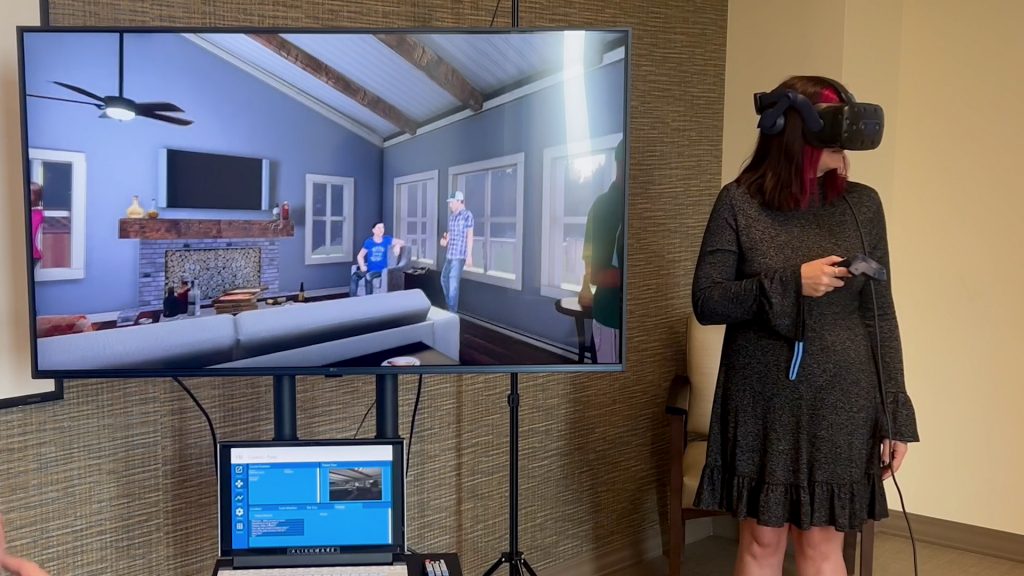
With holiday stress on the rise and alcohol consumption climbing, a North Texas addiction recovery center is turning to virtual reality to help patients stay sober. The process even recreates boozy scents to help prepare them for the triggering situations.
A study by the American Psychological Association found that 38% of people said their stress increases during the holiday season, often leading to anxiety, depression and substance misuse. Another survey shows the average American drinks 27% more during the holidays, while the Distilled Spirits Council of the United States reports that a quarter of the $49 billion distilled spirits industry’s annual profits are made between Thanksgiving and New Year’s.
At Texas Health’s addiction recovery center in Mansfield, clinicians are using virtual reality to help patients recognize and manage real-world triggers before they return to social settings where alcohol is common.

“People don’t really take it very seriously,” said Dr. Ken Jones, a behavioral health specialist with Texas Health. “But once they actually put the headset on and navigate through those environments, they realize their body is being triggered by some of those particular scenes.”
Jones said patients often begin noticing physical responses almost immediately.
“They’ll start talking about, ‘My hands are getting a little bit clammy. My breathing is changing,’” he said. “They recognize those changes in their body just by being exposed to these stimuli in a virtual environment.”
The therapy can also be tailored to each patient’s specific temptations. Staff can simulate environments that include the smell of a person’s preferred drink.

“We can customize it to their drink of choice,” Jones said. “They’ve got the headset on, and we can pass that somewhere around their nose. They’ll have that reaction — ‘That actually smells like gin,’ or ‘That smells like vodka.’”
By engaging multiple senses, clinicians aim to help patients regulate their nervous systems and build confidence in managing cravings — a skill Jones considers especially crucial during the holiday season, when alcohol is a fixture in many gatherings.
“This allows them to practice those environments,” he said.
Once patients develop a plan and learn to identify their triggers, Jones said they are more likely to make positive decisions toward long-term sobriety.
The post Virtual reality helps people stay sober when the “real world” gets too real appeared first on Straight Arrow News.
Ella Rae Greene, Editor In Chief