US oil companies are drilling more. For drivers, gas price relief remains elusive
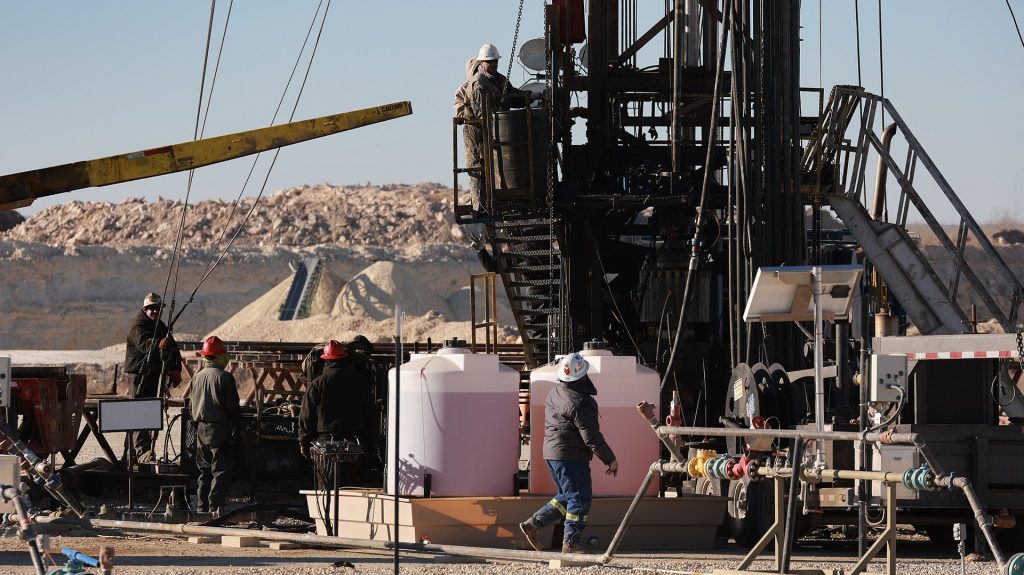
The U.S. oil industry is expanding production in reaction to prices that are expected to stay high, even if the war with Iran ends soon. But the increased oil drilling is unlikely to lead directly to price relief at the pump.
The tally of active rigs is up from a low point of 466 in March to 515 this week, according to Alex Ljubojevic, lead supply analyst at the energy data analytics company Enverus Intelligence Research.
When the war started, “at first we didn’t really see much of a reaction,” Ljubojevic told Straight Arrow. But after over a month of oil tankers being unable to pass through the Strait of Hormuz, that began to change. A few rigs at a time, oil industry activity — mostly in the Permian Basin of West Texas and New Mexico — increased.
That shift occurred when the oil price forecasts showed the potential for elevated oil prices lasting into 2027. For example, the latest U.S. Energy Information Administration’s short-term energy outlook shows U.S. oil (WTI) above $80 per barrel through the remainder of this year.
Gasoline prices follow the oil market. As long as oil remains high, American consumers can expect to pay more, with the current national average over $4.40 per gallon. Enverus’s price projections from mid-May show an average global oil price (Brent) at $95 per barrel for the rest of 2026.
What types of companies are moving?
Two significant players, Diamondback and Continental Resources, each announced plans to grow production this week.
“We don’t expect prices to go back to where they were prior to the Iran war,” Continental Resources founder and chairman Harold Hamm told the Financial Times.
Hamm said his company will increase its 2026 capital budget by about $300 million — a pivot from before the war when oil prices were around $60 per barrel, and the company cut production in North Dakota’s Bakken formation.
Diamondback and Continental Resources are large companies focused solely on oil exploration and production, but they’re a tier smaller than household names like Chevron and ExxonMobil that also own other parts of the broader oil business like refineries.
The larger companies are “not nearly as nimble as an independent producer,” said Skip York, a nonresident fellow at Rice University’s Baker Institute for Public Policy. The major oil and gas companies’ operating budgets are already set, and they are more likely to pass revenue from higher oil prices onto shareholders.
Will drilling more oil affect the price of gasoline?
In the right circumstances, increasing oil supply will bring down oil prices, and gasoline along with it. But scale matters.
“This drilling isn’t going to do anything to the oil price,” York told Straight Arrow. “The only thing that takes pressure off is reopening the Strait of Hormuz.”
The price of oil is dependent on the global market. Before the war, about 20 million barrels of oil per day flowed through the Strait. With the U.S. already producing 13.7 million barrels each day, American producers cannot make up the difference alone, and it would take years to build new supply sources globally.
And once the Strait reopens, the prices will not come down immediately. At this point, production fields in the Middle East have ground to a halt.
“It’s definitely not something that comes back overnight,” Ljubojevic said.
It can take months to ramp up production, and once that happens, analysts including Ljubojevic expect a temporary period of increased demand as governments look to refill strategic petroleum reserves that have been depleted.
Round out your reading
- Tennessee officials will pay $835,000 for jailing man over Charlie Kirk meme.
- Why the immune system turns on women more often than men.
- More than 340 newspapers block the Wayback Machine. What that means for the future of the internet.
- Why Rep. Cohen filed articles of impeachment against Supreme Court Justice John Roberts.
- We’re building a new Straight Arrow. Help us shape our future by taking our survey.
Ella Rae Greene, Editor In Chief