US launches ‘self-defense’ strikes against Iran, but officials say negotiations will go forward
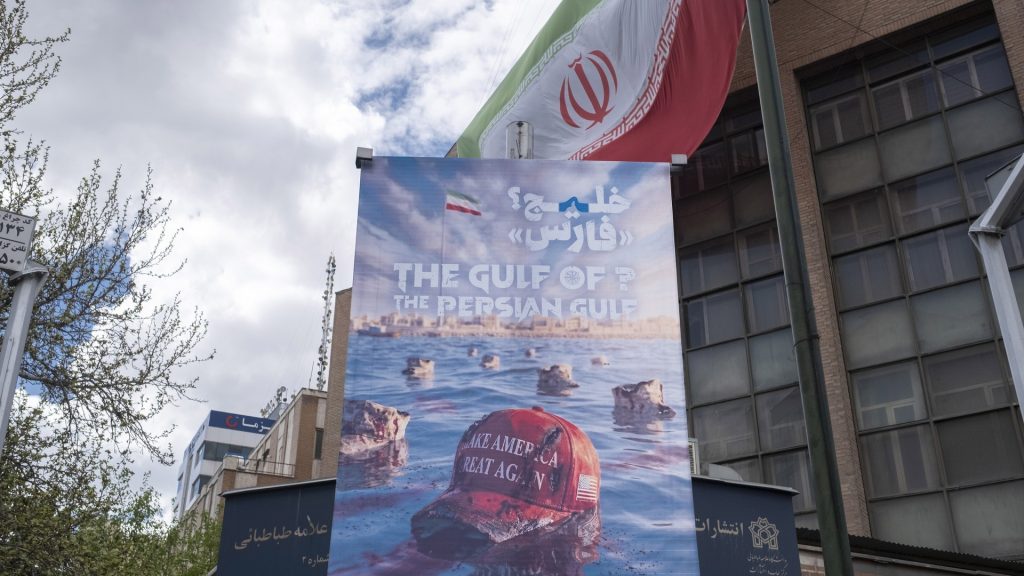
The U.S. and Iran exchanged fire overnight, with Iran saying it shot down a U.S. drone and fired on other aircraft it said entered Iranian airspace. Meanwhile, the U.S. says it carried out self-defense strikes, targeting missile launch sites and Iranian boats they said were trying to place mines in the Strait of Hormuz.
Following the strikes, the U.S. did not announce a change to the temporary ceasefire with Iran, rather reiterating that “U.S. Central Command continues to defend our forces while using restraint during the ongoing ceasefire.”
However, Iran’s supreme leader warned that countries across the region will “no longer serve as shields for U.S. bases,” and vowed to “respond decisively to any violation of the ceasefire.”
“The IRGC warns against any violation of the ceasefire by the invading American army and considers its right to reciprocal response both legitimate and certain,” Iran’s Revolutionary Guard said Tuesday.
Negotiations hang on reopening the Strait
The military action comes while negotiations between Washington and Tehran continue. As Straight Arrow previously reported, top Iranian officials arrived in Doha on Monday for talks on “resolving outstanding issues” with the U.S.
Over the weekend, President Donald Trump took to social media over the weekend, saying a deal to end the war was “largely negotiated.” The president said negotiations are proceeding in an “orderly and constructive manner” but added he’s not in a rush as “time is on our side.”
Meanwhile, Secretary of State Marco Rubio said Monday a deal could be finalized soon, though there will not be a deal without a full reopening of the Strait.
“Well, the straits have to be open,” Rubio said. “They’re going to be open one way or the other. So they need to be open. What’s happening there is unlawful, it’s illegal, it’s unsustainable for the world, it’s unacceptable. I don’t know of any country in the world that does it.”

Trump made similar comments.
“Final aspects and details of the Deal are currently being discussed, and will be announced shortly,” the president wrote on Truth Social. “In addition to many other elements of the Agreement, the Strait of Hormuz will be opened.”
Iran’s Revolutionary Guard claimed that 32 vessels, including oil tankers, moved through the Strait of Hormuz over the last 24 hours.
And reports from Qatari media say at least one Iranian official has discussed reopening the Strait in phases.
The other major holdup between the U.S. and Iran is the nuclear issue. The U.S. says Iran can’t have any nuclear capabilities, but Iran says any deal would not address the “nuclear issue.”
Rather, Iran’s foreign ministry says the agreement would include a memorandum that the Strait reopen for 60 days, and during that time, the countries will discuss nuclear-related issues.
Oil prices ebb and flow
The back and forth over the weekend led to significant changes in oil prices.
Prices were lower over the weekend amid talks of a deal coming soon, but jumped about 3% Tuesday following the U.S. strikes. Brent crude sat at about $96 a barrel Tuesday morning.
Round out your reading
- Tennessee officials will pay $835,000 for jailing man over Charlie Kirk meme.
- Why the immune system turns on women more often than men.
- More than 340 newspapers block the Wayback Machine. What that means for the future of the internet.
- Why Rep. Cohen filed articles of impeachment against Supreme Court Justice John Roberts.
- We’re building a new Straight Arrow. Help us shape our future by taking our survey.
Ella Rae Greene, Editor In Chief