US-Iran continue talks despite weekend strikes; Colorado wildfires turn deadly
After a weekend of back-and-forth strikes, the U.S. says technical talks with Iran remain on track. However, one U.S. official says President Donald Trump’s patience may be wearing thin.
Plus, rescuers in Venezuela remain hopeful of locating survivors in the rubble, despite search efforts entering their fifth day.
And what you need to know about a dangerous heat wave moving through the U.S. this week.
These stories and more highlight your Unbiased Updates for Monday, June 29, 2026.
US, Iran to continue technical talks despite exchanging fire over the weekend
The U.S. and Iran have once again agreed to “stand down for now” after both sides exchanged fire near the Strait of Hormuz over the weekend.
Meanwhile, U.S. officials said technical talks over a peace deal remain on track despite the renewed aggression, adding that “vessels can move freely” in the Strait.
That doesn’t mean they are. Commercial vessels face confusion and danger, navigating threats from sea mines, drones and Iranian military patrol boats, as three routes have emerged with different authorities looking to take charge.
U.S. Ambassador to the U.N. Mike Waltz told Fox News Sunday that even though peace discussions will continue, Iran needs to realize its “leverage” is diminishing.
“Well, the president’s patience isn’t going to last forever,” Waltz said. “Discussions are ongoing, particularly at a technical level of how to get inspectors in, the down-blending, and the other pieces that are focused on ensuring Iran never has a nuclear weapon. But they need to understand their leverage is diminishing by the day. The Gulf arabs are creating all kinds of alternatives to the Straits of Hormuz.”

Iran’s foreign minister claimed Sunday that Iran is the only country capable of restoring shipping traffic in the Strait of Hormuz and that any outside intervention would “delay the reopening.”
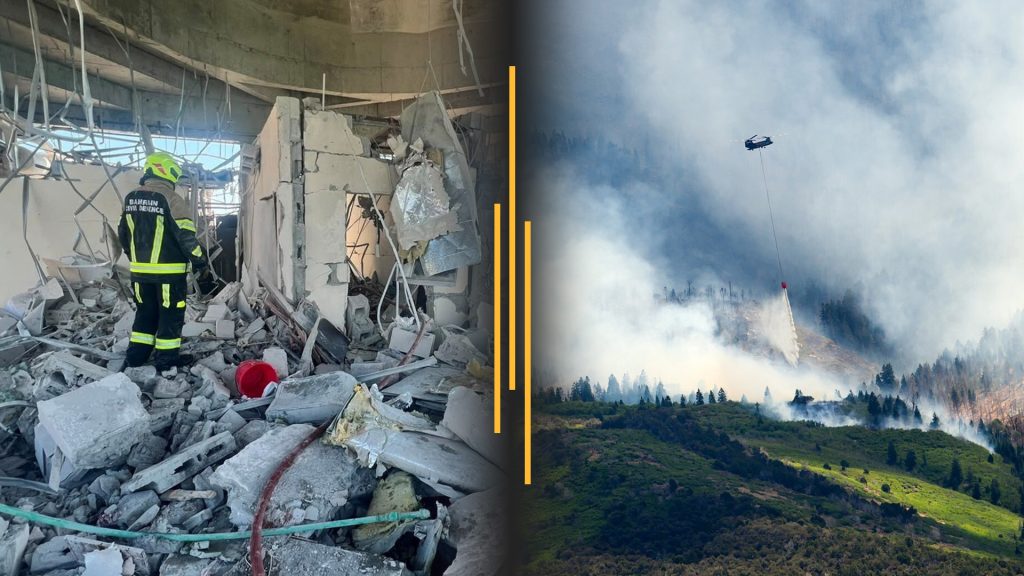
Meanwhile, a U.S. official told ABC News that Iranian attacks on Kuwait and Bahrain early Sunday failed, saying there were “no U.S. injuries or impacts to American locations.” The strikes were Iran’s response to the U.S.’s retaliatory strikes on Saturday, which came after an Iranian drone struck an oil tanker in the Strait of Hormuz.
Rescue efforts continue in Venezuela nearly a week after twin earthquakes
Rescue crews aren’t giving up hope in Venezuela, still searching through the rubble of collapsed buildings, listening for any sign of life five days after twin earthquakes rattled the country.
Rescuers miraculously pulled surviving people from the rubble this weekend after four days. Acting President Delcy Rodríguez said these search-and-rescue operations will continue, though rescuers said they’ve entered “critical hours” in their efforts to find survivors.
Officials said the quakes killed more than 1,400 people, injured upward of 3,000 and displaced nearly 13,000 people. The death toll is still expected to rise.

The country’s national assembly leader said Sunday that quakes damaged or destroyed 774 buildings, including 189 that completely collapsed.
In La Guaira, the hardest-hit area, officials said civilians are hampering rescue efforts by blocking access to relief supplies and volunteers. They said the influx of people trying to help is clogging the only highway into the region, leaving many rescue workers stuck in traffic.
They’re trying to limit rescue efforts to only those authorized to help, but frustrated civilians continue to pour in despite this.
Colorado wildfires turn deadly, killing three firefighters
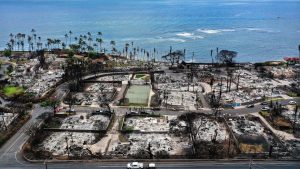
Three firefighters are dead, and two others suffered burn injuries while fighting fast-moving wildfires along the Colorado-Utah border over the weekend.
The U.S. Wildland Fire Service reported it happened during a burn-over incident, when flames overtook firefighters or equipment. The five Wildland firefighters deployed their shelters, but three did not survive. As of early Monday, they had not yet released their names.
Several agencies have sent firefighters to western Colorado to fight the Knowles and Gore wildfires, which have merged with the Snyder Mesa fire, scorching more than 28,000 acres, according to officials.

Colorado Gov. Jared Polis has declared a disaster emergency and authorized the mobilization of the National Guard to fight the flames. Days of high, dry temperatures in the 90s and gusty winds have fueled the fires.
In Utah, Gov. Spencer Cox has also declared an emergency and banned fireworks ahead of the July Fourth holiday.
Officials there say over the past week, Utah has seen an increase in wildfire starts, stretching the state’s wildland firefighting capabilities.
And as extreme fire conditions persist, Rocky Mountain Power has shut off power lines in certain areas to help mitigate risk.
Dangerous heat wave hits US with highs topping triple‑digits
A severe heatwave is projected to affect the central and eastern U.S. this week, with high humidity intensifying the already scorching temperatures.
So far, more than 100 million Americans across the South and the Great Plains are at moderate-to-severe risk of heat, but the National Weather Service said that risk will expand as the heat intensifies throughout the week.
Forecasters predict several days of high temperatures exceeding 100 degrees in parts of the lower Great Lakes, mid-Atlantic, and the Mississippi and Ohio river valleys. Temperatures will rise into the mid-to-high 90s and low 100s, potentially breaking records. Elevated humidity levels will make the “feels like” temperatures reach as high as 115 degrees in certain areas.
Nighttime isn’t expected to provide much relief.
It might be a holiday week, but experts say it’s best to spend much of that time indoors if you have air conditioning and to stay hydrated. Several cities across the affected regions will offer cooling centers for those who need a break from the heat.
117 dogs found dead at California rescue with hundreds still unaccounted for
A Northern California animal rescue that called itself “no-kill” is now at the center of an animal-cruelty investigation.
The Humboldt County Sheriff’s Office said investigators discovered the remains of at least 117 dogs at Miranda’s Rescue in Fortuna. Authorities said many appeared to have been shot.
The dogs were found at two dig sites on the 50-acre property. Investigators found hundreds of bones and about 600 dog collars. The sheriff’s office said investigators also found an area inside a barn where they believe dogs were killed.
The case began after authorities said they received credible information about alleged animal abuse, fraud and conspiracy.
“Animal cruelty cases can be especially difficult to charge and prosecute because there are unique evidentiary challenges that come with animal cruelty cases, most notably the fact that the animals themselves can’t testify,” Matthew Liebman, a University of San Francisco law professor, said.
The rescue’s founder, Shannon Miranda, said in a statement that the rescue does not euthanize animals simply to make space, but added that there are rare cases when euthanasia may be necessary.
Sheriff William Honsal said more than 900 animals were transferred to Miranda’s rescue over five and a half years. Only about 100 have been accounted for as adopted. Honsal said the investigation is just beginning.
Canada makes historic leap into World Cup round of 16
Canada has reached the round of 16 for the first time in World Cup history, and the breakthrough came at the last possible moment.
Stephen Eustáquio scored in the 92nd minute to give Canada a one-nil win over South Africa, sending the team into the history books.
The match opened the World Cup’s new round of 32, created after the tournament expanded to 48 teams. Canada created better chances throughout the game but couldn’t capitalize on most of them.
South Africa played conservatively, cleared shots off the line and kept the game scoreless until the final minutes. The game went into stoppage time, when minutes are added to the end of the match.
-

Liza Rosales/ISI Photos/ISI Photos via Getty Images -

Ronaldo Bolanos / Los Angeles Times via Getty Images -

Karl Anderson/Icon Sportswire via Getty Images -

Patrick T. Fallon / AFP via Getty Images -

Robin Alam/ISI Photos/ISI Photos via Getty Images -

Keith Birmingham/MediaNews Group/Pasadena Star-News via Getty Images -

Etienne LAURENT / AFP via Getty Images -

Tayfun CoÅkun/Anadolu via Getty Images -

Sarah Stier – FIFA/FIFA via Getty Images -

Eric Verhoeven/Soccrates/Getty Images
The ball fell to Eustáquio, who put it away for the game’s only goal.
Canada held on to secure its first World Cup knockout-round win. Team Canada now heads to Houston, where it will face either the Netherlands or Morocco on Saturday.


In the modern surveillance state, someone’s always watching
The Watergate scandal of the 1970s began with a botched surveillance attempt. Five men working for President Richard Nixon’s re-election campaign were caught burglarizing and planting listening devices in the Democratic National Committee headquarters in Washington. The episode led to Nixon’s resignation and to legislation that reined in both the power of the federal government and its domestic surveillance apparatus.
More than 50 years later, the legal firewalls put into place during that era — including the 1974 Privacy Act, intended to silo and restrict the sharing of Americans’ data across agencies — have either completely eroded or begun to unravel.
Those reforms failed to anticipate a digital era in which private companies, not the government, would become the primary consumer of private data — and what would happen when the data from the public and private sectors was combined.
Ella Rae Greene, Editor In Chief