Trump weighs military action to seize 1,000 lbs of Iranian uranium
President Donald Trump is weighing whether to send U.S. forces into Iran to secure nearly 1,000 pounds of enriched uranium, according to reporting by The Wall Street Journal and The Associated Press. He has not made a final decision and is balancing the risk to U.S. troops while also pressing Iran to surrender the material through negotiations.
The stockpile sits at the center of Trump’s stated goal of preventing Iran from obtaining a nuclear weapon. Some experts and lawmakers told the AP that the material could allow Iran to build as many as 10 nuclear bombs if weaponized. But any effort to seize or destroy it could pull the United States into a high-risk ground operation inside Iran.
Trump has also said he does not want a protracted conflict. The Journal reports some of his top aides want him focused on other priorities, including the coming midterm elections, even as the question of Iran’s uranium remains unresolved.
Where is the material?
Before U.S. and Israeli strikes last June, Iran had more than 400 kilograms (881 pounds) of uranium enriched to 60% and nearly 200 kilograms (440 pounds) enriched to 20%, according to the reporting.
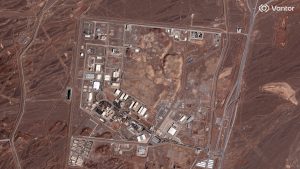
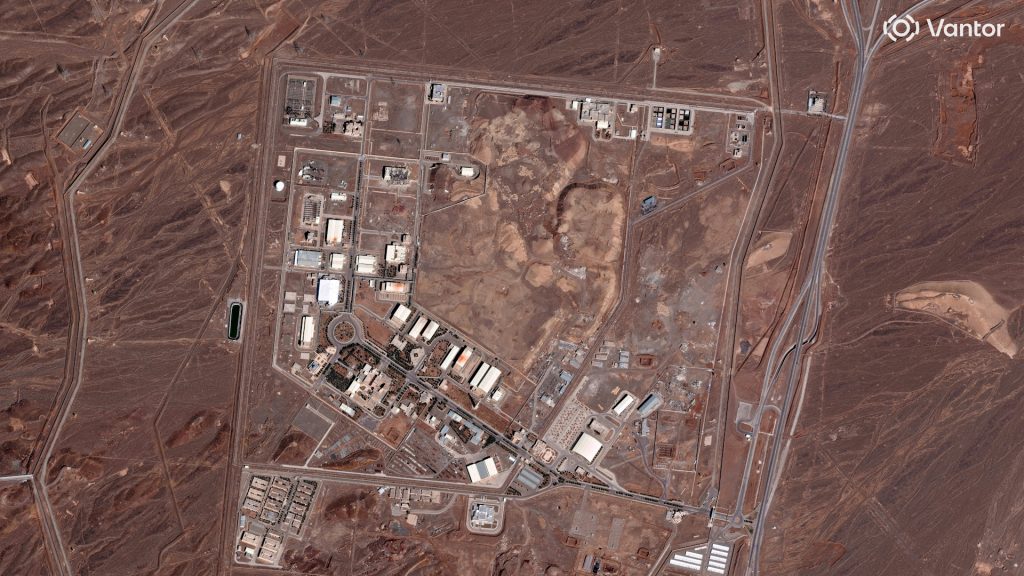
International Atomic Energy Agency Director General Rafael Grossi has said the material does not appear to have moved and likely remains at sites hit last year. He said most of it is believed to be buried under rubble at Isfahan, with smaller amounts at Natanz and Fordow.
Iranian Foreign Minister Abbas Araghchi said earlier this month on CBS’s “Face the Nation” that Iran has no current plans to recover the material from those sites. The Journal also reports that Secretary of State Marco Rubio has acknowledged Iran is not currently enriching uranium.
What Trump and his team are saying
White House press secretary Karoline Leavitt said in a statement to the Journal that “it’s the job of the Pentagon to make preparations in order to give the commander-in-chief maximum optionality,” adding that it does not mean a decision has been made. Trump told reporters Sunday that Iran must comply with U.S. demands or “they’re not going to have a country.”
Defense Secretary Pete Hegseth said earlier this month the U.S. has a “range of options,” including pushing Iran to give up the material. He also said the administration saw no reason to telegraph “what we’re willing to do or how far we’re willing to go.”
How the US could try to get it
The administration is pursuing both diplomatic and military options. The Journal reports Trump has encouraged advisers to press Iran to surrender the material at the negotiating table, with Pakistan, Turkey and Egypt acting as intermediaries.
At the same time, the Pentagon has positioned many of the assets needed for a possible extraction mission in the region and is considering deploying an additional 10,000 ground troops.
Experts interviewed by the Journal and AP described such an operation as difficult and risky. It would likely require combat troops to secure the sites, engineering support to reach buried material, and specially trained teams to handle and transport the uranium safely.
Brandan Buck, a senior fellow at the Cato Institute, told the AP that extracting or diluting the material would likely take more than 1,000 troops at each site.
What Trump has not decided
Trump has not committed to a uranium retrieval mission, and officials told the Journal he is still reviewing the risks and logistics.
The Journal reports that Trump and some allies believe a targeted mission might not significantly extend the war and could still allow the United States to end the conflict by mid-April. Former officers and outside experts, however, warn such a mission could stretch the war beyond the publicly discussed four- to six-week timeline.
Ella Rae Greene, Editor In Chief