Trump eyes Iran oil takeover; US allows Russian oil to Cuba
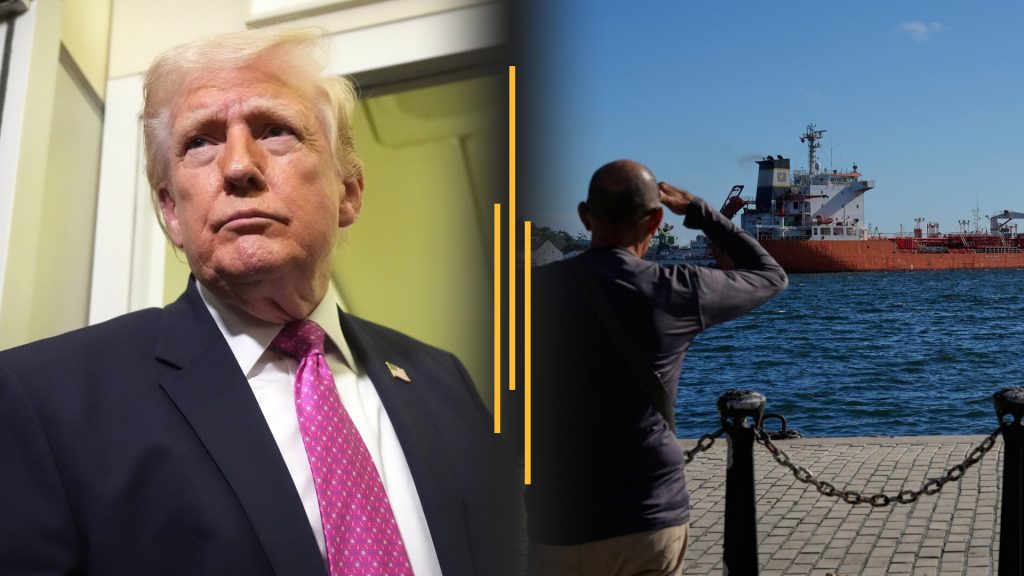
The U.S. weighs seizing Iran’s oil and a key export island as the war enters week five.
Plus, a Russian oil tanker heads to Cuba with more than 700,000 barrels of fuel, and with President Donald Trump’s blessing.
And Transportation Security Administration workers are expected to start getting paid again this week. The question now is whether enough return to ease long security lines at airports.
These stories and more highlight your Unbiased Updates for Monday, March 30, 2026.
Trump weighs seizing Iran oil hub, but move would require US troop presence
Amid the war in Iran, President Donald Trump says he’s weighing whether to seize Kharg Island, saying he wants to “take the oil in Iran.”
In an interview with The Financial Times, Trump compared the idea to the United States taking control of Venezuela’s oil industry earlier this year, saying the U.S. could hold it “indefinitely.”
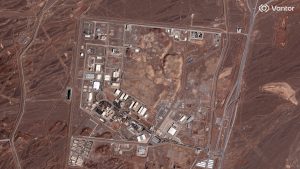
Kharg Island handles about 90% of Iran’s oil exports and is a critical hub for the country.
Trump said controlling the island would mean keeping U.S. troops there for some time.

He also says the U.S. is still negotiating with Iran, both directly and indirectly. When asked if he could foresee a deal in the upcoming week, the president said, “I do see a deal in Iran. Yeah. Could be soon.”
The president was also asked about the possibility of putting troops on the ground in Iran.
”I just have lots of alternatives,” Trump said. “We have tremendous numbers of ships over there. We don’t need them all because of, you know, the power. Look, I would say we’re just like, we’re ahead of schedule… we’re ahead of schedule with Iran. We’re weeks ahead of schedule.”
Trump also said the U.S. has already “bombed 13,000 targets” in Iran, and he claims only a few thousand remain, but added a deal could still come together quickly.
Iran, meanwhile, says there are no talks.
On Sunday, Iran’s parliamentary speaker accused the U.S. of using talks in Pakistan as a cover to move more troops into the region.
He also issued a warning, saying Iranian forces are “waiting for the arrival of American troops on the ground” in order to respond.
Pakistan’s foreign minister says talks between the U.S. and Iran could happen in the coming days.
Oil prices are reacting, with Brent crude spiking to around $116 a barrel at one point.
Meanwhile, the fighting continues.
Israel says it struck 40 sites across Tehran, targeting facilities it says were used to produce missiles and other weapons.
And Israel says it’s expanding its ground operation in southern Lebanon.
Prime Minister Benjamin Netanyahu says the goal is to stop cross-border attacks and push back Iran-backed Hezbollah forces.
US allows Russian oil into Cuba despite sanctions
Some possible relief for Cuba as it deals with a deepening energy crisis following a U.S. oil blockade.
The Trump administration is now signaling that it will allow a Russian oil tanker to deliver fuel to the island.
The vessel, owned by the Russian government and sanctioned by the U.S., the European Union and the United Kingdom, is carrying more than 700,000 barrels of oil.
Cuban state media says it’s expected to arrive at the port of Matanzas Monday night.
When asked about allowing the oil into Cuba, Trump didn’t directly confirm the shipment, but made clear he doesn’t plan to stop it.
He also said he doesn’t see how allowing the move would help Russian President Vladimir Putin.
“It doesn’t help him, why? He loses one boatload of oil. That’s all it is, it’s fine,” Trump said. “If he wants to do that and if other countries want to do it, it doesn’t bother me much. It’s not going to have an impact. Cuba is finished. They have a bad regime, and they have very bad and corrupt leadership. And whether or not they get a boat of oil, it’s not going to matter.”
The U.S. blockade has pushed Cuba into a severe energy crisis.

Blackouts have spread across the island, and shortages of fuel and basic resources have strained hospitals and disrupted transportation.
Experts say this shipment could produce about 180,000 barrels of diesel, enough to cover Cuba’s daily demand for about nine to 10 days.
ICE to stay at airports as TSA staffing struggles continue
Immigration and Customs Enforcement (ICE) agents are not leaving airports anytime soon, even as TSA pay is set to restart as early as Monday.
The long lines at airport security continue.
Staffing hasn’t bounced back after hundreds of TSA officers quit and thousands more stayed home during the ongoing partial government shutdown.
ICE agents are still backing up the TSA at airports, helping with ID checks and securing passenger lanes.
And the administration says manpower will remain in place for now.
“Look, we’re going to continue a nice presence there, and until the airports feel like they’re 100%, you know, in a posture where they can do no normal operations. If less TSA agents come back, that means we’ll keep more ICE agents there…the president has been clear. He wants to secure those airports, especially, as I said earlier, in an increased threat posture, we need to secure those airports. ICE is there to help our brothers and sisters in TSA. We’ll be there as long as they need us, until they get back to normal operations and feel like those airports are secure.”
— Tom Homan, border czar
Officials say rebuilding the TSA workforce won’t be quick.
Training new officers can take up to six months, and it’s still unclear how many who left will come back.

TSA officers will be paid again, Homan says, by Monday or Tuesday, but the broader shutdown remains unresolved.
Congress is deadlocked on funding the Department of Homeland Security, and lawmakers have now left for Easter recess without a deal. Friday’s Senate passage of partial DHS funding died in the House.
There’s no clear timeline for another vote, unless lawmakers are called back.
North Korea tests stronger missile engine
North Korea announced it has tested a more powerful missile engine designed for weapons that could reach the United States. State media reported leader Kim Jong Un oversaw the test of an upgraded solid-fuel engine.
Officials stated that the engine generates substantially more thrust than previous versions, which is a crucial step toward developing longer-range missiles.
Solid-fuel systems are easier to move and launch quickly, making them harder to detect than older liquid-fuel weapons.

North Korea said the test is part of a broader push to strengthen what it calls its “strategic” arsenal, including nuclear-capable missiles.
But outside experts have questioned the claim. They say key details were not released, including how long the engine can actually burn, making it difficult to verify the system’s level of advancement.
North Korea has tested missiles in recent years that it says can reach the U.S. mainland. But some past claims have been disputed, including a multi-warhead test that South Korea called a failure.
Trump’s citizenship order heads to court, justices will review limits on automatic citizenship
A U.S. Supreme Court case could change who automatically receives American citizenship at birth. The justices are set to hear arguments Wednesday about Trump’s executive order that restricts birthright citizenship.
The order, signed on his first day back in office, would deny automatic citizenship to some children born in the United States if their parents were in the country illegally or on temporary visas.
Lower courts have blocked the policy for now.
At the heart of the case is the 14th Amendment: “subject to the jurisdiction thereof.”
The administration contends that the clause has been interpreted too broadly and cites an 1884 Supreme Court case involving John Elk, a Native American man who was denied the right to vote. Elk said he was a citizen because he was born in U.S. territory and had left his tribe. The court rejected that claim.
The justices are also examining how the policy would be implemented, including what families need to show for passports or a social security number if a birth certificate alone is no longer sufficient.
Critics argue that the plan would replace a straightforward rule with a more complex system based on parents’ status.
The administration claims that concerns about “birth tourism” justify the change.
A decision is expected in June.
UConn stuns Duke with last shot
March Madness lived up to its name Sunday as the Connecticut-Duke college basketball game had a finish for the ages that you had to see to believe.
Duke led by 15 at halftime and seemed in command. But in the second half, UConn kept chipping away, narrowing it to two points with just 10 seconds remaining.
Duke just needed to run out the clock.
The Blue Devils got the ball in and made two passes, but a third from star Cayden Boozer was deflected and intercepted.
The Huskies advanced the ball down the court, and freshman Braylon Mullins made a miraculous long three at the buzzer with just four-tenths of a second remaining.
UConn pulled off the comeback, winning 73-72.
The Final Four is set for Saturday: UConn faces Illinois, which defeated Iowa. Arizona takes on Michigan after the Wolverines routed Tennessee.
The championship game is scheduled for Monday night, April 6.
More from Straight Arrow News:

The demoralization of America’s doctors
Christie Mulholland’s patient was dying.
As a palliative care physician at Mount Sinai Hospital in New York, most of her patients come to her in the final stretches of their lives, looking for comfort and a painless end.
Mulholland’s patient wanted to leave the hospital and spend her final days in a hospice facility, a specialized, home-like setting designed for end-of-life care.
But the patient’s insurance would not approve the move.
Mulholland and her team called repeatedly, trying to reverse the decision. Days passed. Finally, a physician at the insurance company tasked with reviewing coverage decisions answered.
“Oh,” the doctor told Mulholland over the phone. “She didn’t die yet?”
The remark laid bare a system in which financial calculus can eclipse patient needs. Read the full story now>
Ella Rae Greene, Editor In Chief