Trump brings an Iran deal to G7. Europe still has plenty to say
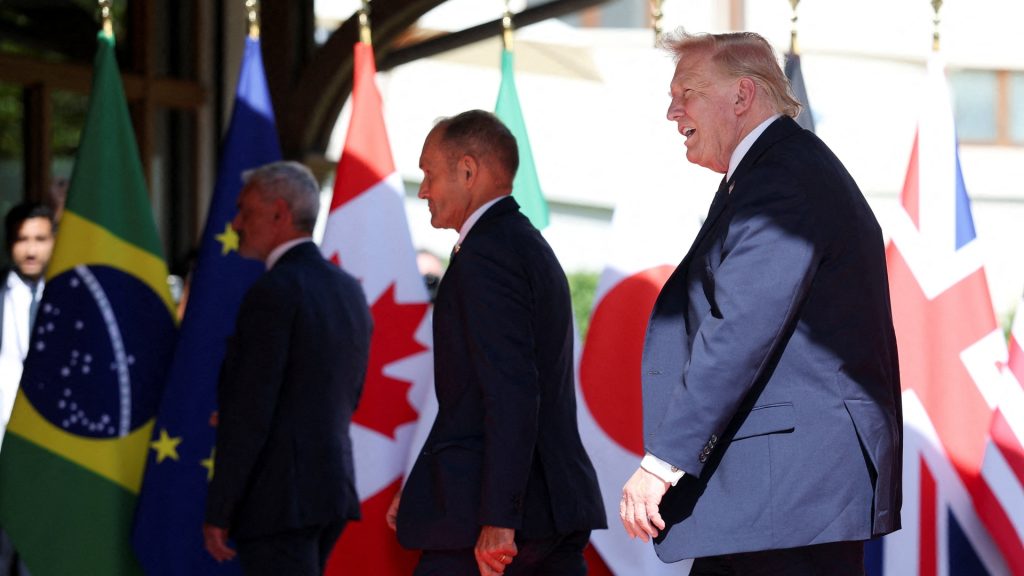
President Donald Trump will arrive in France on Monday with a newly announced Iran agreement in hand, a deal that immediately alters the opening conversation at the G7 Summit, even as many of the disputes between Washington and its allies remain unresolved.
For much of the past week, European governments were preparing for a summit dominated by a widening Middle East conflict, rising energy prices and the possibility of further military escalation. Instead, Trump will land in Évian-les-Bains after announcing an agreement to reopen the Strait of Hormuz and extend the ceasefire, while negotiators continue work on a broader settlement.
Iran changes the conversation
The agreement does not remove Iran from the agenda. If anything, it gives world leaders a different set of questions to tackle.
European capitals have spent months dealing with the economic effects of the conflict, particularly disruptions to shipping and energy markets tied to the closure of the Strait of Hormuz. The proposed reopening of the waterway would restore a critical route for global oil shipments and ease one of the biggest economic concerns hanging over the summit.

Trump is expected to discuss the agreement in meetings with French President Emmanuel Macron and other G7 leaders throughout the week. The White House has also indicated he will participate in discussions covering Ukraine, artificial intelligence, supply chains, migration and economic growth.
Long-running disputes remain
The Iran agreement may change the immediate focus, but it does not erase the disagreements that have accumulated between the U.S. and several of its closest allies.
Many European governments were frustrated by how little consultation occurred before military action against Iran.
Concerns also linger over the administration’s efforts to reduce some U.S. military commitments in Europe and Trump’s repeated criticism of NATO allies.
Trade remains another source of friction. So does artificial intelligence, where Washington and Europe are moving in very different directions on regulation and oversight.

Ukraine is also expected to remain a point of discussion. European leaders continue to push for stronger coordination and long-term support, while Trump’s approach has often differed from that of several governments gathered in France this week.
A broader agenda waits
French officials built much of the summit around economic security, global competition, technology and international stability.
For Trump, the trip offers an opportunity to present the Iran agreement as a diplomatic achievement before some of the world’s most influential leaders. For many of those leaders, the attention will quickly turn to implementation.
Round out your reading
- Could a common dietary supplement accelerate Alzheimer’s?
- NY AG Letitia James gets hundreds of taunts, racial slurs in ICE public reporting portal.
- As Musk becomes the first trillionaire, historian sees warning signs.
- An experimental weight loss drug is so effective, many Americans don’t care it’s not FDA approved.
- How search engine optimization reduced Simone Biles to an ‘NFL wife’.
Ella Rae Greene, Editor In Chief