Third AI leader out in a year as Trump’s China AI fight reignites
The Trump administration has now lost its third artificial intelligence testing chief in about a year. Chris Fall confirmed his resignation as the director of the Center for AI Standards and Innovation on Monday, Axios reported, after just three months in the role.
Fall’s resignation comes at a time when the administration reportedly debates whether to restrict cheaper yet still relatively powerful Chinese AI models, which U.S. companies are increasingly shifting towards.
CAISI, which is housed within the National Institute of Standards and Technology, is the U.S. Commerce Department’s hub for testing and evaluating the most advanced AI models. The Trump administration renamed and refocused the department toward “innovation” over “safety” when it took over the former U.S. AI Safety Institute in 2025.
Before Fall took over in April, the Trump administration pushed out CAISI’s previous director, Collin Burns, after just four days over his ties to Anthropic.
How has the Trump administration acted on AI?
When he started his second term, President Donald Trump said he would use a light hand when it came to AI. But as his term continued, the administration grew more aggressive toward the industry. In February, the Pentagon effectively blacklisted Anthropic after the company refused to loosen safeguards on autonomous weapons and surveillance use. Then in June, the Commerce Department ordered Anthropic to cut off foreign access to its two most advanced models, Fable 5 and Mythos 5, citing national security concerns.
The administration has also made moves to restrict Americans’ access to foreign-made AI models. According to sources that spoke to Axios, the Commerce Department considered adding multiple Chinese AI companies to its “Entity List,” which would prohibit Americans from accessing their software without a license.
But that wasn’t the only discussion the administration reportedly had involving China’s growing AI presence in the U.S. The National Security Agency and the White House Office of the National Cyber Director also considered releasing an advisory on Chinese AI lab threats in 2025. This would’ve discouraged U.S. companies from using Chinese AI models, Axios reported.
Another consideration from the White House was implementing an executive order that would’ve told U.S. companies they could only host Chinese AI models if they could guarantee security and take liability in the event of a security breach.
Administration officials worried that these proposals could stifle innovation and eventually won out, shutting down these proposals. Not everyone in Trump’s orbit thinks a ban is the right move. David Sacks, an outside White House AI adviser, argued in a post on X on Sunday that the push mainly serves the major AI companies like OpenAI and Anthropic. He labeled them a “duopoly” that is trying to eliminate open-source competition and said the rest of Silicon Valley should push back on their behalf.
But China’s release of its latest AI model has some in Silicon Valley and the White House on edge.
Could China’s latest AI release force the administration’s hand?
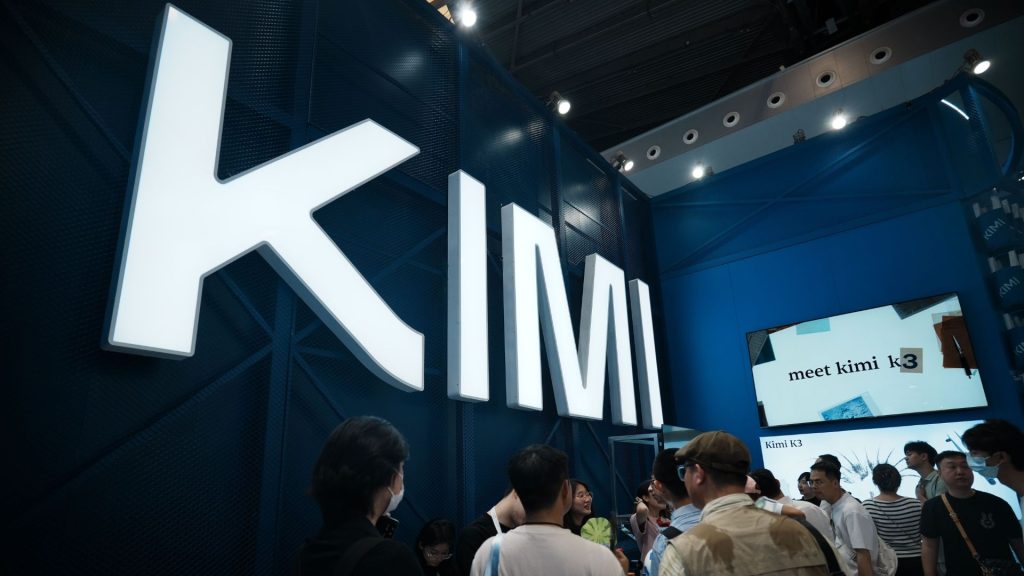
On Friday, Moonshot AI, a Beijing-based startup, released Kimi K3, the country’s most advanced publicly available AI model. The model outcompetes even the most advanced American models on some tasks like front-end coding, according to Arena, an AI evaluation platform.
Anastasios Angelopoulos, the cofounder and CEO of Arena, said the release “may be the single biggest release of the year,” according to Fortune.
Despite the promising results, Moonshot said the model still trails Fable 5 and GPT-5.6 Sol overall. But the release shocked Silicon Valley and discredited the assumption that China was still far behind the U.S. on AI development.
Axios reports that the release has reignited the administration’s internal push to restrict Chinese AI models, which was a fight national security hawks had been losing until now.
Who would be impacted by a possible ban?
The same qualities driving concerns in Washington — Chinese models match or even beat U.S. models at a fraction of the cost — are exactly why many American businesses are switching to them.
Chinese AI models cost as little as 18 cents per million tokens, versus roughly $4 for comparable American models, Straight Arrow previously reported.
U.S. usage of Chinese AI models has also surged. Weekly reliance on the models has stayed above 30% since February, according to data from OpenRouter, a platform that allows developers to use a wide range of AI programs. That’s up from an 11% average the year before.
One AI startup, Lindy, said in June that it moved all of its traffic from Anthropic’s Claude to DeepSeek, a switch its CEO said would save the company millions. Any moves to restrict access to China’s cheaper, yet still powerful models would test just how deep America’s businesses depend on the software.
What’s next?
The Commerce Department says a permanent CAISI director could be named within weeks, but the administration still hasn’t said whether it will act on Chinese AI models. Even if it does, the effects may be limited.
China is separately weighing restrictions on its own top models. But Chinese models are often open-weight, meaning companies can download and run the software on their own systems rather than access it only through the AI maker’s servers. This means that a company that’s already downloaded one can keep running it indefinitely.
Any future restrictions, American or Chinese, would likely only apply to models that haven’t been released yet. For companies that have already made the switch, like Lindy, they may be largely insulated either way.
Round out your reading
- From Obama to Trump to Biden: When networks said ‘no’ to presidential speeches.
- ‘The end of American science as we know it.’ White House funding plan sparks alarm.
- AI data centers are popping up everywhere. What exactly do they do?
- The Trump administration is accused of breaking a law built to target the KKK.
- One Republican senator is dead, another is still alive. Both are the center of conspiracy theories.
Ella Rae Greene, Editor In Chief