The US has a nuclear waste problem. Five states want to help with the cleanup
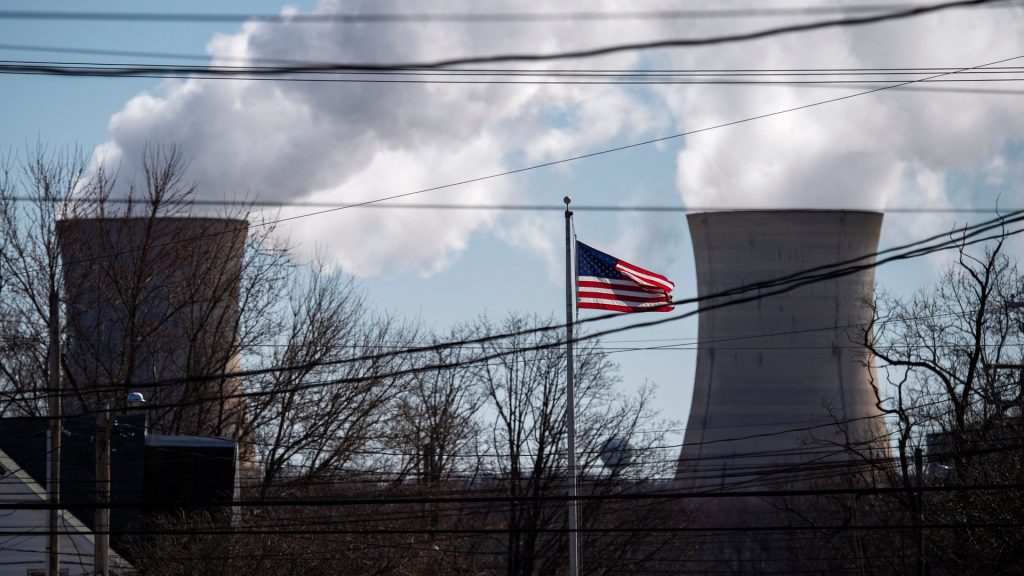
For decades, America’s nuclear waste problem has been buried — both literally and politically. That could be changing, at least in the short term.
Several states have now agreed to take a large part of America’s nuclear waste. At the same time, a government office says the country could be doing a much better job of disposing of waste from nuclear power plants.
While nuclear energy has been promoted as a cleaner alternative than fossil fuels for generating electricity, its byproduct is unavoidably dangerous.
“All nuclear plants, because of the way they produce energy by the nuclear fission reaction, will produce wastes, which are radioactive materials that are produced during the fission process, as well as materials that absorb some of the radiation,” M.V. Ramana, professor in the School of Public Policy and Global Affairs at the University of British Columbia, told Straight Arrow.
New state-federal agreement
For years, the federal government planned to build a permanent underground storage facility for nuclear waste in Yucca Mountain in Nevada. But that plan was never popular.
“Political opposition has essentially killed that site, so it’s no longer viable,” Edwin Lyman, director of nuclear power safety at the Union of Concerned Scientists in Washington, told Straight Arrow. “There’s no program to actually develop it, so the country has no other option right now.”

Without the Yucca Mountain facility, the waste is being stored at the nuclear plants themselves. Fifty-seven nuclear plants in 28 states operate 96 reactors, according to the U.S. Energy Information Administration.
But five states — Idaho, Louisiana, Oklahoma, Tennessee and Utah, all led by Republican governors — have all agreed to accept the country’s nuclear waste as part of a deal with the federal government. Twenty-six states submitted applications to the Department of Energy to handle the waste.
“These campuses will be massive generators of economic growth, create thousands of high-paying jobs, and be crucial to unleashing America’s nuclear renaissance,” Energy Secretary Chris Wright said last week in announcing the agreements.
While the states welcomed the economic boost, the deals contained an additional incentive: federal help to develop nuclear energy.
“Today marks a new frontier—the chance to add nuclear to our energy abundance agenda,” Oklahoma Gov. Kevin Stitt said.
These sites will be called Nuclear Lifecycle Innovation Campuses.
They would include waste sites along with areas for uranium enrichment and more.
The department says these new campuses have the potential to generate tens of billions in private investment and another $10 billion in tax revenue.
The federal government has no plans to put any money into these campuses.
“All they’re doing is putting some stamp of approval on a state so that the state can go and try to raise its own money for these facilities,” Lyman said.

While the government and states are touting the benefits, experts believe some pushback is expected because of the true goal of this program.
“The Trump administration’s program is deficient in a lot of respects,” Lyman said. “It’s trying to minimize or even conceal the fact that the core motivation for this program is finding a waste dump.”
These sites won’t be temporary, either.
Nuclear waste can last anywhere from hundreds of years to hundreds of thousands of years.
“Any community that is taking this on is undertaking to store these radioactive materials forever and ever essentially,” Ramana, the Canadian professor, said. “So, this is a problem that is going to be passed on to future generations.”
America’s waste concerns
The Energy Department announced the program the same week its handling of nuclear waste came under criticism in a new Government Accountability Office report.
The GAO estimates nuclear waste removal efforts in America will cost more than $640 billion and take decades.
The report compared waste removal in several other countries with the U.S., which produces significantly more nuclear waste than any other country.

France, which produces the second-most amount of waste, has full-scale test facilities to replicate operating nuclear cleanup facilities to solve technical problems and train workers before applying methods at actual sites. The GAO said this saves money and reduces disruptions.
Lyman, of the Union of Concerned Scientists, said France is no model, however.
“France has made some progress recently in advancing a repository site, but still most countries that generate nuclear waste aren’t any better off in the United States in terms of a long-term solution,” he said.
The United Kingdom has adopted a risk-based approach to nuclear cleanup, focusing resources on the most dangerous waste first. The GAO said this, too, saves money.
Like France, the U.K. reprocesses some waste, which separates it into usable materials, such as uranium and plutonium. These products can be used for nuclear weapons or, potentially, can be recycled into new reactor fuel. The Trump administration has advocated using plutonium from decommissioned warheads to power nuclear plants.
But Lyman said reprocessing doesn’t solve the problem.
“In fact, it makes it worse for a number of different reasons,” he said. “It’s very expensive compared to direct disposal. You still have waste streams that require geologic disposal even after you’ve processed spent fuel.”
Meanwhile, the U.K. and Canada have also created dedicated organizations to deal with nuclear waste, according to the GAO report.
“They try to set up some kind of an organization that is removed from the producers of the nuclear waste as well as from the ministries that are promoting nuclear power and hopefully a little bit more independent,” Ramana said.
Of all the countries, Finland is typically considered the most advanced when it comes to a long-term solution.
Its radioactive waste will be sealed in durable containers and buried hundreds of feet underground in stable bedrock for long-term isolation.
Finland also does not rank in the top 10 when it comes to the most nuclear waste.
The issue of nuclear waste
While nuclear plants generate only about 20% of America’s electricity, the waste they produce is a serious, long-term problem, experts say.

“It’s a major issue anywhere nuclear power is generated because you are producing this highly radioactive waste that does need long-term attention and sequestration,” Lyman said.
“It has to be kept away from any kind of contact with human beings as well as the environment more broadly,” Ramana said.
The new plan for dispersing waste to five states may need congressional approval. The Nuclear Waste Policy Act of 1982 designated Nevada as the sole location for waste storage. It’s unclear whether amending that law would receive bipartisan support.
“We’re facing a very dangerous time,” Lyman said. “Not just in terms of the potential for a continued generation of waste, where there’s no plausible solution here, but also potential for nuclear disasters like the world has seen in Chernobyl and Fukushima.”
Round out your reading
Why Gen Z is staying home on the weekends.
Autism research is entering a new era. Here’s what scientists are learning.
The big reason small cities want data centers. Hint: It’s not permanent jobs.
High school teacher arrested at city meeting after clapping for anti-data center speech.
Off Script: Everyone’s watching Michigan. Our reporter explains why the race just changed.
Ella Rae Greene, Editor In Chief