The impact of judicial employee furloughs is all just a matter of time
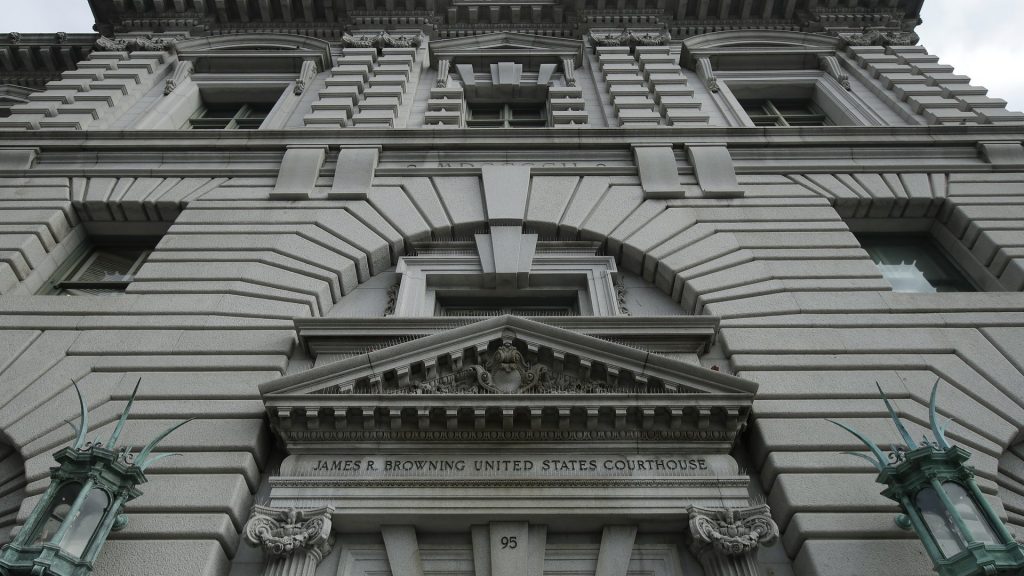
Furloughs are set to hit nonessential employees within the U.S. federal court system on Monday, signaling what could be a significant escalation in the ongoing government shutdown. While not unprecedented, it does mark the first time the federal judiciary has been affected by a shutdown in three decades.
Judge Robert Conrad, the director of the Administrative Office of the United States Courts, warned in a letter sent to court administrators on Thursday that if Congress doesn’t pass a funding bill by midnight on Monday, “furlough notices will be distributed, and orderly shutdown activities will commence.”
A matter of time
While the impact on the judicial system could be wide-ranging, it ultimately depends on how long the government shutdown lasts.
“Depending on how long this goes on, additional, deeper cuts or decisions will have to be made,” Scott Dodson, a professor and director of the Center for Litigation and the Courts at UC Law San Francisco, told Straight Arrow News. “But I don’t expect a lot of people to be furloughed that are absolutely essential to the workings of the adjudicatory system.”
According to Dodson, the first furloughs to hit the judiciary will likely affect employees in courthouse cafes, while judges, clerks and bailiffs should continue to be employed.
“The essential folks would be judges, the staff that helps them do their business, bailiffs to monitor the courthouses,” Dodson said. “The judiciary is not going to shut down, but the question is, which employees are necessary and which ones are not necessary for that particular outcome.”
Dodson added, “Basically, if they’re needed to help judges make their decisions and keep the adjudicatory system running, then they’re going to be essential.”
In a post to its X account on Friday, the GOP wing of the Senate Judiciary Committee blamed the shutdown on Democrats, writing, “They should be ashamed for obstructing federal courts & withholding critical government services.”
In his own post to X, ranking Democratic member of the Senate Judiciary Committee, Sen. Dick Durbin, D-Ill., wrote that “The Republicans’ lapse in funding is reaching our judicial system.” Durbin added, “This could mean justice delayed—or even justice denied. It’s past time for Republicans to get serious about making a deal.”
What could the impact be?
Whereas President Donald Trump has sought to use the shutdown as a pretext for widespread firings of federal employees, Dodson said checks on the executive branch’s power mean the administration has less room to implement its reduction-in-force agenda. However, the judicial branch could order layoffs if it deems them necessary.
“Trump doesn’t control the federal court system. He has plenary authority over the executive branch, but not the judicial branch. He doesn’t make hiring or firing decisions about judicial employees, so there won’t be any layoffs,” Dodson said. “Whether the judicial branch determines whether layoffs are financially prudent at the time is a different matter.”
Since the government officially shut down on Oct. 1, the federal judicial system has been operating on reserve funds, including the balances from pending court fees. Those reserves are now expected to dry up by Monday.
To keep the judiciary functioning in some capacity, judges’ salaries are protected by Article 3 of the Constitution. As such, criminal proceedings and emergency injunctions will continue to be heard by the courts, according to JD Journal. But other aspects of the federal judiciary overseen by administrative staff and IT workers could be affected, including court filings, case management and public records access.
“No one’s constitutionally protected except the federal judges themselves. And so, who gets furloughed, who gets docked pay, who gets terminated, that’s all going to be subject to the decisions within the judiciary,” Dodson said. “And I suspect the different courthouses may make different decisions about these kinds of matters, but they will start with people who really aren’t necessary to the effective functioning of the adjudicatory system.”
To offset costs, some courthouses might opt to reduce their opening hours, shift their schedules or modify their standard procedures.
“The Supreme Court, for example, has said that it is not going to allow public attendance at its oral arguments, just because to do so would require additional staffing, and that’s one area where the Supreme Court is cutting costs,” Dodson explained. “But it’s not going to affect, you know, the actual adjudication of the cases.”
JD Journal also notes that hearings and rulings will continue, but with reductions to the backbone of the courts –– that is, administrative support staff –– scheduling those hearings and processing those filings could be “significantly hampered.”
“This situation puts the judiciary in an impossible position — bound by constitutional duty but constrained by the lack of appropriations,” JD Journal quotes a former federal prosecutor as saying. “It’s a collision between law and politics that directly affects people’s access to justice.”
Is there a precedent?
Despite several government shutdowns in recent years, the federal judiciary hasn’t been impacted by a funding lapse since a 21-day stretch between 1995 and 1996, when President Bill Clinton was in office. At that time, roughly 20% of federal court employees wound up being furloughed, resulting in nationwide backlogs and delayed hearings.
However, rising operational costs and continued inflation have created a much different situation this time around.
“The courts have always prided themselves on being able to weather a funding storm better than most agencies. But the reality is that our reserve system was never meant to sustain a shutdown of this length with modern budget pressures,” a former federal court administrator said, according to JD Journal.
As for Dodson, he seems hopeful that the inner workings of one of the country’s most crucial institutions will continue with little to no disruption.
“I suspect at this time, the functioning of the judicial system will continue, looking fairly close to what it looks like when it’s fully funded, to the lay outsider,” Dodson told SAN. “If it goes on for a substantial amount of time, I’m not sure exactly what changes will be made and how that will look. But if it just goes on for a couple of weeks, I doubt that the American public is going to see too much difference.”
The post The impact of judicial employee furloughs is all just a matter of time appeared first on Straight Arrow News.
Ella Rae Greene, Editor In Chief