‘The end of an era’: What the cancellation of ‘The Late Show’ could mean for the future of late-night TV
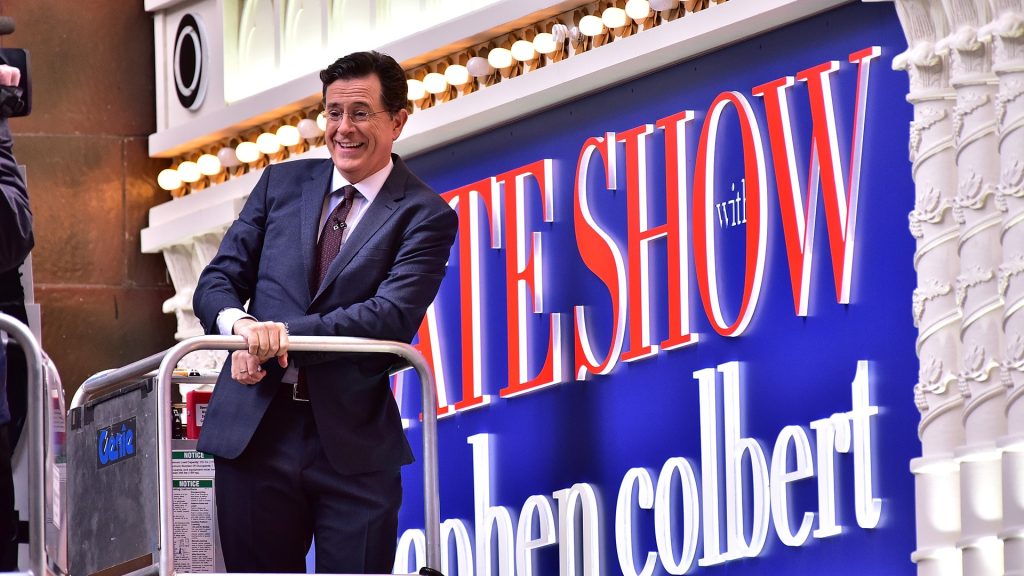
After 11 years, Stephen Colbert’s run as the host of “The Late Show” comes to an end this week, and it’s not going quietly. From enraged and saddened fans to industry insiders and even the show’s former host, many are predicting that the show’s end is the beginning of the end for late-night television.
Thursday, May 21, won’t just mark the end for Colbert – it marks the end of an era in late-night TV. CBS announced in July of last year that it would completely cancel “The Late Show,” which has been airing for nearly 33 years, citing financial reasons.
While no guests have been announced yet for Thursday’s series finale, this week will feature big names like Bruce Springsteen, Steven Spielberg and Jon Stewart.

‘I have every right to be pissed off’
One of the loudest critics of CBS’ choice to end the show is its former host, David Letterman. The comedian, who was the show’s creator and host for 22 years, made a final appearance opposite Colbert last week.
“I have every right to be pissed off, so I’ll just be pissed off here a little bit,” Letterman said. “Because this theater – you folks wouldn’t be in this theater if it weren’t for me. And Stephen wouldn’t be here if it weren’t for me. We rebuilt this theater, and then Stephen came in, and, look at this, it’s like the Bellagio.”
He added, “You can take a man’s show, you can’t take a man’s voice.”
Letterman signed off of the episode satirizing legendary CBS broadcaster Ed Murrow’s iconic farewell, “Goodnight and good luck, m********kers!”

Letterman isn’t the only one voicing solidarity with Colbert. At the end of Sunday’s episode of “Last Week Tonight,” host John Oliver urged his viewers to tune in for Colbert’s final show, echoing Letterman’s signoff.
In a show of solidarity, no new episodes of “Jimmy Kimmel Live!,” “The Tonight Show” starring Jimmy Fallon, or “Late Night with Seth Meyers” will air on Thursday. Instead, they’ll all air reruns.
CBS says it’s about numbers, not politics
In the months since announcing “The Late Show” would come to an end, CBS has maintained the decision was based on the show losing money, not on appeasing the Trump administration.
Unbiased. Straight Facts.TM
The first episode of “The Late Show” with Stephen Colbert as host aired on Sept. 8, 2015.

The timing of the announcement has been the topic of much discussion. At the time, CBS’ parent company, Paramount, was seeking the Trump administration’s approval of an $8.4 billion merger with Skydance Media.
Amid that attempt, Paramount settled a $16 million lawsuit with President Donald Trump over a “60 Minutes” interview with then-Vice President Kamala Harris that aired during the 2024 election. Trump had claimed the interview was edited to cast Harris in a more favorable light. Prior to the settlement, Paramount had dismissed the lawsuit as meritless.
In the wake of the settlement, Colbert called it offensive on air and said it damaged his trust in the company.
“Now, I believe this kind of complicated financial settlement with a sitting government official has a technical name in legal circles: It’s ‘big fat bribe,’” Colbert said at the time. “because this all comes as Paramount’s owners are trying to get the Trump administration to approve the sale of our network to a new owner, Skydance.”
Just days later, CBS announced “The Late Show” was coming to an end, calling it “purely a financial decision.”
While Colbert’s show was the top-rated late-night offering during its 11-year run, it is true that it was losing money. According to the advertising data firm Guideline, “The Late Show’ was losing up to $50 million per year.
But Colbert’s show is not an outlier. Ad spending on late-night programs across all networks fell almost 50% between 2018 and 2024, dropping from $439 million to $220 million, according to Guideline.
With the rise of streaming, late-night shows have seen a decline in viewers, despite clips frequently going viral on social media. However, Colbert has said the network never raised any financial concerns and did not push to cut costs.
Comparatively, when NBC saw a decline in revenue from its late-night programming, it got rid of Seth Meyers’ band and cut Jimmy Fallon’s show down to four days a week.
While ratings are declining for late-night broadcast shows, Fox News’ programming has seen a distinct rise in viewership. Conservative host Greg Gutfeld consistently draws in around 3 million viewers, although it is worth noting his show airs at 10 p.m. ET – a point in the primetime window where more people are awake.
‘The end of an era’
Perhaps former late-night host Conan O’Brien put it best when he made this prediction after learning “The Late Show” was coming to an end: “Late-night television as we have known it since around 1950 is going to disappear.”
In a recent interview with The New York Times, David Letterman also made a prediction that while “We still have Jimmy. We still have Seth [Meyers]. It’s not completely dead on arrival, but I would be surprised if it lasts more than a year or so.”
“It does feel like the end of an era,” Jason Lynch, the curator at The Paley Center for Media, told USA Today. “For decades, it seemed unfathomable that late night as we know it would ever cease to exist. Now, it’s fair to speculate if the current group of late-night hosts will be the very last people to ever have those jobs.”
“Colbert wanted a ‘Late Show’ that, in the era of Trump, could no longer exist,” The Washington Post’s Will Leitch wrote in an opinion piece last week.
Bill Carter, the editor at large for LateNighter.com, wrote in The New York Times that “having a late-night star on the air most weeknights has been a powerful statement, affirming that the broadcasters were still in the game.” Now, Carter accuses CBS of “assenting to its own diminishment.”
He added, “The biggest loss is to core America values, such as the right to speak freely, even in brutally mocking terms, about those in power.”
What’s next?
Starting Friday, “Comics Unleashed with Byron Allen” will take over “The Late Show’s” spot. Another of Allen’s show’s, “Funny You Should Ask,” will fill the two 30-minute slots after that.
Allen, who founded Allen Media Group, told TheWrap, “Between the two time periods, they’re saving approximately $150 million+ per year, just on production and marketing. That does not include what I’m paying. So it’s a great deal for CBS.”
Allen did not say how much he’s paying for “The Late Show’s” time slot.
As for Colbert, it’s not yet totally clear what the future holds for him.
He told The Hollywood Reporter that he’s looking forward to spending some time with his family.
“My brother is getting married, so my whole family is going to be here on the 21st, and then we’re all going to get on the train and go to D.C. for the wedding,” Colbert said. “So, immediately after the show’s over, there’s something much more important going on.”
Colbert has also signed on to co-write the script for a sequel film in “The Lord of the Rings” franchise alongside his son Peter McGee and screenwriter Philippa Boyens. He signed on for the project well before CBS canceled “The Late Show.”
He has said he started being approached about potential future projects as soon as his show’s cancellation was announced, but said he hadn’t accepted any other big projects because he wanted to focus solely on finishing “The Late Show” first.
Round out your reading
- They built an Epstein files library, but realized they couldn’t let everyone read them.
- The doctor who claims functional medicine reversed her MS.
- For many Americans, ‘one more round’ no longer serves their lifestyle or budget.
- Trump claimed economic data is ‘rigged.’ Former officials pledge to ‘watch like hawks’ for political manipulation.
- We’re building a new Straight Arrow. Help us shape our future by taking our survey.
Ella Rae Greene, Editor In Chief