The economics of an ICE raid: What’s left behind after agents complete mass arrests
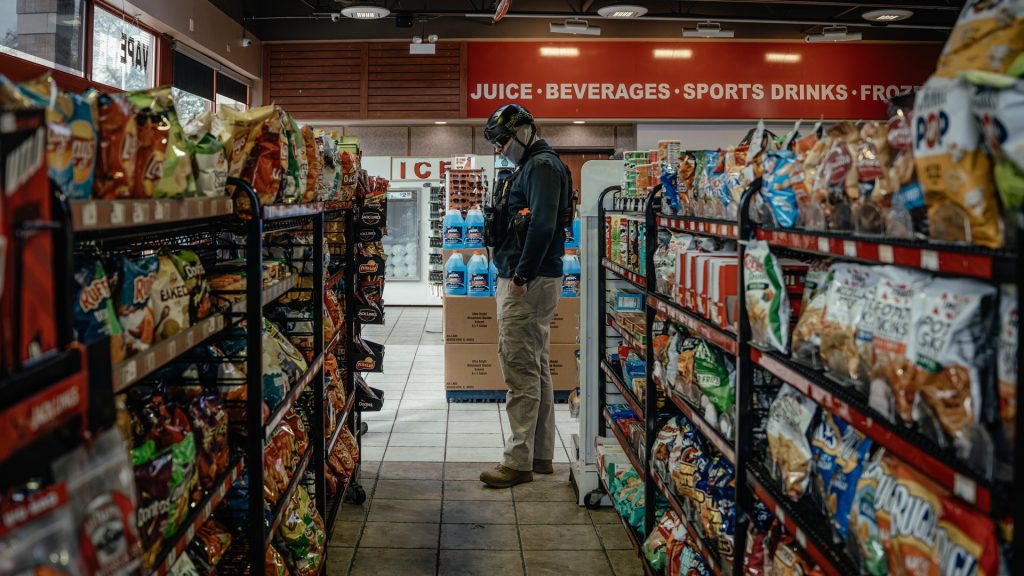
A national effort by several federal agencies to meet President Donald Trump’s deportation goals is not just putting a strain on government lawyers, but also local economies. A sharp decline in workers and customers has left business owners to choose between staying open or closing their doors for good.
The continued raids have lasting effects beyond removing alleged unauthorized immigrants. They have caused once-bustling neighborhoods to go dark and for booming construction companies to seek bankruptcy protection. University of Pennsylvania Wharton School professor Exequiel “Zeke” Hernandez told Straight Arrow News that small businesses are facing significant declines.
“The losses are in the millions of dollars over a period of a few weeks,” he said, speaking about small businesses as a collective.
At least one company has filed for Chapter 11 bankruptcy and directly cited the U.S. Immigration and Customs Enforcement raids as a reason. Law360 reported that 57 Concrete LLC in the Rio Grande Valley, which borders Mexico, said residential concrete sales declined by 60% in the beginning of May 2025 and they didn’t recover. About 70% of the company’s business is in residential work.
“These liquidity issues have not been caused by management, they have not been caused by mistakes in how they do business. These issues have been caused by the actions of the federal government and its immigration policies,” Law360 reported 57 Concrete’s bankruptcy lawyer Lenard Parkins said during a court hearing.
It is not isolated to southern border towns, Hernandez said, as the Trump administration has zeroed in on operations in Portland, Oregon; Chicago; Maine and the Twin Cities in Minnesota.
For the Twin Cities and largely Minnesota, the state’s top economist told the Minnesota Star Tribune that continued enforcement will drive out the stability many need during this time.
“So, businesses of all sorts in affected areas have workers who are worried about showing up,” Matt Varilek, commissioner of the state Department of Employment and Economic Development, told the Star Tribune. “They have customers who are worried about showing up.”
Five-fingered effect
Hernandez broke the economic impacts down to five effects that he’s seen play out in places like Los Angeles and Chicago. Those are consumption, taxes, labor and talent, investment and innovation.
“Hispanics in general, regardless of legal status, are afraid, and they’re restricting their work hours,” Hernandez said.
Fears about being detained by federal immigration authorities aren’t new. Throughout Trump’s first term as president, cities with high Hispanic populations began passing policies to make them sanctuary cities, whether in name or practice. Most policies shielded how cooperative local and state policing agencies can share information with the Department of Homeland Security and protected immigrants from federal officers when reporting crimes.
Coupled with the policies, places of worship became safe havens against federal immigration enforcement and challenged authorities’ ability to carry out final deportation orders. Safe havens weren’t restricted to one denomination as Catholic, Protestant, Muslim and Jewish places vowed to protect immigrants.
The raids have nearly doubled the number of detained immigrants compared to January of 2025, a TRAC report found. TRAC is a data repository whose numbers come from public information requests. On Jan. 26, 2025, there were 39,238 people detained by ICE and the Customs and Border Protection. One year later, 70,766 people were detained, an 80% increase.
For 57 Concrete, the raids shrank the number of people available to work for their contractors, which slowed business. They said in court records that residential construction relies on skilled workers from Mexico, but didn’t detail the legal status of those workers.
“As a direct result of these enforcement actions, many residential builders experienced acute labor shortages, work stoppages, and project suspensions,” the company said in court papers. “In numerous instances, projects were delayed or abandoned entirely due to the inability to staff job sites.”
The National Association of Home Builders said foreign-born migrant workers make up about 38% of all construction industry workers in Texas, one of the highest rates in the country behind Florida, New Jersey and California.
The story is just as severe in California, where the Bay Area Council Economic Institute studied the 2025 raids and said that about 25% of the state’s agricultural workforce are unauthorized immigrants. If they were removed, the absence would shrink California’s gross domestic product by 14%. Overall, immigrants of any status dominated the agriculture industry, taking 63.1% of the workforce share.
Hernandez said workers aren’t just in the U.S. to make a living. Some have lived in the country for numerous years, created families and helped fuel the investment and innovation needed for small businesses to thrive.
It’s not restricted to California. The Bay Area group found that about 45% of all Fortune 500 companies were founded by immigrants or their children. That count includes Apple, founded by American-born Syrian Steve Jobs; Google, cofounded by Russian Sergey Brin; and NVIDIA, cofounded by Taiwanese immigrant Jensen Huang, according to the American Immigration Council. All three of the aforementioned founders were in the U.S. legally.
“When you instill fear or remove people that are ensconced in our communities like that, the economic damage is much more severe,” Hernandez said.
It takes a village
Reversing or stabilizing the effects requires several different approaches, Hernandez said. He noted that the biggest move could come from Congress, narrowing DHS’ scope. But with immigration a divisive issue, the brunt of the work falls to neighborhoods.
“The problem with local officials is that they make the moral and legal case, which again is very important, right?” he said. “But they’re not articulating clearly, ‘here are the quantifiable ways in which our economy is suffering.’”
He advised people to get on the ground and support their local businesses. He’s seen people help deliver groceries to families, organize carpools to get kids to school and otherwise volunteer to help businesses. He noted that those efforts help soften the blow, but more needs to be done.
“We need to talk about the economic case more,” Hernandez said.
The post The economics of an ICE raid: What’s left behind after agents complete mass arrests appeared first on Straight Arrow News.
Ella Rae Greene, Editor In Chief