The $30M fight over pigs, pork and state power
In early June, Sen. Roger Marshall, R-Kan., withdrew his sponsorship of the Save Our Bacon Act, a bill that would override state animal welfare laws. His withdrawal was the first time in three years that Republicans broke from pushing the legislation, giving critics something litigation and lobbying couldn’t.
On Tuesday, the provision’s fate became more uncertain when Senate Agriculture Committee Chairman John Boozman, R-Ark., released his version of the farm bill without it.
Supporters, like the National Pork Producers Council, argue this is a cost issue. The NPPC cites a study from North Dakota State University that prices for Proposition 12-covered products rose nearly 20% in California. But critics say that’s overstated, citing data from the U.S. Department of Agriculture showing that about 27% of producers are already compliant without major market disruption.
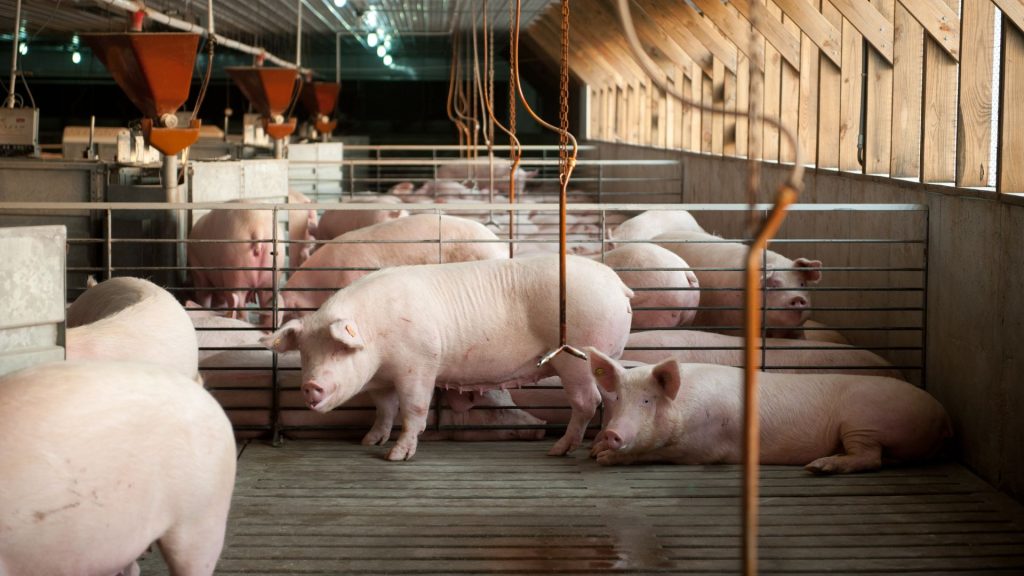
The measure would bar states from imposing livestock-housing standards on animals raised outside their borders. Lawmakers specifically wrote the bill to nullify two voter-approved laws, California’s Proposition 12 and Massachusetts’ Question 3, which set minimum space requirements for pigs, calves and egg-laying hens. The U.S. House of Representatives folded the provision into its version of the 2026 farm bill and passed it in April on a 224-200 vote, largely along party lines.
The Senate’s draft, released Tuesday, leaves it out. But proponents of the bill continue to push for it, despite the low likelihood that it will pass the Senate’s 60-vote supermajority rule.
What is the Save Our Bacon Act?
In 2018, California voters approved Proposition 12 with more than 60% supporting it. Two years earlier, Massachusetts voters approved Question 3 with nearly 80% support. Then, the U.S. Supreme Court ruled 5-4 in 2023 to uphold California’s law.
Following the ruling, Marshall and Rep. Ashley Hinson, R-Iowa, introduced the Ending Agricultural Trade Suppression Act, or EATS Act, that same year to override both laws. But the efforts stalled. Hinson reintroduced the measure as the standalone Save Our Bacon Act in July 2025.
The provision was later folded into the House’s farm bill, which lawmakers later passed. But Boozman warned that he didn’t have the votes to pass the bill in the Senate with the measure’s language still inside, saying he didn’t believe “there’s a single Democrat that would vote for it.”
After Marshall withdrew his sponsorship of the bill, the measure lost one of its most vocal supporters, as he had been fighting for it since the original EATS Act. His office told AG Bull Trading that he is now prioritizing year-round E15 ethanol sales and helping Boozman finish the farm bill. The Save Our Bacon Act still has plenty of Republican co-sponsors, but it shows that the GOP may be softening its support of the provision.
The president of the NPPC, Rob Brenneman, called the move “disheartening,” saying Marshall was one of the strongest voices arguing against Proposition 12.
How are groups lobbying
The NPPC has been the bill’s most vocal advocate. The group led a large coalition of 330 agricultural organizations in a letter to Senate Agriculture Committee leaders earlier this week. In the letter, the group urged senators to include the Proposition 12 prohibition in the final bill.
According to Sentient Media, the NPPC spent $260,000 in the first quarter of 2026 lobbying on the issue, among others. Responding to the draft released Tuesday, Brenneman said that “it’s the Senate’s turn to deliver on a farm bill for all of rural America.”
“While there is certainly room for improvement, we appreciate the Chairman putting forward a discussion draft to guide a path forward,” Brenneman said. “America’s pork producers will continue to advocate for a Prop. 12 fix in the formal farm bill like our livelihood depends on it—because it does.”
Those opposing the Save Our Bacon Act have responded with bigger numbers. The American Meat Producers Association, which is a coalition of independent farmers and meat companies formed to counter the NPPC, launched a $30 million ad campaign. The campaign targeted TV, radio and digital spaces, urging senators to keep the provision out of the final bill.
AMPA President Holly Bice called the measure “a poison pill” that would primarily benefit Smithfield Foods, the country’s largest pork producer, which is owned by a Chinese conglomerate, at the expense of independent family farms.
“We’re pleased Senator Boozman recognizes that the corrupt ‘Save Our Bacon’ Act is a poison pill in the farm bill and has left this dangerous provision out of his draft,” Bice said, according to National Hog Farmer. “The Save Our Bacon Act saves China’s pork industry at the expense of American family farmers and producers.”
What’s next for the bill?
The Save Our Bacon Act’s path forward is complicated. Boozman said that he would hold a Senate Agriculture Committee markup in July after they return from the July 4 recess but before the chamber’s August recess. A markup is a formal committee process in which members can debate a bill section by section and propose changes.
If the bill clears the committee, it then moves to the floor, where it would need 60 votes to survive a filibuster. If the Senate ultimately passes a version of the bill without the provision in it while the House version keeps it, then a conference committee would have to reconcile the two chambers before any bill makes it to the president’s desk.
Boozman, or any of the other Republican senators supporting the Save Our Bacon Act, could offer a floor amendment to include it. But the practical power belongs to Senate Agriculture Committee ranking member Amy Klobuchar, D-Minn. Without her support, and a handful of other Democrats, the bill won’t have the 60 votes it needs to pass the Senate.
Round out your reading
- Not red or blue: America’s politically homeless middle.
- Peter Thiel’s ‘Dialog’ network was super-secret. A data leak changed that.
- The novel legal strategy that Taylor Swift and Matthew McConaughey are using to fight AI.
- Illinois balances budget with new $200 million social media tax that tracks in-state users.
- When Trump serves up ‘Just the News,’ it comes with a side of bias.
Ella Rae Greene, Editor In Chief