Summer electric bills could rise 10.5% this year. See where costs are up most
Summer weather is here: Heat advisories were in effect last week from California and Utah to Texas and Florida. In the coming days, the National Weather Service forecasts hazardous heat in 11 states across the Gulf and southern Atlantic coasts, with more than 34 million people facing what’s categorized as a major heat risk.
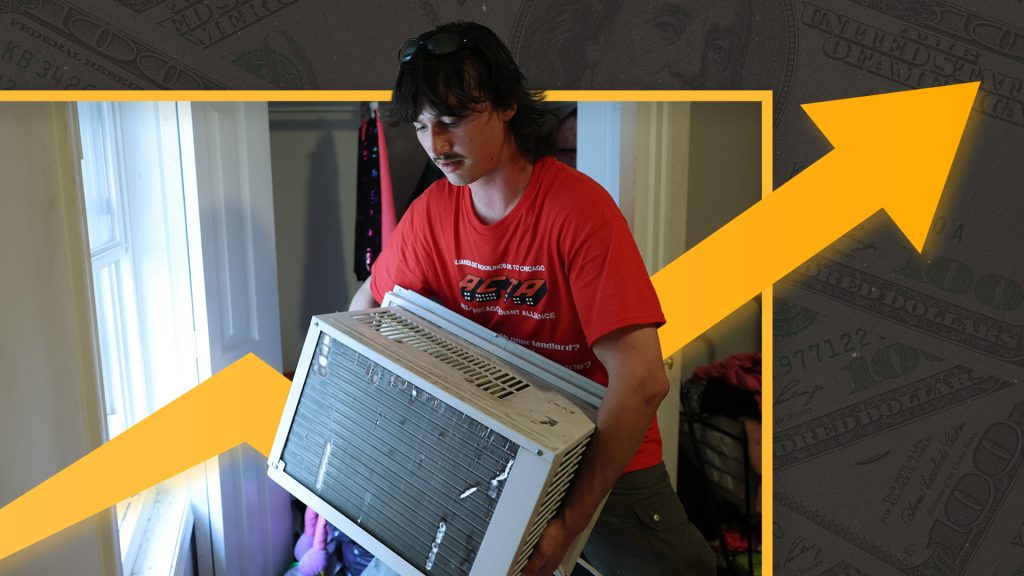
For most Americans, the heat means you’re either dipping into a pool or staying indoors and making sure that the air conditioning is turned up. This year, that comfort from sweltering weather will cost more than it did last summer, thanks to the trend of increasing electricity rates.
Residential electricity bills are projected to rise by 10.5% in the months of June to September this year, compared to 2025, according to a report from the National Energy Assistance Directors Association and the Center for Energy Poverty and Climate.
The average household electricity bill for those four months combined will be $792, the report said. The finding is based on data on electricity rates from the U.S. Energy Information Administration and temperature projections from the National Oceanic and Atmospheric Administration.
America’s electric grid is in the midst of a transformation. Maintenance costs on power plants and transmission lines built decades ago are adding up, and billion-dollar repairs are often needed after disasters like hurricanes and wildfires. Data centers are driving up demand for electricity and the infrastructure to grow the grid. All of it factors into monthly household utility bills, and, for most regions across the U.S., summer is when Americans use the most electricity.
“For a vast majority of Americans, these significantly higher energy prices pose very fundamental household-level challenges,” Sanya Carley, faculty director of the Kleinman Center for Energy Policy at the University of Pennsylvania, told Straight Arrow.
Straight Arrow’s exclusive data analysis
The financial impact is not spread equally across all 50 states. It’s concentrated in areas where Carley described the “double whammy” in places seeing higher energy prices that outpace inflation and extreme heat.
In 2025, the average American household spent $112 more on electricity during the combined months of June, July and August than they spent in 2021. Straight Arrow analyzed data on monthly electricity rates by state and regional differences in summertime electricity consumption from the Energy Information Administration. The analysis found summertime electricity costs increased the most in the South and Northeast.
Residents of Maine, New Jersey and Maryland paid upwards of $200 more across the peak summer months in 2025 compared to 2021. In Washington, D.C. — where the local media The 51st reports utility company Pepco has initiated two multi-year rate hikes since 2021 — summer electricity bills soared by $390.
The Pacific Coast states have among the lowest demand for electricity in the summer. The difference between California’s average increase of $102 and neighboring Oregon’s $40 demonstrates how much faster electricity prices are increasing in the Golden State. Residents in northern states like Washington also use more electricity during the winter than in the summer.
California is one of 12 states where the average household spends a total of $600 or more to stay cool through June, July and August, according to Straight Arrow’s analysis.
What’s next for rising electricity bills?
Electricity bill increases are not slowing down. Electricity prices are forecast to rise another 5.6% this year, according to the Energy Information Administration’s latest short-term energy outlook report.
The exact drivers of electricity bill increases vary by region, but as utility companies make repairs or build new infrastructure, much of the cost gets passed on to consumers. With rising electricity demand, utility companies are racing to upgrade power lines and add new sources of electricity.
“Right now, we’re essentially paying double,” said Larry Paulhus, head of electric utility consulting at the firm RINA North America. “We’re paying the high market cost because the infrastructure isn’t there, and also paying the cost of building the new infrastructure that’s needed.”
Data centers add more upward pressure to rates, Paulhus said. Even if the tech companies pay for new electricity infrastructure, data centers are affecting supply and demand of electricity markets, leading to higher prices, especially in the Mid-Atlantic region’s PJM grid.
Are households receiving any support?
The burden of high electricity bills in the summer falls especially hard on residents in Southern states with lower incomes. In Alabama, a household making the median monthly income of $5,503 per month spends 4.4% of it on electricity in the summer, according to a report from Consumer Affairs.
The report found that residents making the median monthly income in Mississippi, Louisiana, Texas and Arizona also spend more than 3.8% of it on electricity during the summer months.
“For families already struggling to make ends meet, higher cooling costs can force difficult choices between paying utility bills and covering other necessities such as food, rent, or medicine,” said Mark Wolfe, executive director of the National Energy Assistance Directors Association, in a press release.
Wolfe’s organization is advocating for an increase in funding for the federal Low Income Home Energy Assistance Program (LIHEAP), which sends money to state programs to help low-income residents pay for utility bills and make energy-efficiency improvements.
In 2024, 13.4 million electric utility customers had their power shut off due to unpaid bills, an April report found. As many as 1 in 3 Americans have reported that they struggle to pay the utility bill each month.
Another policy solution, highlighted by Carley, is state laws that bar utilities from disconnecting customers during hot periods. Twenty-five states now have heat-related disconnection protections, a trend Carley is hopeful will continue given the life-threatening nature of going without power during hot weather.
“There are already so many other households that are essentially on the margins that they could become compromised as energy bills continue to rise,” Carley said.
Round out your reading
- Not red or blue: America’s politically homeless middle.
- Peter Thiel’s ‘Dialog’ network was super-secret. A data leak changed that.
- The novel legal strategy that Taylor Swift and Matthew McConaughey are using to fight AI.
- Illinois balances budget with new $200 million social media tax that tracks in-state users.
- When Trump serves up ‘Just the News,’ it comes with a side of bias.
Ella Rae Greene, Editor In Chief