States take aim at data center electric rates. Here’s why it won’t lower your bill
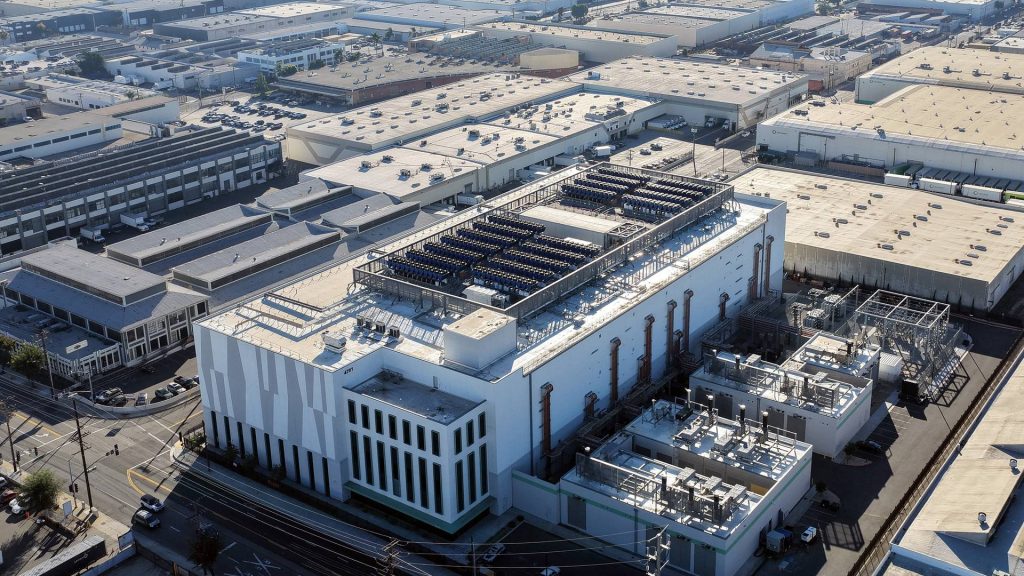
As the data center boom takes hold, lawmakers in dozens of states are looking to blunt the impact of high electricity prices.
“There’s going to be a tremendous need for new electricity, new infrastructure to serve data centers and other large loads,” said Daniel Tait, research and communications director at the Energy and Policy Institute, a national nonprofit that monitors the electric utility industry.
Electricity rates are already a major driver of inflation. Data centers are set to consume about half of all the new electricity added to the grid through 2030, and their size is reshaping electricity markets. Consumer advocates worry the costs of upgrading the grid could fall on all electricity customers, especially if current hype around artificial intelligence fades. To get ahead of the problem, state legislatures are creating distinct customer classes aimed at making Big Tech pay not only for its power, but for new infrastructure and risk mitigation.
Who has authority over electricity prices?
A variety of government bodies and corporations all play a role in determining the amount on Americans’ monthly bills. And the exact configuration of who has ultimate power to set rates varies by state.
In general, public utilities commissions — sometimes called public service commissions — are the state regulatory board with authority over electric utilities. When an electric utility company wants to raise customer rates, the commission must grant approval.
The commissions issue rate increases so utility companies have funds to cover the cost of maintaining the power grid and building new infrastructure as needed. They also have control over what kinds of expenses utilities can pass to customers and the percentage of profit companies can make on new infrastructure spending.
But, as Tait told Straight Arrow News, state legislatures “could direct the PUC to do specific things that affect the profit, that affect what is allowable to be charged” to customers. That means many state legislatures can lower customers’ rates.
However, in some states where the commission is created by a constitutional amendment, legislative action doesn’t carry a mandate. And other states that allow residents to select their own plan among a variety of power suppliers have less direct control over electricity rates.
What are states doing about data centers?
As Big Tech marshals its financial resources to break ground on hundreds of new data centers, states are looking to protect ratepayers.
“Left, right, red, blue — you name it: There’s probably a proposal in your state to do something about this,” Tait said.
So far, lawmakers have tried creating a new category of utility customers for large electricity consumers — those that use at least as much electricity as tens of thousands of homes.
For example, in Delaware, House Bill 233 directs the state Public Service Commission to create new rates for any data center that can consume 20 megawatts of power or more. The electric rate paid by these customers will be distinct from existing rates for residential, commercial or industrial loads. In addition to covering the direct costs of serving the data centers, the bill calls for data center electric rates that “mitigate the risk of other classes of retail electricity consumers paying unwarranted costs,” and offset the wider risk of making the grid less reliable.
“It is critical that we put proper guardrails in place,” said state Sen. Stephanie Hansen, one of the bill’s sponsors, in a press release. Hansen added that the bill aims to ensure large energy users are “paying their fair share for energy and distribution.”
While the bill passed out of committee, lawmakers have not yet taken a full vote on it.
How do state proposals differ?
Delaware is hardly alone when it comes to pending legislation.
In California, SB 978 would establish a new rate class for facilities that can draw 75 megawatts or more from the grid. One megawatt can typically power 400 to 700 homes, depending on time of day and weather conditions; 75 megawatts would equal up to 50,000 homes. Proposals in Iowa (SB 2324) and New York (S8540) each join Delaware in establishing a 20-megawatt threshold — about as much as 8,000 to 14,000 homes.
Other states have proposed rates that kick in at 30, 40 or 50 megawatts. In total, about a dozen states have already passed new laws around electric rates for data centers, and at least nine states have legislation pending, including Arizona, Alabama, Georgia, Illinois and Maryland.
Even if state law does not require special rate classes for data centers, many utility companies are pursuing this avenue on their own. By the end of 2025, utility companies in 34 states had created 65 special electric rates — known as tariffs — for specific large power users, Latitude Media reported.
The new rates for data centers also typically include minimum contract length terms. The company behind a large electric load will have to keep paying for a portion of increased system costs for the length of the agreement — often 15 years — even if the data center is abandoned. This is intended to mitigate the risk for utility companies that invest in new infrastructure to serve large customers.
“You have to agree to pay these costs for a minimum of 10 or 15 years, so that even if you change your mind, we don’t accidentally harm other customer classes because of that,” Tait said.
Why don’t more states try to directly lower electric bills?
Tait supports distinct rate classes for data centers, but said it’s not enough.
“Solving this problem is very good and should be done,” said Tait. But, he added, “that alone is not going to bring people the relief that they’re looking for.”
Instead he pointed to state legislatures’ power to affect existing customer rates by lowering the guaranteed rate of return utility companies earn on infrastructure spending, or changing which costs companies are allowed to pass on to customers.
In Florida, where state regulators approved a $7 billion rate increase last year, one proposed bill would limit the return on equity and limit costs from being passed on, but it has yet to receive a vote.
Legislation like that, however, faces powerful opposition. Tait said solutions to reduce existing customer bills are less common due to the “political influence and, frankly, control of utilities.”
“Addressing things like data centers and those costs moving forward are very non threatening to a utility,” Tait said. “Addressing things like return on equity or what actually can get charged into the rate base. Now that is a big deal to shareholders and investors.”
Ella Rae Greene, Editor In Chief