Smartwatches are getting smarter. Is healthcare ready?
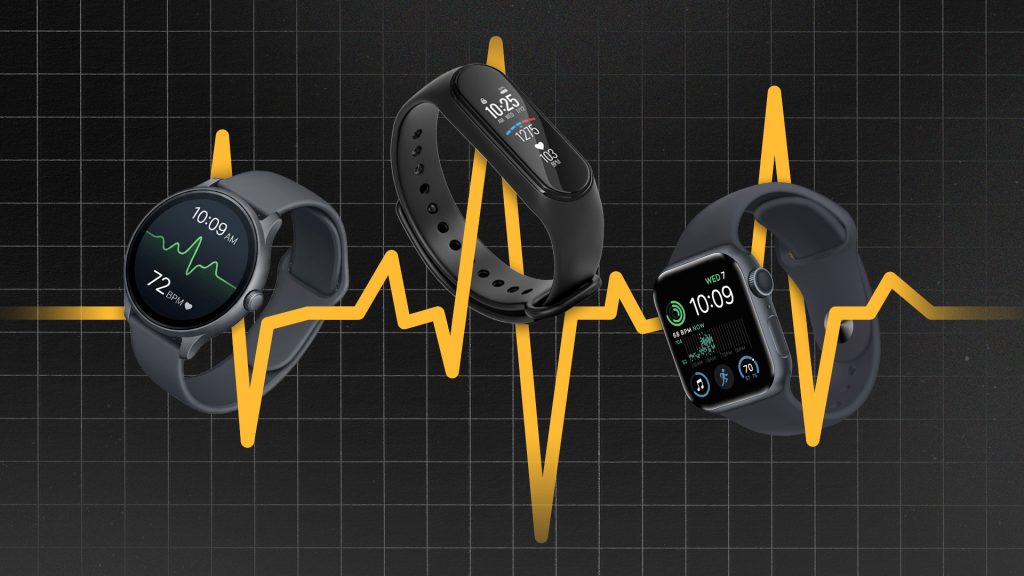
When the first activity trackers hit the market in the 1960s, they did one thing: counted steps. In the 1980s and 1990s, athletes started wearing heart-rate monitors. In the early 2000s, tech companies like Fitbit and Garmin added GPS features, allowing runners and cyclists to track speed, distance and pace. Wearable technology expanded from shoe-mounted sensors and chest straps to armbands and wristwatches.
Today, a single smartwatch — or smart ring — can continuously monitor heart rate, stress, physical activity and dozens of other metrics. Some can even detect irregular heart rhythms or early signs of illness.
Researchers increasingly see these devices as something far more ambitious than fitness gadgets. They envision a future where artificial intelligence combines wearable data with blood tests, genomics and other biomarkers to detect disease earlier, personalize treatment and shift medicine from reacting to illness to preventing it.
“They’re amazing,” said Michael Snyder, a professor of genetics at Stanford Medicine who has spent years studying wearable devices and famously wears four different smartwatches, two smart rings and an exposometer to measure airborne exposures. “They track your health 24/7 as long as you keep them charged.”
Snyder compares wearables to the dashboard of a car.
“You don’t drive a car without sensors and a dashboard,” he said. “Yet we do that for our health. We run around without any sensors and health dashboards.” His research has shown that changes in metrics such as resting heart rate and heart-rate variability can identify respiratory viral infections before symptoms appear.
“We think this is the tip of the iceberg.”
As wearables become increasingly capable of monitoring the human body, many researchers say the bigger challenge is no longer simply collecting accurate data; it’s determining how to turn the flood of information into meaningful insights for users, and perhaps, even for their doctors. Snyder and other researchers are hopeful that wearables could revolutionize personalized medicine. But it is unclear if the U.S. healthcare system can make use of smartwatch data — and whether consumers trust that their most personal health information will remain private.
How accurate are today’s wearables?
Researchers say wearable activity trackers have become increasingly accurate at measuring dozens of different metrics from heart rate and heart rate variability to blood oxygen and skin temperature. Snyder and his colleagues routinely compare wearables with clinical-grade devices and generally, he said, most line up well.

Jessilyn Dunn, a biomedical engineering professor at Duke University, said many of the sensors in today’s wearables use the same underlying technology as medical devices already found in hospitals and clinics. Pulse oximeters, the small devices that clip to a patient’s fingertip, use beams of light to estimate blood oxygen levels and heart rate. Smartwatches use a similar approach, using sensors on the underside of the watch.
But not all wearables collect data the same way. Many devices measure the same physiological signals, Snyder said, but might differ in how frequently they collect data or how much information is collected. For example, the Apple Watch measures heart rate more frequently than some competing devices, making it better suited to capturing brief spikes in heart rate. The trade-off, Snyder said, is shorter battery life.
Snyder said the trickiest activity to measure is sleep.
“In general, none of the devices are perfect,” he said.
Kelly Glazer Baron, a behavioral sleep medicine researcher at the University of Utah, said that’s because wearables aren’t actually measuring sleep itself. “Sleep is defined by the rhythmic firing of neurons in your brain,” she said. “Everything else we’re doing based on heart rate, movement, temperature, all that is trying to estimate the brain.”
Today’s newest devices have improved substantially, Baron said. Most estimate total sleep duration within about eight to 10 minutes of a laboratory sleep study, in which researchers hook sleeping patients up to an EEG to directly measure electrical activity in the brain.
Measuring sleep stages, however, is less precise.
While most wearables agree with EEG sleep studies about 70% of the time when classifying sleep into its four main categories — wakefulness, light sleep, deep sleep and REM — Baron said the bigger challenge is how people interpret those numbers. Patients frequently come to her worried that they aren’t getting enough REM or deep sleep, even though those measurements can vary widely from person to person and have limited clinical significance for most people.
“It’s a beautiful picture to see your sleep stages,” Baron said, but “there’s a tendency to overestimate that staging data.”
More than half of a typical night’s sleep is naturally spent in light sleep, she noted. Medications, age and a slew of other factors can influence REM and deep sleep in ways that aren’t necessarily cause for concern, she said.

Data deluge
Advances in genetic testing, blood biomarkers, microbiome research and artificial intelligence are increasingly moving medicine away from a one-size-fits-all approach toward more personalized care, allowing physicians to tailor prevention and treatment to each individual patient. Snyder believes wearable devices could become a key part of that transformation.
For one, they continuously monitor a person’s physiology, creating a far richer picture of health than the single snapshot captured during an annual office visit — which can be influenced by temporary factors such as illness, stress, a poor night’s sleep or even white coat syndrome, where the nervousness or anxiety of being in a medical setting spikes a patient’s blood pressure.
Moreover, Snyder envisions a future in which physicians compare patients against their own historical baseline rather than broad population-based reference ranges. Medical textbooks and organizations such as the American Heart Association and Cleveland Clinic, for example, define a “normal” resting heart rate for adults as 60 to 100 beats per minute and normal blood pressure as less than 120/80 — thresholds derived from large populations that help identify people at increased risk of disease.
Data collected by wearable devices could create unique reference ranges for each patient, allowing physicians to detect meaningful departures from that person’s typical patterns even when measurements remain within traditional “healthy” ranges. A resting heart rate of 80 beats per minute, for example, may be perfectly normal for the general population but represent a significant change for someone whose usual resting heart rate is 60.
“It’s the delta that counts,” Snyder said. “It’s the shift from your baseline.” A sudden increase in resting heart rate or drop in heart-rate variability might indicate the body is under stress, he explained.
Snyder and other researchers have already begun testing this idea. During the COVID-19 pandemic, his team developed a smartwatch-based alert system that continuously monitored participants’ heart rate and activity levels, looking for meaningful departures from each person’s baseline. When the system detected a sustained change, participants were asked what might have triggered it, such as vigorous exercise, emotional stress or illness.
The researchers wanted to determine whether physiological changes could serve as an early warning sign of COVID-19 infection. In many cases, it did. The system detected more than 80% of infections before or at symptom onset, with physiological changes appearing a median of three days before symptoms.
While Snyder’s findings offer a glimpse of how continuous monitoring could help detect disease, translating the constant stream of smartwatch data into meaningful information is far more difficult than simply collecting and analyzing it.
A modern wearable device records thousands of measurements every day. By themselves, most have little clinical value. Much of that information remains locked inside company-specific platforms disconnected from electronic health records or other clinical systems. Even when the data are available, few physicians have the time or desire to sift through months of heart-rate readings, sleep scores and activity logs. But researchers like Duke University’s Dunn are developing digital biomarkers — models that combine many different metrics to identify people at risk for prediabetes, respiratory infections or complications following surgery.
Rather than presenting physicians with raw smartwatch data, Dunn envisions a standardized dashboard or report that highlights meaningful changes — much like a routine bloodwork report. The goal is not to ask clinicians to interpret thousands of data points, but to surface only the information that could change medical care.
Much of that work remains experimental, but Dunn said researchers are getting “very close.” Even today, many wearable technology companies generate proprietary health scores — such as readiness, recovery or stress scores — that function as digital biomarkers. The difference, she said, is that companies don’t always publicly report how those algorithms were developed, validated or how accurately they perform.
Researchers say two major hurdles remain before wearable-derived data become a routine part of healthcare: integrating them into a reactionary healthcare system currently designed to treat, rather than prevent, illness and establishing clear standards for when data or digital biomarkers are accurate and reliable enough to guide patient care.
From data to better health
Even as smartwatches collect increasingly sophisticated health data and researchers become better at translating those measurements into meaningful insights, that information doesn’t automatically translate into better health. One reason, researchers say, is that it’s difficult to turn information into sustained behavior change.
“Just because you have a lot of information doesn’t mean you’re going to do something with it,” John Jakicic, professor of physical activity and weight management at the University of Kansas Medical Center, said.
Activity trackers are built on a simple theory of behavior change: people monitor their behavior, receive feedback and adjust their actions accordingly. Someone who sees they are falling short of a daily step goal, for example, might choose to take an evening walk.
“But that doesn’t always work,” Jakicic said.
In one of the first large randomized clinical trials to evaluate wearable activity trackers for weight loss, Jakicic, then at the University of Pittsburgh, and his colleagues enrolled 471 young adults in a two-year weight-loss program that required a low-calorie diet, increased physical activity and group counseling sessions. After six months, study participants were randomly assigned to different additional interventions. One group was given a wearable device to track their diet and physical activity. At the end of the study, participants using the wearable lost less weight on average than those who did not receive the device.
Subsequent studies painted a more nuanced picture. Meta-analyses suggest wearable devices can modestly increase physical activity and support weight loss, particularly when combined with coaching, personalized feedback and other evidence-based behavioral interventions.
“For certain people, it works well,” Jakicic said. “For others, it just becomes white noise over time.” Some early studies showed that after about 12 to 24 weeks, the impact of wearables evaporates. “A lot of people stopped paying attention to them,” he said. “I think that it’s a mixed bag.”

Jakicic said researchers still don’t fully understand who is most likely to benefit from wearable devices and who might toss it in a drawer after a few months. Long-term studies linking device-use patterns with individual characteristics and health outcomes could help identify who benefits — and what additional support they need.
A broken system
Even when wearable data doesn’t translate into sustained behavior change, it has the potential to inform conversations between patients and their physicians. But that information doesn’t always make its way into the healthcare system in a meaningful way.
Jakicic said some patients now bring data from their smartwatches to routine appointments, giving physicians an objective record of their physical activity rather than relying on memory alone. As more health systems encourage clinicians to discuss exercise as part of routine care, wearable devices can help make those conversations more specific and productive.
“There’s been a big movement for providers to more regularly engage patients in asking them about their physical activity behaviors,” Jakicic said. Patients can now open their activity tracker app and show their doctor their activity history.
But integrating wearable data into routine medical care remains a much larger challenge. Most physicians don’t have time to review months of heart-rate readings, sleep data and activity logs during a brief office visit, and many health systems lack standardized ways to incorporate that information into electronic health records or clinical decision-making.
Researchers hope digital biomarkers — a standardized summary that combines dozens of smartwatch metrics into a handful of clinically meaningful insights — could help ease the data volume burden, and Snyder envisions physicians may eventually contract with third-party companies that analyze wearable data, identify important physiological changes and integrate those findings into the broader healthcare record rather than requiring clinicians to review data themselves.
But, even then, Snyder fears a larger obstacle remains. Today’s healthcare system is largely designed to diagnose and treat disease after patients become sick, and care is centered around episodic office visits rather than continuously monitoring health.
“Our healthcare system is broken in so many ways,” Snyder said. “Nobody pays to keep you healthy. Most people only get sick care. They go in when they’re ill, and there’s no incentive for people to really keep you healthy,” he said.
Until that changes, Snyder said, wearable technology will struggle to reach its full potential in healthcare.
A regulatory gray zone
Most consumer wearables are developed by technology companies rather than medical device manufacturers. As a result, many features are marketed as wellness tools rather than products intended to diagnose or treat disease, allowing them to avoid the Food and Drug Administration’s oversight procedures required for medical devices.
But as wearable devices move beyond tracking steps and calories to generating health scores and digital biomarkers that may influence medical decisions, researchers say the line between wellness products and medical devices is becoming increasingly blurred.
“We’re in a little bit of a wild west,” Dunn said. She and other researchers developing digital biomarkers argue that one of the biggest barriers to bringing wearable data into clinical care is the lack of consensus around what constitutes enough evidence. “There’s no sort of consensus around what ‘good enough’ means.”
Dunn said the uncertainty raises questions about responsibility. If patients and physicians begin making healthcare decisions based on wearable-derived insights, someone must be responsible for demonstrating that the underlying algorithms perform as advertised. Otherwise, she said, responsibility falls to clinicians and patients, who often lack the expertise to determine which metrics are reliable.
Earlier this year, the Food and Drug Administration clarified its guidance, reiterating that many low-risk wearable features — including noninvasive tracking of metrics such as heart rate, sleep and blood pressure — can remain on the market without medical device review as long as they are marketed for general wellness rather than diagnosing or treating disease.
Dunn believes the dividing line is relatively straightforward. If wearable data is simply being used to encourage healthy habits, it falls within the wellness space. But when patients begin bringing those data to physicians to inform treatment decisions, she argues, the technology enters the realm of a medical device and should be held to corresponding standards of evidence and oversight.
As wearable devices begin to collect increasingly detailed health information, they also raise questions about who owns that data and how it can be used.
Unlike information collected in a doctor’s office, data generated by consumer wearables are generally not protected by the federal Health Insurance Portability and Accountability Act (HIPAA) unless they become part of a patient’s medical record, explained Carmel Shachar, the director of Harvard Law School’s Health Law and Policy Clinic.
Instead, companies’ privacy policies and state laws largely dictate how wearable data can be collected, shared and used. Depending on those policies, companies may use or share consumer data for advertising, analytics or other commercial purposes, and some health apps have been found to disclose sensitive information to advertising platforms. Pregnancy and fertility data, for example, can signal major life events, allowing companies to identify consumers entering a period of substantial spending on baby products, healthcare and household goods.
Those concerns have already prompted federal enforcement. In 2023, the Federal Trade Commission reached a $7.8 million settlement with the online counseling company BetterHelp after alleging it shared users’ mental health questionnaire responses, email addresses and IP addresses with companies such as Facebook, Snapchat and Pinterest for targeted advertising despite promising to keep that information private. As part of the settlement, BetterHelp was barred from sharing consumers’ health data for advertising, required to obtain affirmative consent before certain future disclosures and ordered to implement a comprehensive privacy program. BetterHelp denied wrongdoing.
Snyder said privacy concerns are often overstated. He argues that the potential health benefits of continuous monitoring outweigh the risks for most people, particularly when wearable data can help detect disease earlier or improve care. “Privacy doesn’t bother me very much,” he said. He believes people routinely share far more personal information through smartphones, internet searches and social media than they do through physiological measurements.
Researchers caution, however, that as wearable devices begin collecting more sensitive information — from reproductive health data to physiological signals that could reveal disease risk — the need for clearer privacy protections and greater transparency around how data are used will likely become increasingly important.
Round out your reading
- Why Gen Z is staying home on the weekends.
- Autism research is entering a new era. Here’s what scientists are learning.
- The big reason small cities want data centers. Hint: It’s not permanent jobs.
- High school teacher arrested at city meeting after clapping for anti-data center speech.
- Off Script: Everyone’s watching Michigan. Our reporter explains why the race just changed.
Ella Rae Greene, Editor In Chief