Physician tells Senate: ‘Something has gone seriously wrong in the FDA’
A panel of physicians, patient advocates and biotech executives testified Thursday during a Senate special committee hearing that the Food and Drug Administration’s process for approving rare-disease therapies has become increasingly “unpredictable,” “erratic,” and may be stalling lifesaving therapies.
“Something has gone seriously wrong in the FDA,” Jeremy Schmahmann, a neurologist and founding director of Massachusetts General Hospital’s Ataxia Center, told Straight Arrow News after his testimony.
On Thursday, he told senators that working with the FDA is “like talking to a brick wall.”
This week’s hearing comes amid concerns from lawmakers and advocates that recent FDA decisions have been inconsistent with the agency’s stated desire to accelerate treatments for rare and ultra-rare conditions. The result, critics told SAN, is a disconnect between public messaging and regulatory outcomes.
“The Senate hearings are about more than bureaucratic delay,” said Jeffrey Singer, a surgeon and senior fellow at the Cato Institute. “They’re about whether the FDA’s efficacy requirements are denying patients with rare, life-threatening diseases access to treatments that may help them, simply because those treatments can’t meet regulatory standards designed for mass-market drugs.”
What is a rare disease?
In the U.S., a rare disease is a condition that affects fewer than 200,000 Americans. While each individual rare disease affects a small population, there are now more than 10,000 rare conditions, according to Pamela Gavin, the chief executive officer of the National Organization for Rare Disorders.
Collectively, rare diseases — many genetic, chronic and life-threatening — affect 1 in 10 Americans.
A disease’s rarity makes it especially difficult to study and develop effective treatments.
Typically, the FDA requires drug makers to carry out large, randomized, placebo-controlled trials that demonstrate a drug’s safety and effectiveness. Those studies often require thousands of participants and years of follow-up, which can be difficult or impossible to meet when only a few hundred, or even a few dozen, patients exist worldwide.
Over the past four decades, Congress has passed laws and created special programs — such as the Orphan Drug Act, the 21st Century Cures Act and the Accelerated Approval Pathway — to incentivize companies to develop treatments for rare diseases and to give the FDA significant regulatory flexibility in how it evaluates and approves those therapies when large, traditional studies are not possible.
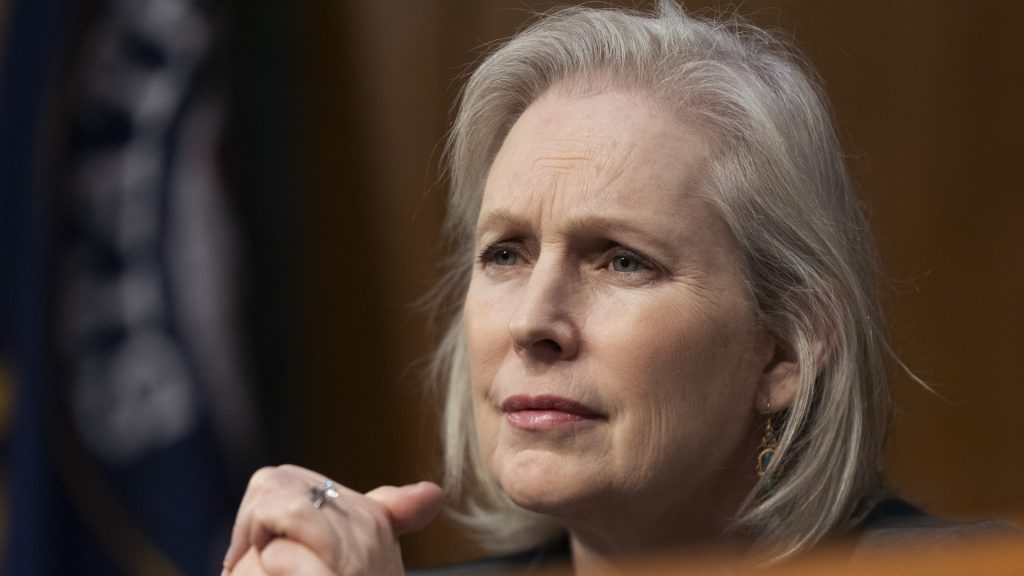
But today, these mechanisms are “not working how it should be,” Sen. Kirsten Gillibrand, the ranking member of the Senate Special Committee on Aging, said during Thursday’s hearing. She said the FDA has been inconsistent in how it handles rare-disease drug reviews, has failed to consider patient experience and real-world evidence in its rejections and has not communicated clearly with drug developers.
Gillibrand also charged that the agency has, in some cases, changed its expectations for clinical study design too late in the process and required new studies that are impractical. The FDA is not fully using the flexibility Congress has already authorized it to speed innovation for rare-disease therapies, she said.
“This is heartbreaking for patients,” Gillibrand said Thursday
And its effects can be wide-reaching.
“When the regulatory pathway feels unpredictable, it sends a chilling signal to the broader investment community and that ultimately affects the entire innovation ecosystem,” Gavin told SAN.
What led to the hearing?
Several recent FDA decisions have fueled concerns among patient groups and biotech companies that the agency’s approach to rare-disease reviews has shifted.
Annie Kennedy, the chief mission officer at EveryLife Foundation for Rare Diseases, testified during the hearing that the FDA has rejected 23 rare-disease therapies since 2025. Many of those rejections were reversals of prior decisions. The agency also held 65% fewer advisory committee meetings last year than in 2024, she said.
The drug review process can be opaque and difficult to track. Historically, upon rejecting a drug, the FDA privately sent a letter, outlining its reasoning, to the drug maker.
Because these letters were not routinely published until the FDA began releasing more reports in 2025 in a renewed push for transparency, it is difficult to compare this past year’s 23 rejections to previous years.
However, multiple experts who testified during the Senate hearings said the FDA was increasingly rejecting therapies and reversing prior decisions.
Some have blamed Vinay Prasad, the FDA’s chief medical and scientific officer and director of the Center for Biologics Evaluation and Research, one of the two branches in charge of approving drugs.
But several physicians and experts told SAN that the FDA’s unpredictability predated the current FDA leadership.
“I started dealing with the FDA committee in 2023. When I talked in my testimony about talking to a brick wall, that was the last administration,” said Schmahmann. “The FDA seems to be carving their own path, regardless of who’s in Congress or the White House.”
Contradictory policies
The FDA’s controversial rejections of rare-disease therapies come as the agency has released a series of new efforts to accelerate rare disease therapy development.
In September, the agency introduced its Rare Disease Evidence Principles process to ensure that drug makers received “clearer guidance on the types of evidence that can be used” and to “provide greater speed and predictability in the review of therapies.”
This week, the FDA launched a new framework that would allow the agency to approve treatments based on evidence for a “plausible mechanism” for how the treatment would work.
“President Trump promised to accelerate cures for American families — and we are delivering, especially for children with ultra-rare diseases who cannot afford to wait,” Health and Human Services Secretary Robert F. Kennedy, Jr. said in a Monday press release. “We are cutting unnecessary red tape, aligning regulation with modern biology, and clearing a path for breakthrough treatments to reach the patients who need them most.”
President Donald Trump has also publicly pressured pharmaceutical companies to lower drug prices for Americans, including calling for “most favored nation” pricing models and taking aim at the high cost of blockbuster medications such as GLP-1 weight-loss and diabetes drugs. And yet, in practice, when it comes to therapies for rare diseases, policymakers and physicians say the FDA is doing the opposite.
“We’re hearing the White House saying they want to bring drugs to American people and make it accessible, and the FDA is sort of sabotaging the White House’s efforts. That’s why Republican Senators are so annoyed,” Schmahmann told SAN.
“The White House could have an easy win on this. The data are there. Nobody’s trying to bend the science. The science is there. What is inflexible and unbending is the FDA committee hearing these cases,” he said.
A way forward
Neither Gavin nor Schmahmann comprehends the FDA’s reasoning for its recent decisions. Gavin suggested that a reduction in staff and resources or a change in philosophy may explain it. Prasad has repeatedly called for more stringent approval processes, particularly when it comes to vaccines.
Singer, from the Cato Institute, thinks the question being raised is much broader.
“At the bottom, this is a question of who gets to decide how much uncertainty is acceptable — the FDA, or autonomous adults or parents of children who are running out of time,” he said.
Before 1962, when Congress passed the Kefauver-Harris Amendments, drug makers only had to prove their drug was safe, not that it was effective. Ironically, once the FDA approves a drug for one condition, clinicians can use it to treat any health condition where it might be beneficial. This practice is called “off-label” use, and more than 20% of prescriptions written in the U.S. are used this way.
“In other words, patients must wait years for approval for ‘Condition A,’ but once approved, physicians are trusted to use their judgment for Conditions B through Z. That inconsistency is not merely illogical—it can be deadly,” Singer said in an email to SAN.
“When regulators insist on ever-larger trials before granting approval, patients with no alternatives may deteriorate or die waiting for data that may never be feasible to generate in ultra-rare populations,” Singer continued. “In that sense, rules designed to protect patients can, in certain contexts, end up costing lives.”
Singer told SAN Congress should repeal the efficacy mandate and return the FDA to its original role of assuring safety, leaving judgments about effectiveness to clinical researchers and practicing clinicians.
“Anything short of that is merely tinkering around the margins,” he said.
Ella Rae Greene, Editor In Chief