Number of maternal mental health bills introduced by states increases, but US still has way to go
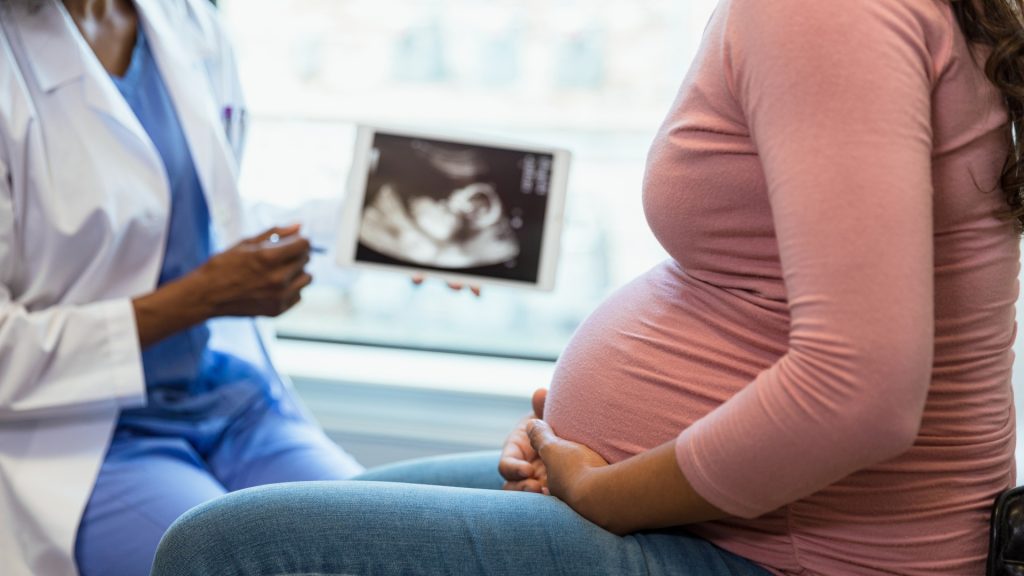
In 2025, the number of maternal mental health bills introduced by state legislatures went up by 46%, although only a handful were deemed “substantive” for detection and treatment, according to a report published Friday.
According to the Policy Center for Maternal Mental Health, 34 states introduced 107 maternal mental health bills, including resolutions, last year, compared to 21 states and 73 bills in 2024. Forty of these carried over to 2026.
Of the states, Arizona, Connecticut, Illinois, Missouri and Virginia were the ones that enacted the aforementioned “substantive” pieces of legislation, the policy center said.
Arizona’s bill directs the state’s Department of Health Services to create an advisory committee on obstetrics, gynecology and maternal mental health in rural communities.
Connecticut’s HB 7214 directs the state Commissioner of Public Health to convene an advisory committee to study and give recommendations on how to improve perinatal mental health services and make hospitals more “doula-friendly.”
Illinois’ HB 3019 prohibits prior authorization for maternal mental health and substance use disorder treatment during pregnancy and postpartum, while a Missouri budget bill requires the Department of Mental Health to establish a universal screening program to identify maternal depression and other behavioral health disorders. In Virginia, HB 2109 re-establishes a Task Force on Maternal Health Data and Quality Measures.
“In recent years, there has been increased awareness of maternal mental health, and the need for legislative policy at both the Federal and state levels,” the Policy Center for Maternal Mental Health said. “While the Federal government can take some action, because health care policy is largely left to the states, it’s critical that state legislatures understand the gaps and opportunities and the evidence-based state policy solutions.”
Bills addressed a variety of topics, including access to care, case management, reimbursement and insurance coverage. “Patient education” and “screening” were the categories with the highest numbers of bills.
US ‘mediocre’ on maternal mental health
Per the policy center’s Maternal Mental Health state report cards, the overall U.S. grade improved a little, going from a C- to a C. The U.S. did get a failing grade, though, in the policy center’s “parental support” category, which deals with paid leave and “affordable, accessible child care.”
No states received As from the policy center in 2026, but no states received Fs, either. The two states, Alabama and Missouri, that got an F in 2025 went up to Ds in 2026.
The policy center worked with the George Washington University Milken Institute of Public Health to analyze states for the report card.
Caitlin Murphy, research scientist at the Milken Institute School of Public Health, said maternal mental health conditions are a leading cause of maternal mortality.
“The stressors stacking up on U.S. families are contributing to the severity of these conditions,” Murphy said.
Joy Burkhard, CEO of the Policy Center for Maternal Mental Health, said in a statement that while she applauds states for the progress they’re making, the U.S. is still providing “mediocre maternal mental health care at best.”
“It’s critical that mothers and families have adequate paid leave and child care, which is not only necessary for families to return to work if they choose to, but for women to heal from birth, attend medical and mental health appointments,” Burkhard said.
Round out your reading
- Not red or blue: America’s politically homeless middle.
- Peter Thiel’s ‘Dialog’ network was super-secret. A data leak changed that.
- The novel legal strategy that Taylor Swift and Matthew McConaughey are using to fight AI.
- Illinois balances budget with new $200 million social media tax that tracks in-state users.
- When Trump serves up ‘Just the News,’ it comes with a side of bias.
Ella Rae Greene, Editor In Chief