Nigeria denies Christian persecution, local journalist describes ‘cloud of terror’
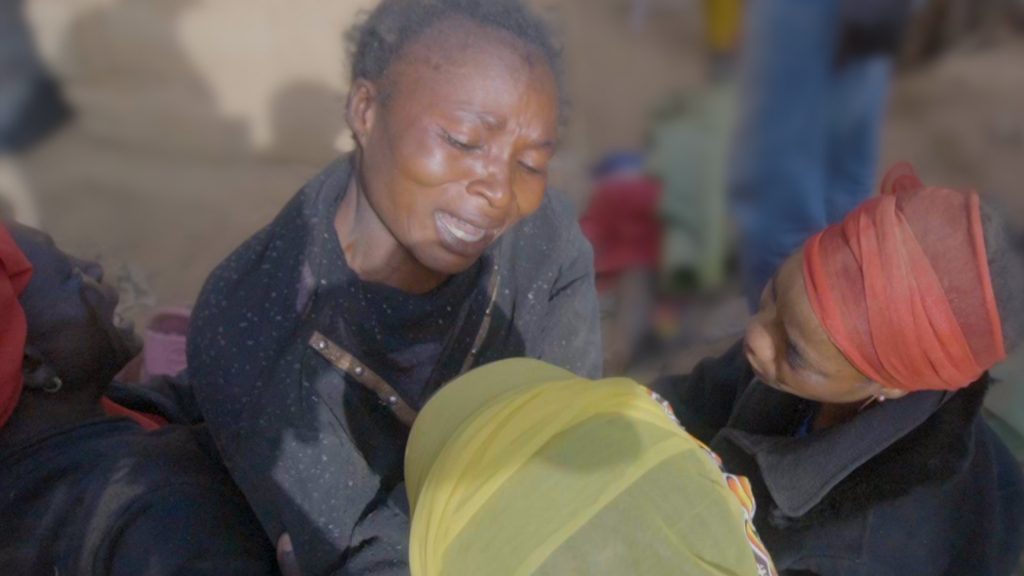
Nigeria, the most populous country in Africa with more than 230 million people, is facing renewed international scrutiny following allegations of mass persecution of Christians. While widespread violence and terror attacks are not in dispute, what divides the world is whether the attacks are motivated by religious hatred or by the country’s ongoing struggles with poverty, territory and resources.
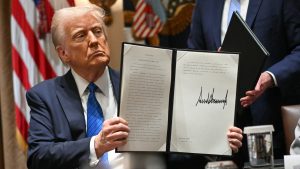
Last week, President Donald Trump announced on Truth Social that Nigeria would be redesignated as a “Country of Particular Concern,” a U.S. State Department label applied to nations accused of tolerating or engaging in severe violations of religious freedom. Nigeria’s government refutes the allegations and pushes back against the designation, pointing to evidence that the violence is touching followers of any religion. The move reignited debate about the nature of the violence and how the world should respond.
A journalist’s firsthand account
Masara Kim, a Nigerian journalist who has spent nearly two decades documenting violence in his home country, describes the attacks as an ongoing campaign against Christians.
“Christians in Nigeria are living under a big cloud of terror,” Kim said in an exclusive interview with SAN. “I’ve seen babies whose brains have been shot out of their skulls, and entire families burned alive in their homes.”
Kim, who identifies as Christian, says many rural communities have been overtaken by armed groups he describes as Islamist extremists and terrorists belonging to many cells.
“We are looking at 500 to 1,000 communities that have been annexed after terror attacks by groups shouting ‘Allahu Akbar,’ ‘God is great,’ while slaughtering women and children,” he said.
Kim argues that international awareness — and pressure — is vital to force accountability.
“If we don’t tell our story, nobody will,” he said.
Nigeria’s redesignation as a ‘Country of Particular Concern’
On Oct. 31, the U.S. State Department officially designated Nigeria as a “Country of Particular Concern,” claiming “particularly severe violations of religious freedom.”
Unbiased. Straight Facts.TM
Nigeria ranked 6th globally in the 2025 Global Terrorism Index, accounting for 7% of all terrorism deaths worldwide in 2024.

The designation reinstates Nigeria’s status from Trump’s first term, when it was added largely because of attacks by Boko Haram, an Islamist terrorist group. The Nigerian government’s military campaign against the group led to the death of its leader in 2021. That same year, then–Secretary of State Antony Blinken, under former President Biden, removed Nigeria from the list after determining that the level of violence no longer met the criteria for that formal designation.
Some activists, including Kim, have welcomed Trump’s decision to restore the designation. “By the time Nigeria begins to feel the pain of global outrage, restrictions on trade, and restrictions on loans, it will realize the severity of the offense it’s committing against its own citizens,” he said.
Nigerian government denies faith-based violence
Nigerian officials have pushed back against allegations of targeted persecution.
“There are no Christians being persecuted in Nigeria,” said General Olufemi Oluyede, the country’s Chief of Defence Staff. “We are facing insecurity, especially terrorism, and it’s something that has been affecting Nigeria for quite some time now.”
Information Minister Mohammed Idris echoed that statement, saying, “It is absolutely false to claim there is a deliberate attempt to kill a particular religious group. Any narrative suggesting that the Nigerian state is failing to act is based on misinformation or faulty data.”
The Nigerian government argues that both Christians and Muslims have been victims of the violence, driven by struggles over land, minerals, and other natural resources.
Disputed data
International data on Nigerian violence varies widely depending on the source.
According to the Armed Conflict Location and Event Data Project (ACLED), a U.S.-based research group cited by The Associated Press, more than 20,000 civilians have been killed in nearly 12,000 attacks from 2020 through 2024. Of those, ACLED attributes 317 deaths to attacks specifically targeting Christians and 417 to attacks targeting Muslims.
By contrast, the Nigerian-based human rights organization Intersociety reports far higher numbers cited by the New York Post. This group tallies more than 7,000 Christians killed in just the first 220 days of 2025.
These conflicting figures have complicated global responses and posed a challenge for journalists and international observers seeking to verify violence in remote regions with limited access.
Divided narratives
Kim remains determined to continue documenting what he calls a “collective persecution” of Christians.
“If not right now, sometime in the future, someone should be able to use the evidence I’m collecting to demand accountability,” he said.
The Nigerian government, however, insists the violence is indiscriminate and rooted in competition over resources, not religion.
“The characterization of Nigeria as religiously intolerant does not reflect our national reality, nor does it take into consideration the consistent and sincere efforts of the government to safeguard freedom of religion and beliefs for all Nigerians,” Nigerian President Bola Tinubu said Nov. 1 on social media.
As conflicting data, political pressure, and personal testimonies collide, Nigeria remains at the center of a complex international debate — one that raises difficult questions about truth, bias and how the world defines persecution.
Editor’s note: This report will be further explored in next week’s episode of Bias Breakdown, which examines how the media cover global conflicts and why establishing factual accuracy in such regions remains a major challenge.
The post Nigeria denies Christian persecution, local journalist describes ‘cloud of terror’ appeared first on Straight Arrow News.
Ella Rae Greene, Editor In Chief