Most seeking green card now need to apply at consulate outside US
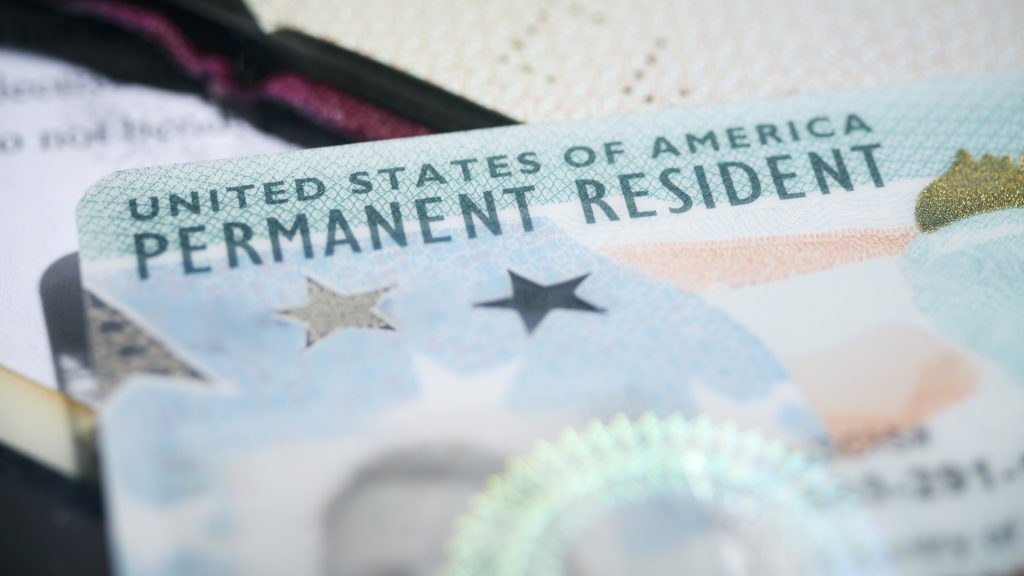
The Trump administration on Friday instituted a policy stating that most people applying for a green card will need to go abroad, and do so at a U.S. consulate outside of the country.
Officers will be directed to consider any relevant factors and information when determining whether an immigrant needs to do this, United States Citizenship and Immigration Services said. Those who have “extraordinary circumstances” will be allowed to apply in the U.S.
“This policy allows our immigration system to function as the law intended instead of incentivizing loopholes,” USCIS Spokesman Zach Kahler said in a statement.
Democrats vow to fight policy
Rep. Grace Meng, D-N.Y., called this policy a blatant attack on legal immigration, “with family separation at the center of its agenda.”
“This new policy will rip apart families, spouses, and children from their parents,” Meng said. “For immigrants from more than 100 countries affected by Trump’s immigrant visa and travel bans — including over a dozen countries in Asia — these separations could last for years, if not indefinitely.”
Added Meng: “We will pursue every avenue to fight against this reprehensible decision and push for its reversal.”
Rep. Dan Goldman, D-N.Y., also said “we won’t let this happen.”
“For over 70 years, adjusting your status to a Green Card from within the US has been the standard pathway to achieve permanent legal status,” Goldman said. “Now Trump wants to change that solely to inflict damage on our immigrants and mixed families by forcing people to wait often years in their home country. This is a stupid as it is cruel.”
Rep. Greg Stanton, D-Ariz., said he’ll fight to reverse the move in Congress.
“Trump just made legal immigration harder — on purpose,” Stanton said. “America is able to attract the top researchers, doctors, & engineers because of our worker visa programs. Forcing these immigrants to now leave the U.S. before applying for citizenship will deprive us of their innovation, their tax dollars, & their contributions to our economy.”
Eréndira Rendón, vice president of immigrant justice of the Resurrection Project, said this policy will create “a lot of confusion” and affect thousands, CBS News Chicago reported.
“It is going to prevent folks from applying for their green card when they are eligible to do so,” said Rendón.
Pedro Gerson, a professor at the Chicago Kent College of Law, told CBS News Chicago the Trump administration’s action will likely face legal challenges.
Kahler said in his statement that the Trump administration policy will free up “limited USCIS resources to focus on processing other cases that fall under its purview, including visas for victims of violent crime and human trafficking, naturalization applications, and other priorities.”
What is a green card?
A green card, or permanent resident card, lets people live and work permanently in the U.S. Those eligible for them include spouses or other relatives of U.S. citizens; students; refugees; and foreign workers.
Steps people have to take to apply for a Green Card vary depending on their situation.
An analysis by the American Immigration Council shows the USCIS green card backlog more than tripled in the last decade, going from 3.5 million cases from the end of 2015 to 11.6 million in 2025.
This backlog began to really take shape when COVID-19 hit, as the pandemic slowed processing and policy changes during President Donald Trump’s first term, the American Immigration Council said.
The dashboard also reveals that completions began to fall behind new filings in 2020 and 2021, due to the COVID-19 pandemic and policy changes made during President Donald Trump’s first term.
Department of Homeland Security data shows 1.4 million people were given green cards in 2024. More than 820,000 were approved for people through “adjustment of status,” the New York Times reported.
Immigration attorney Ian Rochstein told WBIR delays have become more common for his clients.
“One of the first things I tell people at their first consultation is that the timelines are very unpredictable,” Rochstein said to the news outlet. “Sometimes we can get a case submitted, approved within just a few months, and other times we’re looking at one to two years.”
Round out your reading
- They built an Epstein files library, but realized they couldn’t let everyone read them.
- The doctor who claims functional medicine reversed her MS.
- For many Americans, ‘one more round’ no longer serves their lifestyle or budget.
- Trump claimed economic data is ‘rigged.’ Former officials pledge to ‘watch like hawks’ for political manipulation.
- We’re building a new Straight Arrow. Help us shape our future by taking our survey.
Ella Rae Greene, Editor In Chief