Ketamine is booming in America. The reasons go beyond drugs
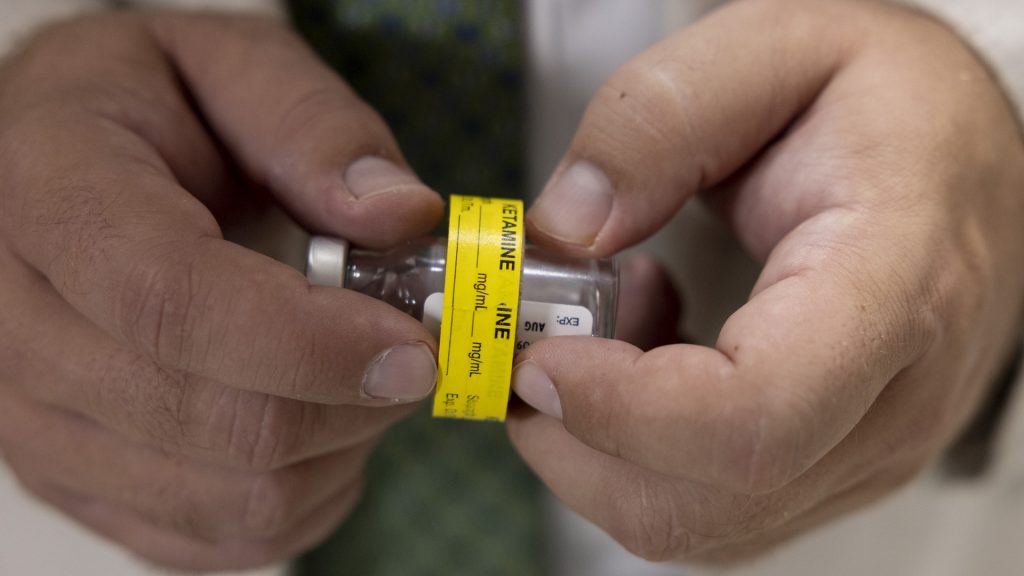
Ketamine, a fashionable drug in therapy, is fast becoming a nightclub drug of choice for Americans seeking a unique form of disconnection from today’s reality.
Once a niche drug famed for being a “horse tranquilizer,” the dissociative anesthetic is surging in New York, Chicago, Miami and Los Angeles. In some city dancefloors, it is replacing MDMA, according to new data obtained by Straight Arrow. Its brightly colored offshoot, a pink-dyed mix that contains ketamine and MDMA, is also spreading rapidly.
The rise of ketamine, used legally in medicine but illegally snorted as a white powder, points to something bigger than a changing drug trend. Researchers, users and harm reduction experts say it reflects a broader shift in American culture, away from the wired intensity and open bonding associated with cocaine and MDMA and toward a drug that offers its own wobbly brand of detachment.
What the data shows
Unpublished data from NYU Langone Health, seen by Straight Arrow, found the proportion of New York City nightclub attendees who said they had used ketamine to get high in the previous year doubled in just three years — from 20% in 2022 to 40% in 2025.
At electronic dance music nights in New York, ketamine now appears to be more prevalent than MDMA, the drug long synonymous with rave culture. When NYU researchers swabbed surfaces at New York EDM clubs, more than three-quarters tested positive for ketamine, compared to roughly a quarter for MDMA. Swabs of clubbers’ cellphones found ketamine on 22% of devices, compared to just 2.4% for MDMA.
“I’ve been saying for a few years that ketamine prevalence is going to trump MDMA, and I think it just did,” said Joseph Palamar, professor of Population Health at NYU Langone Health. “It’s skyrocketed in the nightclub population in New York, and there’s certainly more ketamine in Miami than in most other US cities.”
Nationally, ketamine use is rising while cocaine and MDMA use among younger Americans declines. The number of Americans who admitted prior-year non-medical ketamine use more than doubled between 2021 and 2024, from 570,000 to almost 1.3 million, according to the National Survey on Drug Use and Health. During that period, use among 12-17 year olds tripled, while MDMA use among people aged 12 to 25 almost halved.
Conducted through face-to-face interviews at people’s homes since 1971 and online interviews since 2020, drug use research is a constant effort to try to track generational trends in the use of illegal and legal drugs. The data is critical for public health policy and provides insight into the relationship between substance use and the state of the world.
How drug usage reflects the national mood
“People are looking for relief,” said Mikayla Hellwich, the executive director of drug harm reduction NGO DanceSafe, which has seen a spike in interest in ketamine on its website over the last year. “Through dissociation, ketamine has a way of shutting everything else out, of reducing fear and that existential dread that exists outside the party. Reality is really hard to contend with right now.”
A derivative of PCP, ketamine was approved by the Food and Drug Administration (FDA) for medical use in 1970 and used extensively as a battlefield anesthetic during the Vietnam War because it could sedate patients without suppressing breathing. It soon became widely used as an anesthetic on humans and animals, including horses. While developing the drug in the 1960s, researchers tested high doses on prison inmates in Michigan, some of whom described feeling like they were “floating on clouds,” “had no arms or legs,” or were “in outer space.”
Psychonauts such as Sheraton heiress Marcia Moore and physician John C. Lilly, who was given funding by NASA to teach dolphins to speak, viewed the drug as a way to open new doors of perception. For decades, ketamine existed largely on the fringes, in the illegal warehouse and free party scenes in the U.K. and the U.S.
At lower doses, it produces a short, drunken, floaty high. At heavier doses, users can experience a ketamine trip known as the ‘K-hole,’ a state of extreme detachment where reality, identity and physical sensation can temporarily dissolve.

“It’s a strange drug, you feel like you’re three feet to the left, or like you’re playing in a video game. But K-holing is 40 minutes that lasts forever, where you don’t know what’s reality and what’s fictitious,” said Chris, a 27-year-old TV producer whose name has been changed to protect his identity.
Chris said he has seen the drug “explode” in popularity over the last six years. He said ketamine is now popular “across sexualities, ages and tax brackets,” particularly in “big metro areas like New York, LA, Miami and Chicago, where you can very easily procure it — there’s always someone that has it.”
“There is this idea that it’s more guilt-free and less aggressive than doing cocaine,” he told Straight Arrow. “It’s a different mental experience for someone with anxiety, for people who like a chill vibe when they’re out. It’s about altered consciousness, not heightened consciousness or being wired all the time.”
Hellwich said the switch to ketamine from MDMA is visible on dancefloors themselves. There are still high-energy club nights, but there are now fewer of them due to the rise in ketamine. “There’s a lot more vegging out, or people sitting on inflatable couches, more of a chill vibe, where you might expect lively dancing,” she said. “There’s a reciprocal relationship between the experiences people are looking for, the substances they’re using, and the music being created to facilitate that experience.”
The rise of ketamine therapy
Despite the drug’s potential to propel users into heavy trips, it has now become what drug culture writer Michelle Lhooq describes as a “trendy mental health hack,” pushed across social media “as a way to heal our existential doldrums while also enhancing cognitive function.”
It is no coincidence that the rise of underground, recreational ketamine use has come at the same time as its rise as a therapeutic drug. It has been used by Elon Musk to treat low mood, featured in “White Lotus” and “Desperate Housewives,” and in a political row over New York Rep. Alexandria Ocasio-Cortez allegedly paying nearly $19,000 of campaign money to a psychiatrist who specializes in ketamine therapy. Perhaps most infamously, it was implicated in the death of actor Matthew Perry, who initially began using the drug therapeutically while at a Swiss rehab clinic.
The FDA approved ketamine-derived therapy for severe depression in 2019. Alongside this has been a rapid expansion in clinics offering expensive infusions and prescriptions to treat a much wider range of mental health issues, such as anxiety, addiction, pain and PTSD. Now seen as an alternative to regular antidepressants such as selective serotonin reuptake inhibitors (SSRIs), it is estimated that there are now 3,600 ketamine therapy providers operating in the US in a market worth an estimated $3.4 billion.
Palamar believes the drug’s medical normalization has increased its underground use by helping to reduce stigma. “In the US, pharmaceutical ketamine is being pushed left and right by a subset of mental health experts,” he said. “Tons of people, including famous people, are now using legally prescribed ketamine. This may be giving the idea to people to move onto illicit ketamine, with prescribed ketamine being exponentially more expensive.” Nevertheless, research on ketamine’s use to treat lower-level mental health issues outside of severe depression is limited.
Hellwich sees both sides of the ketamine coin. Apart from running DanceSafe, she is also a psychotherapist based in Maryland specializing in ketamine-assisted therapy “for trauma and mood disorders as well as harm reduction psychotherapy for substance use.” She thinks it is no surprise to see ketamine being increasingly used in therapy and in clubs.
“America has been on this unsustainable trajectory for a long time–environmental collapse, income inequality, racism, violence, Trump — and I think ketamine can help to soften that so it doesn’t feel so overwhelming,” she said. “A big risk is, if that’s a thing you’re leaning on all the time, especially without support, dealing with reality and responding to it can actually become harder, not easier.”
The dangers of unsupervised use
Ketamine is a Schedule III drug, considered to have moderate to low dependence potential. It is often viewed by users as less destructive and addictive than cocaine or methamphetamine.
But countries hit earlier by the ketamine wave offer a grim warning about the drug’s dark side.
In the U.K., the number of people seeking treatment for ketamine addiction increased twelvefold between 2015 and 2025. Hospitals have reported growing numbers of chronic users suffering catastrophic bladder damage caused by the drug’s toxic metabolites. Some patients, including teenagers, have required bladder removal surgery. Heavy use can also cause debilitating abdominal pain known as “K-cramps,” which some users attempt to relieve by taking more ketamine.

Ketamine is not a particularly lethal drug, with only a small number of fatalities linked to sole ketamine use. Deaths more often involve misadventure, such as drowning, accidents or the combined effect of mixing multiple substances, rather than direct toxicity. For example, Missouri doctor Bolek Payan disappeared in December 2022 and was later found drowned in his pond after taking ketamine. The most high-profile death has been that of Matthew Perry, whose body was found in his hot tub after he knocked himself out with a large dose of ketamine. Even so, the resulting trial of the “Ketamine Queen,” the invented nickname prosecutors gave to an LA dealer called Jasveen Sangha who sold the drugs to Perry’s friend, ended with her being sentenced to 15 years.
Authorities are also increasingly concerned about “tusi,” or “pink cocaine,” a party drug that most often contains ketamine mixed with MDMA and caffeine.
The Instagram-friendly drug was created by a new generation of young Colombian narcos in the early 2010s before spreading to Spain and its holiday hotspots such as Ibiza and the Canaries.
“There is the ‘tusi’ phenomenon,” Palamar said. “I think it might be attracting people just because it’s pink.”
According to the DEA, tusi is now commonly found in nightlife hubs including Miami, New York and Los Angeles. Medical examiners in Miami have reported a spike in deaths involving the drug. In one 2024 case, a 24-year-old woman crashed her car and killed two people after taking tusi, and told officers she was “from the future.”
Although at a lower level than other illicit drugs, ketamine poisonings, seizures and cases of pharmaceutical diversion are all rising nationally.
Investigators say the U.S. market is increasingly being supplied by industrial-scale illicit production in Europe and India, with the drug being smuggled into the U.S. often from the U.K. by plane and boat.
“Unlike decades ago, when pretty much all ketamine was diverted from veterinary clinics, now it appears that quite a bit of ketamine is illicitly manufactured,” said Palamar.
In May, a 19-year-old Californian pleaded guilty after attempting to smuggle more than 72 pounds of ketamine into Las Vegas from the U.K. In separate cases, federal officers intercepted major ketamine shipments arriving from Europe through Atlanta.
The rise of ketamine is part of another major shift in American drug culture. In April, Straight Arrow reported on why America is falling out of love with cocaine: due to rising stigma, high prices, declining alcohol consumption and less need to feel hyper-stimulated all the time. Ketamine’s rise is the other side of the coin of cocaine’s fall. The “Wolf of Wall Street” era is long gone, and it’s been replaced by the rise of psychedelics across the socioeconomic spectrum and Generation Z’s rejection of their parents’ drugs. During this time of social media angst, high anxiety and global chaos, ketamine’s offer of a chemical escape hatch, with its numbing, detached traits, appears to offer a more suitable holiday from reality.
Round out your reading
- Not red or blue: America’s politically homeless middle.
- Peter Thiel’s ‘Dialog’ network was super-secret. A data leak changed that.
- The novel legal strategy that Taylor Swift and Matthew McConaughey are using to fight AI.
- Illinois balances budget with new $200 million social media tax that tracks in-state users.
- When Trump serves up ‘Just the News,’ it comes with a side of bias.
Ella Rae Greene, Editor In Chief