Kennedy faces congressional questions on budget cuts, health spending
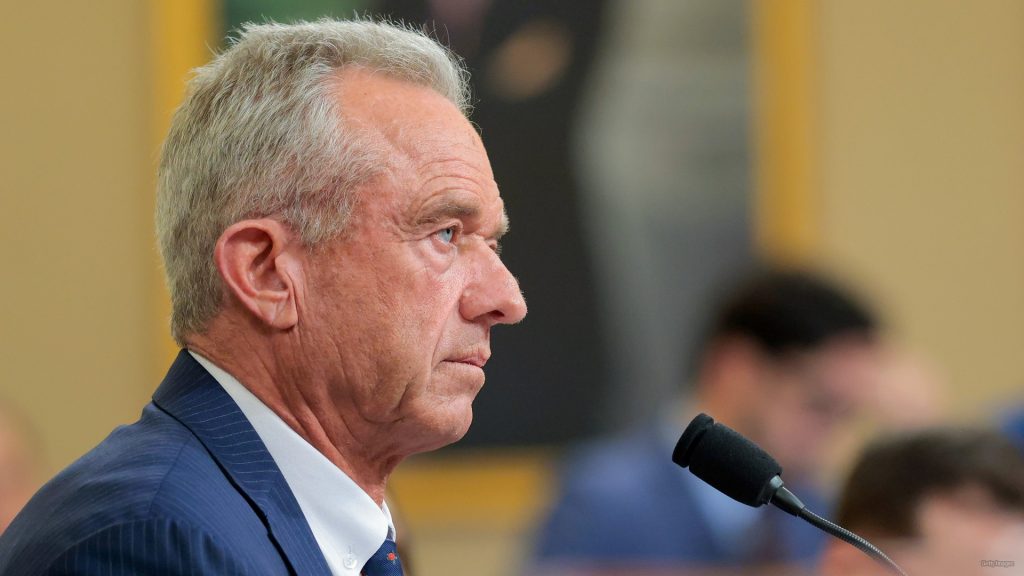
Health Secretary Robert F. Kennedy Jr. testified before Congress on Thursday for the first time this year, appearing before the House Ways and Means Committee in the first of seven hearings scheduled over the coming week.
Much of the hearing focused on rising health care costs, budget cuts and Kennedy’s controversial statements on vaccines and autism.
Democratic lawmakers criticized Kennedy for his lack of medical expertise and for promoting what they described as “dangerous conspiracy theories.” Republicans were largely supportive.
But lawmakers from both parties raised concerns about the administration’s uneven approach to addressing waste, fraud and abuse, pointing out that President Donald Trump has pardoned or commuted the sentences of at least three major perpetrators of fraud in the health care industry.
Health spending, budget cuts, tariffs
The committee’s chairman, Rep. Jason Smith, R-Mo, opened the session by outlining several major challenges facing Americans, including rising health care costs and a health care system that incentivizes treating rather than preventing illnesses. Smith applauded the initial disbursement of a $50 billion rural health fund and efforts by the Trump administration to combat fraud, waste and abuse — highlighting the $3.5 billion in Medicare hospice fraud uncovered in Los Angeles County alone.
But Rep. Richard Neal, D-Mass., the ranking Democrat on the panel, criticized the administration’s rhetoric and actions on vaccines and autism, including what he described as baseless claims linking the condition to Tylenol use during pregnancy.
“Nothing has changed about the science of vaccines,” Neal said. “We need people not to be preyed upon by demagoguery, and there should not be a politicization of these issues.”
Several other lawmakers criticized Kennedy over his remarks about vaccines and recent policy changes at the Department of Health and Human Services, with some warning they threaten American lives.
Kennedy has repeatedly questioned the safety of certain vaccines; raised concerns about a possible link between vaccination and autism and argued that vaccine safety testing and oversight are insufficient.
In January, Jim O’Neill, then acting director of the Centers for Disease Control and Prevention, announced that it removed six vaccines from the national immunization schedule. Prior to that, the CDC revised long-standing guidance on the hepatitis B vaccine for newborns, recommending it only for infants born to mothers who test positive for the virus, rather than universally for all newborns.
Last month, the CDC voted to create a new diagnostic code — an administrative label used by doctors and insurers to document and track specific medical conditions in patient records and billing systems — for vaccine-related injury.
Kennedy told lawmakers he is “pro-safety,” not “anti-vaccine.”
Neal pointed to the department’s proposal to slash $1 trillion from health care funding over several years, warning it could put 440 hospitals at risk of closing “so we can have a tax cut for the wealthiest among us.”
Health care spending has increased fivefold since 2000. As of 2024, the U.S. spends more than $5 trillion on health each year, accounting for 18% of the country’s GDP. Neal said that while health care costs were already high, soaring prices now have “a lot to do with tariffs and Iran.”
In the past decade, U.S. pharmaceutical imports have more than doubled in value, from $73 billion in 2014 to over $215 billion in 2024.
Trump imposed several tariffs on pharmaceutical products, including, most recently, a 100% tariff on certain patented medicines and ingredients, and a 15% tariff on medicines imported from Japan, South Korea and some European countries. He said tariffs would not be collected from companies that agree to “most favored nation” pricing. He also said tariffs would be reduced to 20% for firms that shift manufacturing to the U.S.
It remains unclear whether tariffs have already translated into higher drug prices, as pharmaceutical pricing is typically negotiated through long-term contracts, meaning any impact may be delayed.
While implementing tariffs, the Trump administration has also engaged in direct negotiations with drugmakers to lower prices for certain drugs; those deals could offset some tariff-related increases, though the effects are likely to vary across drugs and markets. However, industry analysts project that tariffs could significantly raise costs — potentially increasing U.S. drug spending by tens of billions of dollars annually — and warn that higher input prices may exacerbate shortages, forcing providers to rely on more expensive alternatives.
The left-leaning Center for American Progress reported that several insurers blamed tariffs on drugs for driving up premium costs for 2026. In Oregon, for example, tariffs accounted for 2.7% of a proposed premium increase, according to the center.
There is no clear evidence that Americans are paying more for drugs, medical supplies or health services specifically because of the Iran conflict.
However, rising energy costs tied to the near-closure of the Strait of Hormuz are beginning to ripple through parts of the health care supply chain. BASF Pharma Solutions, a major supplier of chemicals used in drug manufacturing, announced price increases of up to 20% on some products, while shipping costs have climbed as carriers impose surcharges.
The conflict has also disrupted helium production in the Middle East, raising concerns about potential shortages for U.S. health systems, where MRI machines alone account for roughly 17% of the nation’s helium demand.
House Republicans reportedly are mulling routing $200 billion allocated for health to fund the Iran war.
Fraud, waste and abuse
In Thursday’s hearing, both Republican and Democratic lawmakers criticized the administration’s uneven approach to rooting out fraud, waste and abuse, which the president has identified as a key priority.
Neal argued that the administration’s efforts appear to disproportionately punish ordinary Americans with minor roles in fraud, while some higher-level perpetrators have received leniency. He noted that Trump has pardoned or commuted the sentences of several individuals convicted of large-scale fraud.
Last year, Trump commuted the 50-year prison sentence of Lawrence Duran, owner of the mental health care company American Therapeutic Corp., who had been convicted in an $87 million Medicare fraud scheme, to time served. Trump also pardoned nursing home operator Joseph Schwartz, who was convicted in a $39 million employment tax fraud case. Paul Walczak, a former Florida nursing home operator, also received a full presidential pardon 12 days after being sentenced for failing to pay more than $7 million in employment taxes withheld from employee paychecks.
Rep. Lloyd Doggett, D-Texas, raised additional concerns, noting that HHS last year reinstated 850 insurance brokers who had been suspended in 2024 for enrolling individuals in Affordable Care Act plans without their knowledge. Kennedy did not know whether those brokers had been investigated prior to reinstatement and did not respond to further questions about whether they faced penalties.
Lawmakers also pressed Kennedy on Medicare reimbursement rates that have failed to keep pace with rising health care costs, warning that the gap is placing growing financial strain on clinics and physician practices, particularly those in rural and underserved areas.
They also raised concerns about a recent policy allowing insurers to use artificial intelligence to review Medicare claims and incentivize cost reductions.
The Wasteful and Inappropriate Service Reduction (WISeR) Model, launched in January, introduces prior authorization into traditional Medicare — which has not historically relied on it — using AI to assess the appropriateness of certain services. While the policy is intended to reduce unnecessary care and control spending, Rep. Suzan DeIBene, D-Wash., said it was already forcing patients in her state to be denied medically necessary treatment.
Ella Rae Greene, Editor In Chief