Kalshi blocked in certain states just as the World Cup betting heats up
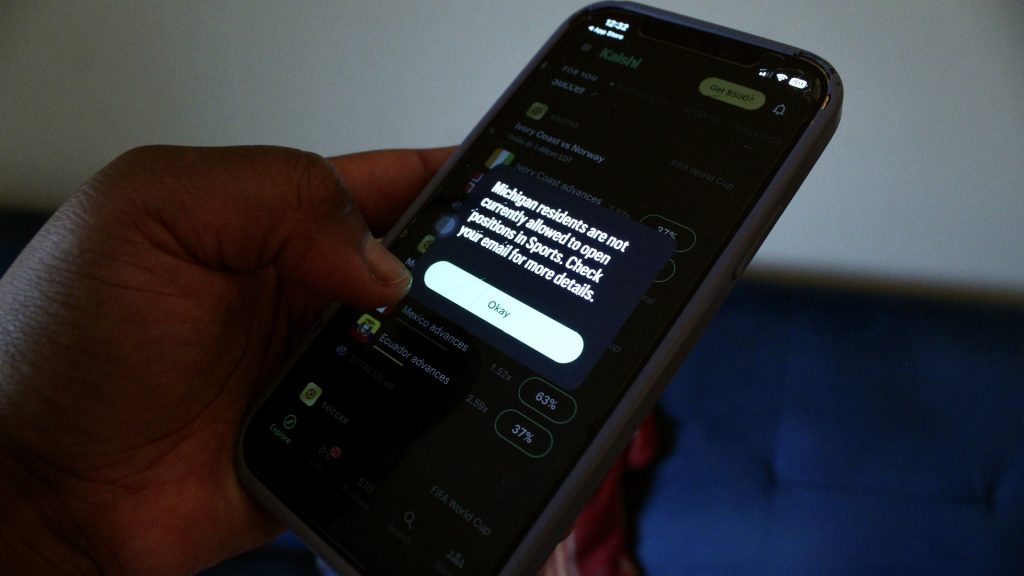
Prediction markets are booming in popularity and became a spot for many World Cup bets to take place as the tournament enters the knockout stage. But bets made on Kalshi hit a roadblock as a judge said the platform violates the state’s gambling laws.
Michiganders are banned from sports betting on Kalshi from June 29 to July 13, keeping the platform from any possible World Cup-fueled bump in revenue there. The temporary order came after Michigan Attorney General Dana Nessel accused Kalshi of violating several state gambling and sports betting laws.
Geoff Zochodne, a journalist who covers sports betting for Covers.com, told Straight Arrow that Nevada has also restricted access to Kalshi. Massachusetts’ attorney general filed a similar complaint, seeking to restrict the prediction market platform from operating there.
The line states are attempting to draw in the lawsuits, Zochodne added, is that they should be the regulators of the platforms, not the federal government.
Unbiased. Straight Facts.TM
Kalshi has reached $2.9 billion in World Cup trading volume as of June, Fortune magazine reports.

“If you were to ask the prediction markets and their federal regulator — the Commodity Futures Trading Commission — they would say they’re regulated federally,” he said. “They’re subject solely to that federal CFTC-led oversight. But the way many states see it as ’No, this fits into the sports betting bucket.’”
The lawsuits aren’t just about states suing Kalshi. Zochodne said prediction markets have sued states to halt enforcement of new legislation, and the CFTC has sued to assert itself as the chief regulator. He noted that the CFTC has become laxer and friendlier toward prediction markets under President Donald Trump’s administration than under former President Joe Biden’s.
How much these bans will affect Kalshi’s bottom line is unknown, as Zochodne said it’s not a publicly traded company, so revenue is tough to pin down.
Kalshi spokesperson Elisabeth Diana said in a statement to Straight Arrow that the company disagrees with the order and would fight it.
“Kalshi is subject to exclusive federal jurisdiction,” she wrote. “We won’t be bullied by interests that care more about protecting their monopolies than their consumers.”
The company started compliance with the order, barring a Michigan-based Straight Arrow journalist from placing a bet on the Ivory Coast (Côte d’Ivoire) vs. Norway World Cup knockout match.

Michigan judge blocks Kalshi in the state
Ingham County Circuit Court Judge Rosemarie Aquilina issued the temporary restraining order on Monday, writing in part that Kalsi has exploited Michiganders on its platform by masquerading bets as an investment opportunity.
She wrote that the state restricts bets to people 21 and up, but Kalshi allows for people as young as 18 to place wagers. She added that Kalshi’s lack of a license to operate in Michigan evades the gaming taxes the state collects to fund schools, gambling addiction support services, economic development and first responders.
Her order barred the platform from operating in Michigan by compelling it to set up geolocation parameters to block bets from someone in Michigan. The order also prevents Kalshi from advertising its product, accepting deposits for online sports betting contracts and operating products like parlays, pools and other betting options to Michiganders.
If Kalshi doesn’t abide by the order, Aquilina said it would be fined $120,000 per day for each day of noncompliance.
The Michigan Gaming Control Board said in a Tuesday statement that it requested Nessel to file the complaint against Kalshi. It further claimed that Kalshi didn’t offer responsible gambling advice like self-exclusion programs, limits on deposits and wagers, and links to addiction resources. The board requires all operators to offer such services.
“Whether Kalshi calls its product an ‘event contract’ or a ‘trade,’ it’s a sports wager being offered to Michigan residents without a license and without the consumer protections our state requires,” Henry Williams, gaming control board executive director, said in a release.
However, a review of Kalshi’s mobile app showed it offers self-exclusion and limits on deposits, wages and app usage.
Kalshi runs on an exchange
Zochodne said that Kalshi and other prediction markets have set themselves as operators of an exchange, allowing bettors and buyers to enter into contracts on an event. This method involves people saying a certain outcome will happen for a certain price, and then they are matched with a buyer willing to take the other side of the bet.
Zochodne added that market makers would provide funds to match the bets. It becomes the justification from prediction market platforms that people aren’t betting against the house, but instead a counterparty.
“It gets a bit blurry when you start going down the market maker road, but that’s really one of the, I would say, the kind of key difference that they’re stressing and that, this is not, the state-regulated sports betting that states are regulating.”
It differs on platforms like DraftKings Sportsbook or FanDuel, where the process explicitly involves placing bets against the operator for the odds that something will happen.
According to the American Gaming Association, 18 states bar online sports betting. The association considers prediction markets as sports betting platforms and advocates for state oversight.
Platforms like Kalshi are reliant on the CFTC asserting federal oversight over prediction markets. The commission has intervened and filed lawsuits against states for efforts to block or modify how prediction markets operate.
It most recently intervened in a lawsuit New Mexico Attorney General Raul Torrez filed against Kalshi. Torrez accused Kalshi of operating an illegal sportsbook.
“The CFTC has the expertise and responsibility to protect its exclusive jurisdiction over commodity derivatives,” Michael Selig, chair of the CFTC, said in a June 12 release.
Round out your reading
- America at 250: Straight Arrow’s week-long look at the pressures testing modern America.
- Ketamine is booming in America. The reasons go beyond drugs.
- Cluster of AI news sites suddenly goes dark after human reporter starts asking questions.
- A 79-year-old, obese, well-connected man gained exclusive access to a new weight loss drug. Is it Trump?
- Newsom pushes national wealth tax after opposing California billionaire tax.
Ella Rae Greene, Editor In Chief