Judge denies Biden bid to block release of recordings tied to classified documents probe
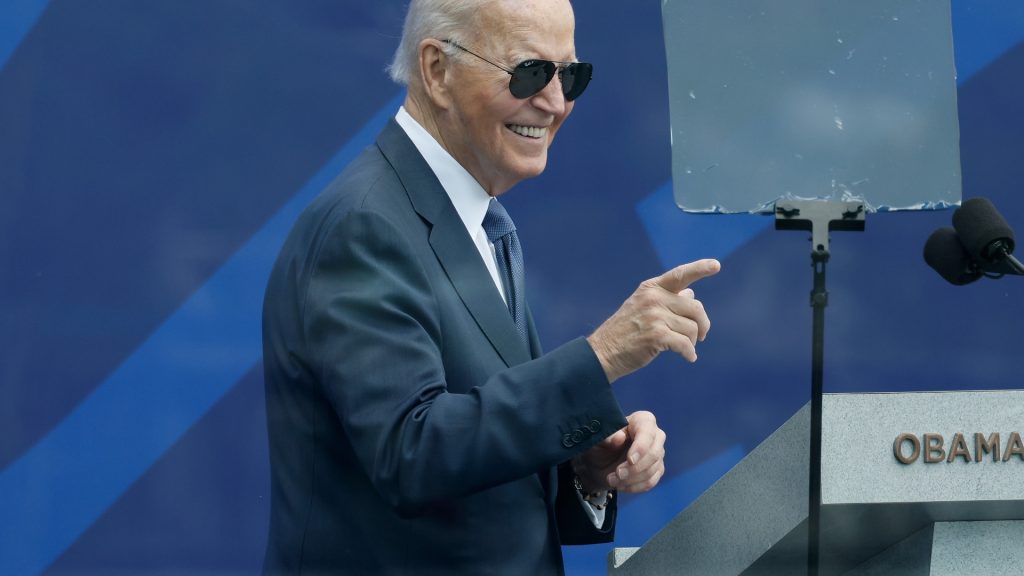
A federal judge rejected former President Joe Biden’s bid to block the Justice Department from releasing audio recordings and transcripts tied to a classified documents investigation. This clears the way for their disclosure to a conservative group and Congress.
The ruling stems from a Freedom of Information Act lawsuit filed by the Heritage Foundation and its staffer Mike Howell, who sought records used by former special counsel Robert Hur in his investigation of Biden’s handling of classified materials. Hur’s probe examined documents found at Biden-related locations, including his Delaware home, but he ultimately declined to pursue criminal charges.
In a memorandum opinion, the U.S. District Court for the District of Columbia denied Biden’s request for a preliminary injunction, concluding he was unlikely to succeed in showing the department acted unlawfully in deciding to release the materials with redactions.
The Justice Department initially withheld the recordings and transcripts, citing several FOIA exemptions. This included interviews Biden gave in 2016 and 2017 to his ghostwriter, Mark Zwonitzer. But the DOJ reversed course in May 2026, saying it planned to disclose the materials, in redacted form, to both Congress and the Heritage Foundation.
Biden intervened in the case and sued to stop the release, arguing it would violate his privacy rights. His attorneys emphasized that the conversations occurred in his home and were later gathered during a criminal investigation.
“Every American … has a right to privacy in the personal conversations he has within his own home,” Biden’s lawyers wrote, contending the department had a duty to protect such sensitive information.
The recordings became a focal point after Hur’s February 2024 report described Biden as a “well-meaning” older man with memory limitations, drawing political scrutiny despite the decision not to file charges. Some excerpts of Biden’s interviews with Hur were later released, fueling further debate over his recollections.
In its decision, the court acknowledged the potential for “irreparable harm” to Biden’s privacy interests if the recordings are released. But it said that harm did not outweigh other legal factors required to justify blocking the disclosure.
The judge found that the Justice Department reasonably balanced privacy concerns against what it described as a “significant public interest” in understanding Hur’s investigation and decision-making. The ruling noted the department had applied extensive redactions, removing references to Biden’s family, private individuals and sensitive topics.
The remaining material, the court said, largely involves discussions of foreign policy and Biden’s decision not to run for president in 2016.
The court also emphasized that the public has a strong interest in how the Justice Department and a special counsel handled a high-profile investigation involving a sitting president at the time. Hur’s report explicitly relied on the Zwonitzer recordings in explaining why he declined to prosecute, including assessments of Biden’s state of mind.
Because of that reliance, the judge said, access to the underlying material could help the public evaluate whether the investigation was conducted fairly.
Biden’s attorneys also argued the department’s reversal was politically motivated, pointing to criticism from political opponents and alignment with the Heritage Foundation’s request. The court rejected that claim, saying there was insufficient evidence of bad faith and that agencies are allowed to change positions if they provide a reasonable explanation.
In this case, the judge wrote, the Justice Department had done so after reassessing the balance between privacy and public interest and consulting with Biden’s legal team on redactions.
With the injunction denied, the Justice Department is poised to move forward with releasing the redacted recordings and transcripts, potentially adding new details to an investigation that has already drawn intense political and public attention.
Round out your reading
- Not red or blue: America’s politically homeless middle.
- Peter Thiel’s ‘Dialog’ network was super-secret. A data leak changed that.
- The novel legal strategy that Taylor Swift and Matthew McConaughey are using to fight AI.
- Illinois balances budget with new $200 million social media tax that tracks in-state users.
- When Trump serves up ‘Just the News,’ it comes with a side of bias.
Ella Rae Greene, Editor In Chief