Israel threatens to sue The New York Times for libel. Proving its case might be difficult
Israel’s threat to sue The New York Times for defamation raises significant questions about the limits of libel law and the use of legal menace to intimidate news reporting.
Israel’s Foreign Ministry said Thursday that the nation would sue The Times over an opinion column by Nicholas Kristof, who wrote about 14 Palestinian prisoners who said they were sexually abused and beaten by Israeli guards. Kristof, a two-time Pulitzer Prize winner who works for The Times’ opinion section, reported the column from the occupied West Bank.
On X, the Foreign Ministry described the column as “one of the most hideous and distorted lies ever published against the State of Israel in the modern press.”
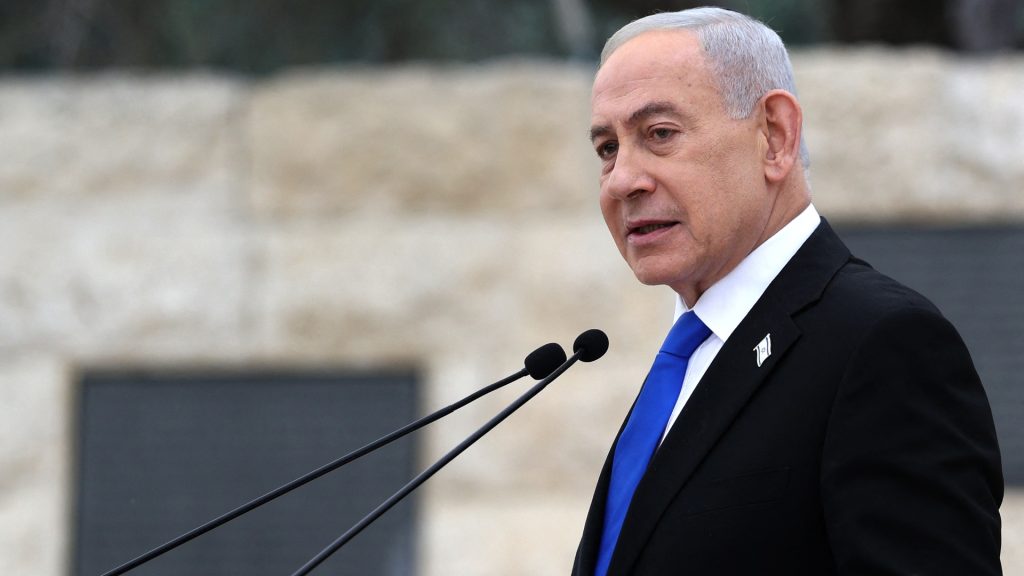
The post said Prime Minister Benjamin Netanyahu and Foreign Minister Gideon Sa’ar have “instructed the initiation of a defamation lawsuit” against the newspaper.
The Times defended Kristof’s work.
“Nicholas Kristof’s deeply reported piece of opinion journalism starts with a proposition to readers: ‘Whatever our views of the Middle East conflict, we should be able to unite in condemning rape,’” a Times spokesperson, Charlie Stradtlander, said in a statement. “He draws together on-the-record accounts and cites several analyses documenting the practice of sexual violence and abuse conducted by various parts of Israel’s security forces and settlers.”
“Details were extensively fact-checked, with accounts further cross-referenced with news reporting, independent research from human-rights groups, surveys and in one case, with U.N. testimony,” Stradtlander added. “Independent experts were consulted on the assertions in the piece throughout reporting and fact-checking.”
Much remains uncertain about Israel’s threat of a lawsuit. It also said last August it would sue The Times, but did not follow through. It’s unclear whether a nation — unlike an individual — can claim to have been defamed. And U.S. libel law sets a high bar for a public entity to succeed in a defamation case.
Israel would not only have to prove Kristoff’s assertions were untrue, but it would also have to show The Times recklessly published the column, knowing it was false.
As President Donald Trump has learned in suing media outlets over unflattering stories, that’s a tough test to pass.
Can a foreign nation file a lawsuit in the US?
Like any other foreign nation, Israel would have standing to file a lawsuit against a U.S. entity in a U.S.-based court. In this instance, Israel would probably have to file the case in New York, where the newspaper is based.
However, it would be an extremely difficult case to win. The First Amendment ensures press freedoms, protecting journalists and publications from government interference and censorship. Court rulings have established that opinions — like those expressed in Kristoff’s column — are protected by the First Amendment.
As a public entity, it would have to prove that Kristoff and the newspaper published the column with “actual malice” — a standard established by a landmark Supreme Court case from 1964, New York Times v. Sullivan.
This case established a legal framework and precedent that makes it tougher for plaintiffs — especially public figures — to successfully sue the press for defamation. The burden of proof falls on the public figure.
President Donald Trump’s defamation lawsuits against the press illustrate the difficulty of meeting the standard. None has resulted in a courtroom victory.
Column sparks debate
Kristof’s column, “The Silence That Meets the Rape of Palestinians,” has sparked debate since The Times published it on Monday.
The online reactions have been deeply divided. Supporters of Israel have said that the column is false.
“We know how the lies in this story made their way into it, where they came from and what purpose they serve,” Israeli commentator Haviv Rettig Gur said an said in a viral post.
But those who support Palestine stand by Kristof and the Palestinian prisoners.
And a columnist for the Jewish news outlet The Forward wrote that claims of Israeli abuses are just as serious as reports that members of Hamas sexually assaulted Israelis during the attacks of Oct. 7, 2023.
“Carefully researched reports of sexual violence should be taken seriously,” Emily Tamkin wrote, “regardless of the nationality of the reported perpetrators.”
Round out your reading
- Are aliens real? Pentagon’s newly released UFO files suggest the truth is out there.
- A million Americans get this knee surgery every year. But does it work?
- Is the apocalypse now? One man is tracking flights by the rich to find out.
- ‘No Mow May’: A boon for the bees or a well-intended mistake?
- We’re building a new Straight Arrow. Help us shape our future by taking our survey.
.
Ella Rae Greene, Editor In Chief