Iran war’s price shock on fuel and fertilizer is coming for US farmers
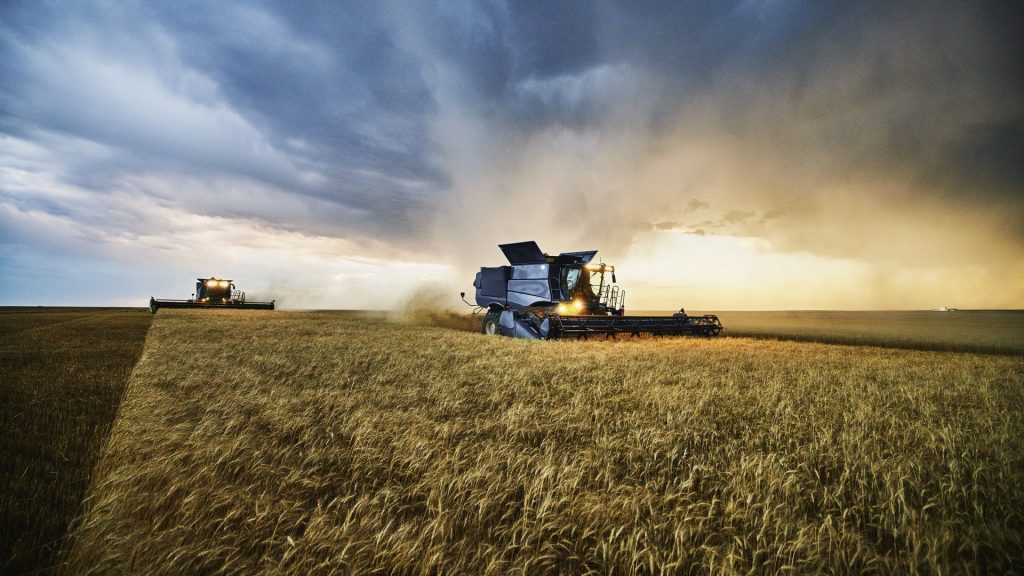
Planting season is around the corner for America’s farmers, and several organizations are warning about challenges they may encounter as fuel and fertilizer costs increase due to the war in Iran.
These only add to an array of problems farmers were already dealing with.
“The recent closure of the Strait of Hormuz and its impact on fertilizer and fuel prices only worsened the financial strain farmers face and poses significant consequences for the food supply chain in America and around the world,” the American Farm Bureau Federation said in a statement Thursday.
About one-fifth of the world’s oil supply moves through the Strait of Hormuz, which is under the joint control of Iran and Oman. Since the war started with joint U.S. and Israeli airstrikes on Iran on Feb.28, vessels moving through the strait have faced attacks.
As a result, oil prices have hovered at $100 or even higher, leading to a spike in gas prices.
The Strait of Hormuz, The Fertilizer Institute said, is also a “key maritime shipping channel for the global fertilizer and energy market.”
“When these fertilizers can’t be transported through the Strait of Hormuz, there are real implications for availability and price, and there is a global market impact,” Lesly Weber McNitt, vice president of public policy for the National Corn Growers Association, said at a Wednesday news conference.
The U.S. usually imports about 40% of the phosphates it needs annually from Saudi Arabia, McNitt said. Phosphate is an important ingredient in most fertilizers. Disruptions to the strait, the Fertilizer Institute said, also impact ammonia, urea, sulfur and natural gas.
Fifty-four agriculture groups sent a letter to President Donald Trump, detailing what they want to see happen next amid hostilities in the Middle East.
The letter notes there were “investments made last year in enhancing farm risk management tools and in securing much-needed tax relief for farmers.” Still, farmers said more resources are necessary amid “record inflation, trade uncertainty, rapidly declining crop prices and catastrophic natural disasters,” as well as severe weather, including winter storms, droughts and wildfires.
“Maritime freight disruptions from the ongoing conflict in Iran pose significant consequences to food security here at home and around the world,” the letter said.
Farmer Jason Sheehan, who lives in Washington state, said it already costs a lot to be a farmer there.
Official numbers show Washington farmers were nearly $400 million in the red in 2024, according to the organization Save Family Farming.
“The conflict in Iran is affecting farmers here in Washington, as fuel and fertilizer prices spike,” Jason Vander Kooy, family dairy farmer and Save Family Farming vice president, said in a statement. “As farms are already grappling with the state’s worsening farming profitability crisis, these additional costs are driving them even closer to the brink of closure.”
Sheehan told Straight Arrow News that his farm has about four to five months of fuel stored up. Historically, he said, the times to fill up tanks are in December and January, and then in June and July. Back when he filled up, fuel prices were less than half of what they are now, Sheehan said, “but we’re also burning through that fuel.”
Not only does it take fuel to actually farm, but it’s also necessary to get products to consumers.
“You’ve really only got two ways to pass that cost on,” Sheehan said. One of them is to raise prices to the consumer, or lower the prices of the farmers’ products.
“You can only absorb so much more,” Sheehan said. “You’re already the dead last net profitability in the country [in Washington.] I mean, you can only eat into your equity so long.”
When it comes to fertilizer, “at least in the spring, I tried to lock those prices in the past,” Sheehan said, but he added that “I don’t know what’s going to happen with next fall’s fertilizer.”
He noted that the war in Iran is far from the only volatility farmers are seeing.
“Everybody’s suddenly aware of what’s going on with fertilizer and fuel, but I think they also need to be aware that there’s been a lot building up to this in agriculture,” he said.
What farmers want
In the letter to the president, farming organizations called on the president to build on efforts to deliver payments through the Farmer Bridge Assistance Program, which is giving American farmers a one-time bridge payment, and another $1 billion available for additional commodities, to aid with disruptions to the trade market.
They also urged officials to allow E-15, a gasoline blended with 10.5% to 15% ethanol, to be sold year-round in states that don’t already allow for it. Iowa and California currently have year-round E-15 laws, according to the Iowa Capital Dispatch.
In addition, they asked for tax incentives, like the Buying American Cotton Act and the Grown in America Act, “to increase use of domestic agricultural products.”
The Trump administration can take actions “to support longer-term demand stability for U.S. agriculture,” farm organizations said, by finalizing strong renewable volume obligations in the Renewable Fuel Standard and supporting value-added opportunities for farmers in the 45Z Clean Fuel Production Credit.
“Without timely assistance, continued losses risk accelerating farm closures, reducing domestic production capacity and weakening the ability of farmers and ranchers across this great nation to provide food, clothes and fuel for the American people,” farm organizations said in the letter.
Ella Rae Greene, Editor In Chief