Inside the debate over Trump’s plan for over-the-counter medications
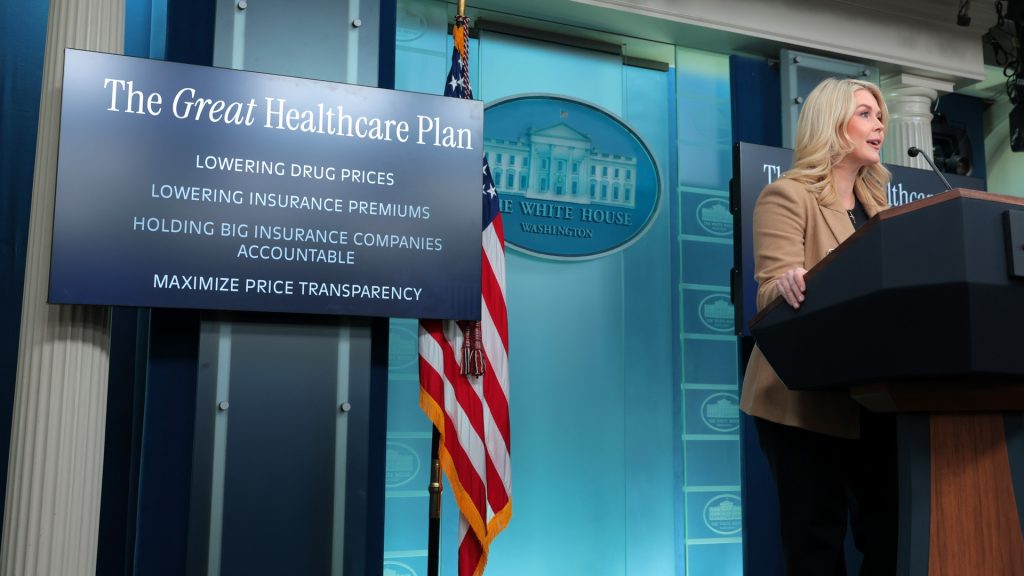
Last month, President Donald Trump unveiled his long-awaited “Great Healthcare Plan,” outlining broad efforts to address rising health care costs and rein in health insurance companies.
Although the proposal was light on specific details, it called for insurers and health care providers to publicly disclose information on pricing, wait times for routine care and claims denials to improve transparency and help patients avoid surprise medical bills. Trump’s plan took aim at drug prices, asking Congress to codify his most-favored-nation prices for prescription drugs.
The plan also calls for more medications to be sold over the counter instead of by prescription — a shift with bipartisan support that would likely cut prices and improve access.
“The proposal to make more drugs over-the-counter is generally a good goal and a good proposal, but it really depends on what drugs we’re talking about and what problem we’re trying to solve,” Neda Ashtari, a physician and associate director for health policy at the Center for American Progress, told Straight Arrow News.
Will more over-the-counter drugs cut health spending?
Policymakers have been calling for more medications to be sold without a prescription for more than a decade. The benefits are obvious: over-the-counter drugs are cheaper and more accessible.
Selling drugs over the counter can dramatically reduce costs, often by 25% to 80%. That initial drop comes largely because health insurance typically does not cover over-the-counter medicines, meaning consumers can pay for their medicine directly — avoiding the higher, negotiated prices that often come with third-party reimbursement.
Prices can decline even further once a drug’s patent expires and other manufacturers begin producing generic versions, increasing competition and driving down costs.
Over-the-counter access can also eliminate the need for a doctor’s visit to obtain a prescription, cutting costs and removing a major barrier for patients who might otherwise delay treatment. Some studies estimate that, on average, every dollar consumers spend on over-the-counter medicines saves them roughly $6 to $7 in health costs overall.
GLP-1 over the counter
As GLP-1 weight loss drugs such as Ozempic, Wegovy and Zepbound become increasingly popular, Jeffrey Singer, an Arizona surgeon and a senior fellow at the Cato Institute, has advocated that they should be available over-the-counter.
That would be a “horrific idea” that could lead to serious side effects in some people, Ashtari told SAN.
Physicians should carefully screen patients’ medical and family history before prescribing them.
“It would inevitably lead to drug dependence. I hate to use the word abuse, but in this case, it really would be because people would be using it for weight loss who did not have any indications to use those drugs as they are currently approved by the (Food and Drug Administration),” Ashtari said. “I think there could definitely be unintended consequences if, God forbid, somebody makes those drugs over-the-counter.”
But all medications, including those already sold over-the-counter, can have severe side effects, Singer told SAN.
“Adults should be able to make their own decisions,” Singer said. “We’re already trusted to drive cars on freeways, to go scuba diving. I could do a whole lot of really dangerous things. I can go hang gliding. I can go bungee jumping and I could buy lethal doses of Tylenol and ibuprofen.”
Many consumers are already able to purchase GLP-1 drugs online as if they were over-the-counter, via telehealth companies operating in legal gray zones by offering minutes-long doctor consultations and selling compounded GLP-1s — drugs that mimic original products but are not FDA-approved.
“Even though, technically it’s prescription-only, there’s a whole lot of people using it over the counter for all intents and purposes at this point,” Singer said.
The FDA has warned Americans about the safety of these compounded medications and has, along with several pharmaceutical companies, pursued legal action against the telehealth companies that sell them.
Prescription for profit and freedom of choice
Some health policy advocates have long argued that shifting more medications from prescription-only to over-the-counter status grants consumers greater freedom to access medications without federal gatekeeping.
Since 1951, when Congress passed the Durham-Humphrey Amendment, the FDA has had exclusive authority to classify drugs as prescription-only or over-the-counter.
Legally, the FDA requires prescriptions for drugs that aren’t considered safe for consumers to use without a clinician’s guidance. That can include medications with harmful side effects as well as those that require careful dosing or medical monitoring, or should only be used after a proper diagnosis.
However, Singer said the FDA’s decision making has historically been influenced by pharmaceutical lobbying and political pressure. He pointed to the common allergy medications Claritin and Benadryl as examples: Both antihistamines work by blocking chemicals, called histamines, that are released during an allergic reaction. The key difference is that Benadryl is a sedative, which can cause severe drowsiness for six hours or more; Claritin does not typically cause drowsiness. For that reason, physicians generally consider Claritin much safer than Benadryl.
Yet, the FDA’s classification of these drugs in the 1990s would suggest otherwise. The FDA first approved Claritin as a prescription-only medication in 1993, and did not make the drug available over the counter until 2002. Meanwhile, Benadryl has been available over the counter since the 1980s.
Schering-Plough, the maker of Claritin, spent millions to lobby the FDA to keep their drug prescription-only.
“A month’s supply of Claritin currently costs about $80 or $85 in the United States, even though it is an over-the-counter drug in dozens of other countries, where it usually costs $10 or $15,” The New York Times reported in 2001. “Claritin has been singled out as a prime example of greed by the American pharmaceutical industry,” including by Al Gore, the newspaper reported at the time.
Claritin is but one example of many, Singer told SAN.
In almost every other country in the world, birth control is available over the counter. Yet, in the U.S., all but one birth control pill require a prescription. Physician groups such as the American College of Obstetricians and Gynecologists and the American College of Clinical Pharmacy have for years pushed for birth control to be available over the counter. Emergency contraception — commonly known as the morning-after pill or Plan B — is already available over the counter.
Experts and physicians told SAN the reason Americans still need a prescription for birth control is political rather than medical. In the U.S., a strong political lobby targets contraception and abortion.
Many states get around federal prescription requirements by allowing pharmacists to prescribe birth control.
“We already use that for contraception in a lot of states,” Ashtari said. “There have not been any safety concerns, and this essentially allows patients to skip seeing a doctor, but you still get professional guidance and counseling from a pharmacist.”
There are other mechanisms in place to ensure consumer safety and prevent abuse: Drugs like the decongestant Sudafed are kept behind the pharmacy counter instead of on open shelves. Consumers can only purchase limited quantities and have to present identification, because Sudafed can be used to produce methamphetamines.
Pharmaceutical companies benefit from keeping drugs prescription-only because they can charge more. Although over-the-counter drugs are more readily available to markets, drug makers have to drop their price to compete with other companies.
Even doctors have a vested interest in keeping drugs prescription-only: They can bill insurance companies and patients for office visits.
The FDA, Singer warned, is also a special interest group; the agency wants to maintain its control over the consumer drug market.
“When there’s a monopoly, and even if you have angels in the government making this decision, they’re going to be subject to political influences, as well as different special interest group influences,” Singer said.
A new framework for over-the-counter drugs
While the Trump administration has not outlined how it plans to make more drugs available over the counter, several experts have proposed frameworks.
Sam Peltzman, an economics professor at the University of Chicago, suggested a system in which prescription drugs automatically become available over the counter after they have been on the market long enough to prove they are safe. Drugmakers or regulators could still block the switch, but only if they could provide a strong reason the drug should remain prescription-only.
Legislators have also pitched international drug reciprocity. This approach would allow Americans to buy drugs over the counter if that medication has been approved in other trusted countries, even if the FDA has not yet approved them. Under this approach, a medication cleared by regulators in places like Canada, the U.K. or Japan, could be sold in the U.S. with a label clearly stating that it is not FDA-approved and naming which foreign agency approved it. Lawmakers have proposed versions of this in the past, including in 2025 legislation called the the Reciprocity Ensures Streamlined Use of Lifesaving Treatments Act of 2025, or RESULT Act. It has not been passed.
If Congress takes up Trump’s proposals, one key debate will be where to draw the line between broader access and patient safety. Expanding over-the-counter availability could lower prices and make medications easier to obtain, while giving consumers more control over their health care choices.
The post Inside the debate over Trump’s plan for over-the-counter medications appeared first on Straight Arrow News.
Ella Rae Greene, Editor In Chief