Illegal midwives, growing demand: The fight over home birth in America
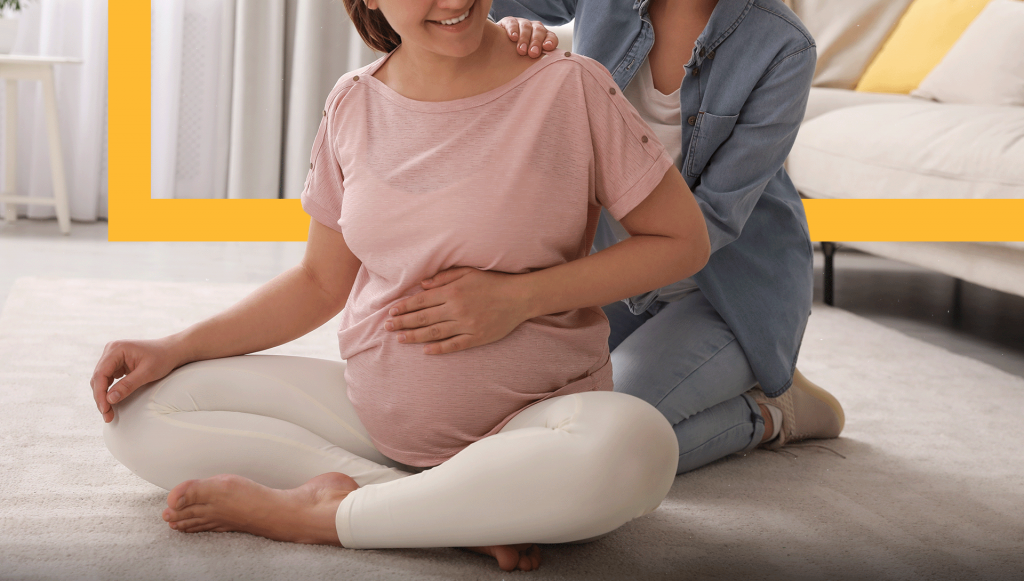
Over the past fifteen years, a midwife in eastern North Carolina has helped deliver, by her count, almost 350 babies. In the eyes of the state, her work is illegal.
The woman, who asked not to be named due to legal concerns, is a certified professional midwife, or CPM, a type of midwife trained to help women give birth at home.
Although home births remain relatively rare in the U.S., they have become increasingly popular over the past two decades. The share of women giving birth at home more than doubled — from about 0.6% in 2004 to roughly 1.5% in 2023 — and rose sharply during the pandemic, increasing by nearly 40% between 2019 and 2021.
Home birth itself is not outlawed. But in North Carolina and 10 other states, the CPMs who attend more than 90% of those births cannot legally care for patients, largely because physicians and medical groups have long argued that giving birth at home is more dangerous than in a hospital.
Neither the American College of Obstetricians and Gynecologists nor the American Academy of Pediatrics endorses home births for that reason.
Despite these warnings, a change is brewing. In the past six years, at least five states have moved to legalize CPMs as the U.S. confronts a worsening maternal health crisis. The renewed interest in midwifery is driven in part by growing gaps in access to care: More than 2 million women live in maternity care deserts where they lack access to hospitals, birth centers and physicians trained in obstetrics.
In North Carolina, roughly a dozen hospitals, many in rural areas, have shut down completely or closed obstetrics units in the past decade. More than 20 of the state’s 100 counties are now considered maternity care deserts, and it’s far from the hardest hit state. North Dakota, South Dakota, Oklahoma, Nebraska and Arkansas rank among the worst for maternity care access, where at least half of all counties lack hospitals and specialty physicians.
Maternal mortality rates have more than doubled since the late 1980s and are roughly three to five times higher than in other high-income countries. Moreover, as public trust in doctors and health officials has weakened, a growing number of women seek alternatives to hospital births, often citing a desire for fewer medical interventions or more control over the birth experience.
Midwives say they can help fill critical gaps. But as calls to expand the midwifery workforce grow, questions about safety — and resistance from some physicians and lawmakers — linger.
Straight Arrow interviewed physicians, midwives and policy analysts across the country and reviewed dozens of studies to examine whether health providers and state legislators can strike a balance between autonomy and safety as home births become more mainstream.

Midwifery in the US
Midwifery is often misunderstood and sometimes stigmatized in the U.S.
Critics portray home birth as a fringe, “back-to-nature” practice: Women laboring by candlelight in inflatable pools in their living rooms.
“In the United States, those who support home birth as safe are propagating junk science,” Amos Grünebaum, an obstetrics and gynecology professor and maternal-fetal medicine specialist at Cornell, wrote in a 2015 New York Times opinion piece.
But midwives and researchers say that image overlooks the training and structure behind modern midwifery care.
CPMs undergo a roughly two- to three-year apprenticeship-style training that includes supervised clinical work such as prenatal, postpartum and newborn exams, Cassaundra Jah, a CPM and executive director of the National Association of Certified Professional Midwives, said. Trainees must also participate in 55 deliveries in home or birth center settings, including at least five where they serve as the primary midwife.
Jah said the CPM model is designed for low-risk pregnancies — about 70% of all pregnancies — and prioritizes individualized, patient-first care.
Women who opt for a home birth want a more hands-off, less medicalized experience. Studies in the U.S. and around the world consistently find that home births are associated with significantly fewer medical interventions, such as induced labor, cesarean sections and instrumental deliveries — where tools like forceps or a vacuum are used.
While medical interventions may be necessary in some situations and are not inherently associated with poor outcomes, they can prolong recovery and, depending on the procedure, increase the risk of infection, blood loss, and blood clots. Maternal mortality is twice as high following C-sections; however, some analyses find that this risk diminishes with planned procedures, suggesting much of the difference reflects the higher-risk pregnancies in which surgery is often performed. Planned or unplanned, C-sections increase the odds of cardiac arrest, hemorrhage and hysterectomies.
CPMs are not the only type of midwives in the U.S. Certified nurse-midwives, or CNMs, are the most widely recognized. They are licensed in all 50 states and typically work alongside physicians in hospitals. CNMs first train as registered nurses — earning either an associate or bachelor’s degree and passing a national nurse licensing exam — then complete graduate-level education in midwifery and pass a second certification exam. By contrast, only a high school diploma is required for CPMs.
Clinical requirements for CNMs vary slightly by program, but are roughly the same as for CPMs: 35 deliveries plus 25 labor encounters, 50 postpartum and 20 newborn exams.

While nurse-midwives and home-birth midwives share the same underlying principles, their practice is shaped by their work settings and the communities they serve.
Critics, however, argue that nurse-midwives and CPMs are entirely different.
While Grünebaum strongly advocates for nurse midwives, he does not consider CPMs professionals.
“They’re called CPMs, but they’re not midwives, because they’re not trained enough in deliveries,” he told SAN.
Grünebaum said he delivered more than 1,000 babies during his training to become a physician. Even then, he said, he did not feel fully prepared to deal with some of the complications that can arise.
“I don’t think there are many professional jobs in this country you can have without finishing college. But you can become a CPM without that,” he said. “It’s like trying to run a marathon after running a few hundred feet a day. I would not recommend that.”
Grünebaum has published several studies comparing the safety of home and hospital births, consistently finding higher risks of adverse outcomes at home. But other, more recent research suggests outcomes may improve in states where CPMs are more clearly regulated and integrated into the health system.
The safety debate
The evidence on home birth safety is limited, and comparing outcomes between home and hospital births is inherently challenging. There is only one randomized controlled trial — the gold standard for comparing medical interventions — because pregnant women are generally unwilling to be randomly assigned to give birth at home or in a hospital.
Instead, researchers rely on observational data. These studies cannot control who chooses to give birth at home versus in a hospital, meaning differences in outcomes may reflect underlying differences in the patients themselves — such as health status, prior birth experience or access to care — rather than the birth setting alone. Researchers attempt to adjust for these factors, but important variables can be difficult to measure or fully account for, leaving the possibility that some of the observed differences are due to study bias.

Observational studies generally report higher rates of rare but serious adverse outcomes in home births compared with hospital births.
Stillbirths and deaths in an infant’s first month were about twice as high in home births, though the overall rate was low: 3.9 deaths per 1,000 home births versus 1.8 per 1,000 in hospitals, according to the American College of Obstetricians and Gynecologists. Neonatal seizures and other serious neurologic dysfunction, while also rare, were three times more common at home, occurring in about 0.4 to 0.6 per 1,000 births, compared with 0.2 to 0.3 per 1,000 in hospitals.
A separate study found that about 3.7 babies per 1,000 born at home had very low Apgar scores — an assessment of a newborn’s heart rate, breathing, muscle tone, reflexes and color performed one and five minutes after birth — compared with 2.4 per 1,000 in hospitals.
Comparing safety outcomes between home births and hospitals is not apples-to-apples. Home birth is typically recommended only for women with healthy, low-risk pregnancies, while hospitals care for a broader and often higher-risk group. In addition, women who choose home birth are more likely to have given birth before, and second or later births generally carry lower risks of complications.
One other challenge in studying home versus hospital births is how births are classified. Some datasets conflate planned and unplanned home births, which can obscure differences in risk. On the flip side, about 20% to 25% of women who intend to have a home birth are transferred to the hospital during labor; those numbers are routinely wrapped up into hospital birth outcomes and complicate comparisons.
In 2011, Oregon became the first state to record planned place of birth on birth certificates, allowing researchers to more accurately track outcomes. Several studies and state reports analyzed birth outcomes following this law and still found the odds of stillbirth, neonatal death and low Apgar scores were significantly higher in planned home births versus hospital births.
Proponents say home births in the U.S. could be safer with more regulation and integration. Some point to countries like the Netherlands where roughly 10% to 15% of births take place at home as evidence that home birth can be safe: One Dutch study of more than 800,000 births found no significant difference in outcomes between planned home and hospital births. Another reported that serious maternal complications were similarly low — or lower — in home births, particularly among women who had given birth before.
But home births in the U.S. and the Netherlands are fundamentally different.
In the U.S., CPMs and physicians operate in completely separate systems with very little coordination. There is no formal consensus for what constitutes a low-risk pregnancy. In contrast, in the Netherlands, midwives are fully integrated into the national health system, home births are tightly regulated, with clear standards and a built-in process for quickly transferring patients to a hospital if something goes wrong.
This lack of integration, experts told Straight Arrow, has real-world safety consequences.

A tale of two systems
In the U.S., the relationship between CPMs and the broader health care system varies by state, but is often fragmented. While a handful of states have made efforts to better integrate CPMs, most practice outside hospital systems, with limited formal collaboration with physicians or other maternal health specialists.
If a pregnancy becomes higher risk, CPMs typically refer patients to hospital-based care. Because they cannot continue providing care in that setting, continuity is often disrupted.
In North Carolina, where CPMs cannot legally practice, those gaps are especially pronounced. Without licensure, midwives generally cannot order lab work or directly arrange services such as newborn hearing screenings or standard blood tests, leaving patients to either coordinate parts of their own care or forgo certain testing. In an emergency, when a CPM must transfer a patient to a hospital, a midwife may hesitate to accompany the patient or communicate directly with hospital staff for fear of legal consequences, limiting the flow of critical information.
The CPM who spoke with SAN said midwives are often criticized for poor handoffs during these situations. Part of hospitals’ criticism of CPMs, she said she has been told, is “that they just drop off a mess at our door, and we don’t know anything about them.”
But that is not how any CPM wants to provide care, she said.
“It’s because they’re afraid and criminalized for practicing that it’s forced them into making a decision other than what they’d like.”
In North Carolina, CPMs who provide care without a license typically face a Class 1 misdemeanor, punishable by up to 120 days in jail, though the charge can be elevated to a Class I felony, with potential prison time, in certain circumstances.
There is no definitive count, but a review of local reporting and law firm blogs suggests that fewer than a dozen North Carolina midwives have been arrested or charged since 2000. At least five midwives were arrested between 2011 and 2014, including one after a child’s death during a home birth. Nationwide, only a small number of CPMs or similar midwives have been criminally charged over the past two decades. Most cases have been tied to practicing without a license in restrictive states; some due to adverse outcomes where patients or physicians alleged a midwife was negligent.
“If we had a license and an integrated transfer plan, then this would improve outcomes and situations for everyone involved,” the CPM said.
Some states, including Washington and Oregon — where CPMs can obtain a license — have taken steps to better integrate CPMs into the broader health care system.
Since the 1990s, Oregon’s state health agency has convened a board of physicians and midwives to develop and review guidelines for CPM practice. Today, those include criteria for determining which pregnancies are appropriate for home birth, according to Wendy Smith, an obstetrician who served on the board from 2013 to 2024. The state also requires midwives to develop transfer plans that outline how a midwife will move a patient to the hospital if complications arise, Smith said. Those efforts have helped midwives and physicians build relationships, fostering trust and better communication.

Limited research, including a 2018 study, has found that states that better integrated midwives into the health care system had better outcomes, including lower rates of preterm birth and neonatal death. (This study also ranked states based on integration; North Carolina was last; Washington, New Mexico and Oregon were top three.)
But Smith said even Oregon’s efforts fall short.
“When we talk about integrated care, it’s basically that we have created these initiatives and some guidelines that help to create safe transports,” she said. Oregon’s system is “nothing like countries that integrate midwifery care and certified professional midwives,” she said. (In most other developed countries, midwives fall somewhere between CNMs and CPMs; they typically hold college degrees in midwifery but are not required to be nurses.)
Even when CPMs follow state guidelines — identifying a hospital and creating a transfer plan in case of emergency — it does not guarantee a seamless handoff, or even that a physician will accept the patient. Smith said CPMs may also face financial pressure to avoid transferring patients, since they may not be paid in full if care is handed off.
Another major challenge: The lack of a clear, consistent definition of what qualifies as “low-risk” — a key factor in determining who may be an appropriate candidate for home birth. Doctors generally consider a pregnancy “low-risk” when there are no complications, there’s only one baby and the baby is positioned head-down, which is the safest position for delivery.
And yet, in Oregon, state guidelines allow women with breech pregnancies — when the baby is not positioned head-down — to deliver at home. Because breech home deliveries are permitted under state guidelines, some patients assume they are broadly considered safe, Smith said, even though many physicians, including herself, consider it a complication. Studies have shown breech delivery — particularly outside hospital settings — is associated with higher risks for both mothers and babies.
In contrast, the Netherlands has strict regulations over who can deliver at home and a clear national definition of a low-risk pregnancy.
Grünebaum, Smith and the North Carolina CPM all said home births could be safer if CPMs had a clear pathway to licensure in every state and if there was stronger regulation and better integration into the broader health care system.
Nearly every year for the past 15 years, the CPM who spoke with Straight Arrow has helped introduce a bill to the state legislature that would formally legalize her profession. Last March, a pair of bipartisan politicians introduced yet another one: the Accessing Certified Professional Midwives Act. The proposed legislation is still pending a vote.
Several prominent medical groups still oppose such efforts. But the state’s department of health seems to be taking the matter more seriously. The Division of Public Health set up a maternal and infant health taskforce to explore what CPM licensure might look like.
As the tide turns in favor of CPMs nationwide and the number of maternal health deserts grows, North Carolina legislators may finally be ready to allow CPMs to do their work. After a nearly 40-year push, the state seems to be at the “tipping point of making that change,” the CPM who spoke with Straight Arrow said.
Round out your reading
- Work for food: New SNAP rules reshaping who gets to eat.
- How Iranians actually feel about regime change and war.
- Feds warn that Russians may hack your internet router. Why?
- The truth behind a medical condition that never existed.
- We’re building a new Straight Arrow. Help us shape our future by taking our survey.
Ella Rae Greene, Editor In Chief