How one tiny island nation is making millions off AI domain names
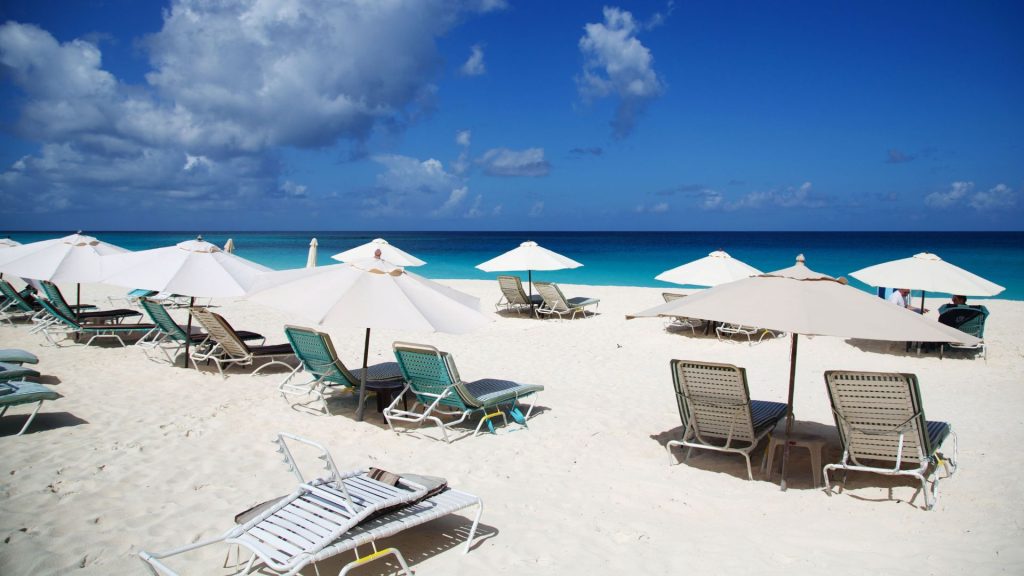
Just northeast of the U.S. Virgin Islands in the Caribbean sits the small island nation of Anguilla. The island is home to about 15,000 people and is only about 16 miles long.
The country features gorgeous beaches languidly extending toward beautiful blue waters. It’s perfect for scuba diving, fishing or just relaxing on a boat. But what might not be apparent is the millions of dollars the country is earning from artificial intelligence.
But those vacationing there won’t see any large AI data centers to train new models or any computer chip forges producing high-end AI chips. Instead, the island is making money off AI in an entirely different way: AI domains.
The happy accident
Anguilla got uniquely lucky. In 1995, when AI was just a science fiction plot device, the Internet Assigned Numbers Authority, or IANA, delegated a domain to the country: .ai.
This was part of IANA’s routine global rollout of country-code domains. It followed the standard practice of assigning two-letter domains to countries. France is .fr; Japan, .jp. But Anguilla — lucky little Anguilla— got .ai. Nobody knew it yet, but the country hit the jackpot.
For a long time, the .ai domain wasn’t even publicly available. The domain was originally for island-based websites, like the government’s. Years later, although it’s not clear exactly when, Anguilla opened the domain to the rest of the world, allowing anyone to pay a fee to register a .ai domain.
But even then, growth was modest. By 2018, the island was registering nearly 50,000 .ai domains a year. This earned the country a nice $2.9 million total — nice but nowhere near the jackpot the country would soon see.
The real spark wasn’t necessarily AI but a specific product launch — ChatGPT. When OpenAI launched its chatbot in late 2022, the floodgates opened. Suddenly, nearly every founder wanted Anguilla’s two letters at the end of its URL.
The AI moment
By April 2026, Anguilla was registering more than 1.22 million domains a year, more than a twentyfold jump, according to data from Domaintechnik, an Austrian domain provider.
It wasn’t just small AI startups registering .ai domains, even large companies use them. Anthropic runs its Claude chatbot on claude.ai. Elon Musk’s AI company is simply called x.ai. Even Google, which owns basically every domain extension it could ever need, has experimented with google.ai.
Google has also helped with the recent surge by refusing to treat .ai as a foreign domain, like it does those associated with most other countries. This means that a .ai site shows up in search results globally, not just in Anguilla.
The suffix, in other words, stopped behaving like a country’s zip code and started acting more like a brand.
The money printing machine
Just eight years ago, Anguilla made $2.9 million off its domain, just under 4% of the government’s budget. But by 2025, that figure rocketed to somewhere between $85 million and $93 million, according to Domaintechnick’s data. The .ai domains now account for nearly half of Anguilla’s budget.
Like most island nations, tourism is a major source of revenue. Tourism in Anguilla accounts for about 37% of the country’s GDP. While comparing GDP to revenue is an apples-to-oranges comparison, the symbolism is hard to miss. A simple internet assignment 30 years ago is now punching in the same weight class as beachside resorts and pristine coastlines.
Actual 2025 revenue blew past official estimates, driven largely by a renewal wave. Since .ai domains are typically bought in two-year blocks and renewed about 90% of the time, 2025 was the year the massive surge in domain requests in 2023 came back due. That growth doesn’t look like it’s slowing down either. In March, the country raised its wholesale registration fee from $140 to $160 per two-year term. That means that hike won’t show up fully until 2027.
Anguilla’s premier, Cora Richardson Hodge, called the windfall a “milestone,” saying the extra cash will help the country pay for major infrastructure projects.
“This milestone is about far more than domain registrations,” she said, according to Domaintechnik. “The success of .ai has enabled Anguilla to invest in critical infrastructure that will serve our people for generations, while connecting our island to the future of global technology.”
The domain process
So, how exactly does a government earn money off a website domain? It’s simpler than it sounds. Think of it less like buying a house and more like paying rent.
Nobody buys a .ai domain outright. Instead, they lease the right to use it, usually two years at a time. If they stop paying for the right, then that domain name goes back on the market.
As the sovereign owner of the domain, Anguilla sets a flat wholesale price, and that fee lands directly in the government’s bank account regardless of who sells it. Retailers like GoDaddy or Namecheap then tack on their own markup.
For years, the government handled domain registration locally but in 2024, it partnered with Identity Digital to help with the explosive growth.
The aftermarket circus
While the explosive growth in .ai domains is significant, another figure is equally noteworthy: how much some .ai domains sell for after their initial registration. In February, bot.ai changed hands for $1.2 million, the highest publicly known sale in .ai history, according to Domaintechnik.
That wasn’t the only massive aftermarket sale. Others like wisdom.ai and you.ai sold for $750,000 and $700,000, respectively. Escrow.com CEO Matt Barrie told Domaininvesting that someone was able to flip a .ai domain that they purchased for $300,000 for $1.5 million.
“These AI domains are being bought by both start-ups looking for their name online, and those trying to flip those domains to make some money,” Barrie said. “There are speculators in the space who realize companies want the best branding.”
Anguilla doesn’t see a cent from these sales. The country only takes money from the original registration fee. Every dollar of these massive sales goes straight into the pockets of private sellers and domain brokers.
The country’s future
While Anguilla’s government is happy about the recent revenue, officials appear to know it won’t last forever.
Ellis Webster, Anguilla’s opposition party leader, has been blunt about how this all started. He knows it was purely coincidental that Anguilla, not neighboring Antigua, ended up with the .ai extension.
“You can’t predict how long this is going to last,” Webster told The Associated Press in 2024. “And so I don’t want to have our economy and our country and all our programs just based on this. And then all of a sudden there’s a new fad comes up in the next year or two, and then we are left now having to make significant expenditure cuts, removing programs.”
That caution shows up in the country’s spending too. Rather than splurging, Anguilla has used its .ai money to claw down public debt by nearly 37% since 2021, according to Domaintechnik. The country has also used it to fund free healthcare for children under 5 and seniors over 70.
This windfall rests on one fragile habit: a roughly 90% renewal rate on domains bought two years at a time, for a naming trend that could cool as fast as it caught on. Anguilla didn’t plan for any of this — it just happened to own two letters the world suddenly wanted. That’s either the best luck a 15,000-person island has ever had, or a bubble with an unusually good tan.
Round out your reading
- Scientists are now eyeing a possible ‘Mega El Niño’.
- Critics mocked Mamdani’s AC request. Republicans made the same ask.
- Social Security was supposed to be a safety net. To young Americans, it’s a broken promise.
- What happens when the water dries up? Much of the American West is close to finding out.
- Political insiders are targeting the two-party system’s grip on America.
Ella Rae Greene, Editor In Chief