How high corn production hides the financial strain of US farms
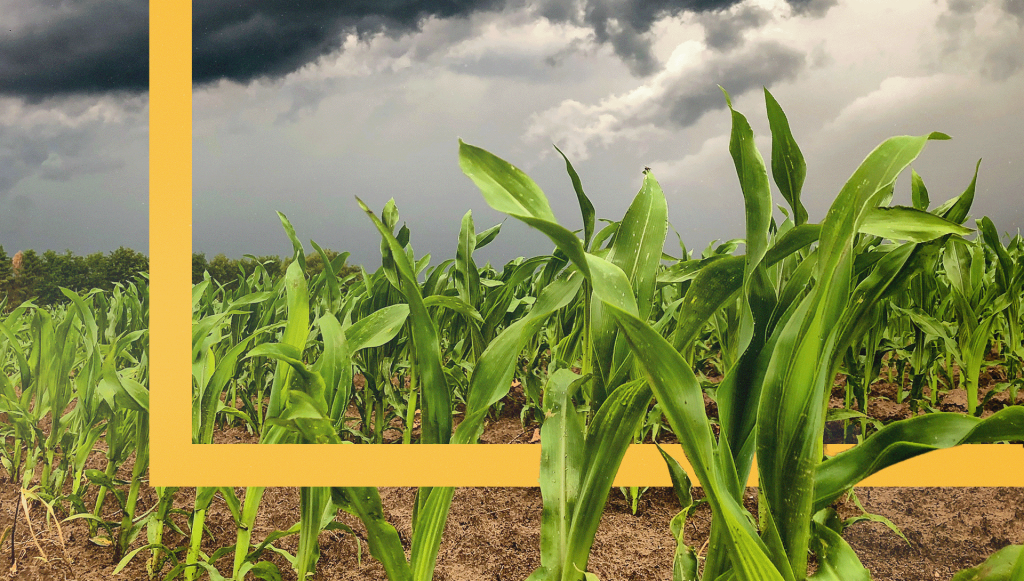
Troy Uphoff has learned to better space the rows of corn on his Illinois farm and grows shorter statured stalks that optimize sunlight and the nutrients in the soil.
“That creates about a 5% yield bump every year,” said Uphoff, whose farm sits near Decatur.
Uphoff developed these techniques with help from researchers, agricultural businesses and other farmers. Such innovations are the reason, experts told Straight Arrow, that the United States grew a record amount of corn last year, even as farmers navigated severe weather and financial headwinds.
In the past several years, American farmers have faced prolonged drought, extreme rain, skyrocketing costs, plummeting revenue and an uneven economy.
And through it all, production keeps growing.
How do farmers hit record yields as weather turns extreme?
USDA figures show that annual yields — the total amount of a specific crop grown in a given year — grew in 2025 compared with 2024, continuing a decade-long trend. Agriculture researchers and experts attribute the rise to innovations made possible by exhaustive study and shrewd adaptation.

“There are corn varieties that will pollinate at temperatures well into the 90s,” said Doug Gucker, a commercial agriculture educator for the University of Illinois Extension. “Forty years ago, that would have been a crop failure.”
And, he added, “we’ve seen the yield increase from planting soybeans in mid-April as compared to early to mid-May.”
But not all farmers benefit from these advances.
Wealthier growers are better able to leverage those innovations. And greater yields do little for farmers who can’t fetch high enough prices to cover production costs.
While higher yields mean Americans don’t generally need to worry about food shortages, experts told Straight Arrow that could change if a warming planet outruns farmers’ ability to adapt.
According to the National Weather Service, 2025 had the highest average annual temperature on record at 57.8 degrees, barely edging out the previous year’s record. For comparison, the average annual temperature between 1991 and 2020 was 54.7 degrees. Both years followed a warming trend that increases the likelihood of prolonged drought and extreme rain, experts told Straight Arrow.
“With precipitation trends, we’re seeing wetter springs,” said Ohio’s state climatologist Aaron Wilson. In the spring “it can be too wet to get into the fields, and wet fields with heavy equipment leads to soil compaction that can impact how the crop emerges from the ground.”
Drought often arrives in the summer when crops need moisture, Wilson said.
What new science helps crops survive as the planet warms?
“Rainfall tends to come in more intense bursts and the dry spells tend to last longer,” said Ariel Ortiz-Bobea, a Cornell economist who studies how climate change affects agriculture.
And to further compound the challenges vexing farmers, costs of the products they depend on, such as fertilizer, farming equipment and diesel fuel are constantly on the rise.

The price per acre for farm machinery — a key metric the USDA uses to assess farmers’ costs — spiked from roughly $135 per acre in 2021 to $160 per acre at the start of 2022 and peaked at just over $170 per acre last year, according to the department’s figures.
In spite of these challenges, crop yields also follow a consistent upward trajectory.
Corn yields hit an all-time record last year at 17 billion bushels — compared with 14.9 billion bushels in 2024, and 13.6 billion bushels 10 years prior — and other crops such as wheat and sorghum, a small grain that is a key ingredient in flatbreads and tortillas, saw their highest yields in years.
Farmers produced 437 million bushels of sorghum last year, the highest figure since 2021, and a 27% increase from the previous year. While the 4.3 billion bushels of soybeans produced by American farmers in 2025 was a 3% decrease from 2024, soybean yields followed a gradual incline in recent years. In 2019, before COVID-era price shocks, the U.S. produced 3.6 billion bushels of soybeans.
The 1,600 acres of corn, soybeans and small grains grown on a plot of land overseen by the University of Illinois just outside of Champaign conform almost seamlessly to a landscape blanketed by crop fields, dotted with the occasional farmhouse.
The research conducted there sets it apart.
It’s one of several plots where researchers at the land grant university look for better ways to grow crops, and one of hundreds at land grant universities across the nation forming a vast research apparatus.
Those experimental fields are one of the reasons farmers like Uphoff have adapted their planting and growing techniques.
“Farmers like science and technology,” he said. “That’s making higher yields possible.”

Why do record harvests fail to protect farm profits?
Soybean yields have been trending upward since the 1970s, said Taylor Dill, research director for the Ohio Soybean Council.
“We can have a high-yield variety [of soybeans] mixed with disease resistance that can capture that yield even if you have environmental conditions conducive to disease,” she said.
“We can’t outrun climate change, but farmers can stress proof their crops,” said Laura Lindsey, a soybean and small grain agronomist at the Ohio State University.
Research shows that farms “are more likely to be profitable with timely planting,” she added.
The upward trend in crop yields does not mean climate change had no impact on production, said Ortiz-Bobea. He noted that a 2021 Cornell study concluded that agricultural productivity was 21% lower than it would have been over the past 60 years in the absence of climate change.
And innovations can only go so far.
Whether farmers make money on higher yields depends entirely on the commodity markets that set what farmers are paid for their crops.
“We’re paying tremendous input prices, and grain markets are moving sideways,” said Jay Sullivan, who grows corn in North Carolina’s coastal plains.
The price of corn, for example, peaked at just over $7 per bushel in 2023, but fell under $4 per bushel late last year.
“Prices are below the cost of production right now,” said Kevin Matthews, who grows corn, soybeans, wheat and barley on 5,000 acres near Winston-Salem, North Carolina. “Farmers can only be so efficient.”
Williams said he is skeptical of USDA yield data, citing budget cuts at the agency along with widespread drought threatening crop production throughout the country.

Geography also plays a role. In some parts of the United States, no amount of research or planning can keep seeds in the ground during intense rain storms or provide precious water during a drought.
Last year “we had to do three replantings of soybeans because of the amount of rain we got,” said Stephanie Cornell, who also grows corn and small grains on a farm in Prince William County, Virginia. “But once we got it in the soil we didn’t get any rain.”
The year was “horrific” for crop yields in her section of the commonwealth, she said.
“Isolated areas in Ohio have had pretty big problems because of the weather,” said Lindsey.
Some farmers, for example, had nothing left to harvest after the remnants of Hurricane Helene rampaged through parts of the state, she added.
Drainage practices can counter intense rains, but “controlled drainage structures haven’t been widely adopted because of the cost,” said Wilson, who is also the climate field specialist for the Ohio State University Agricultural Extension.
Whether yields will continue to trod along their gradual incline remains an open question as towering obstacles such as climate change and high input costs stand in American farmers’ paths.
Scientists continue to warn that rising carbons emissions are warming the planet, forcing producers to constantly modify their growing techniques. Adding to their problems, diesel fuel and fertilizer — some of which is produced in the Middle East — ballooned in price after the United States and Israel invaded Iran. It’s not clear when those costs will drop.
“It could be a pretty dismal financial picture going into 2027 if current high prices continue,” Gucker said.
Ella Rae Greene, Editor In Chief